

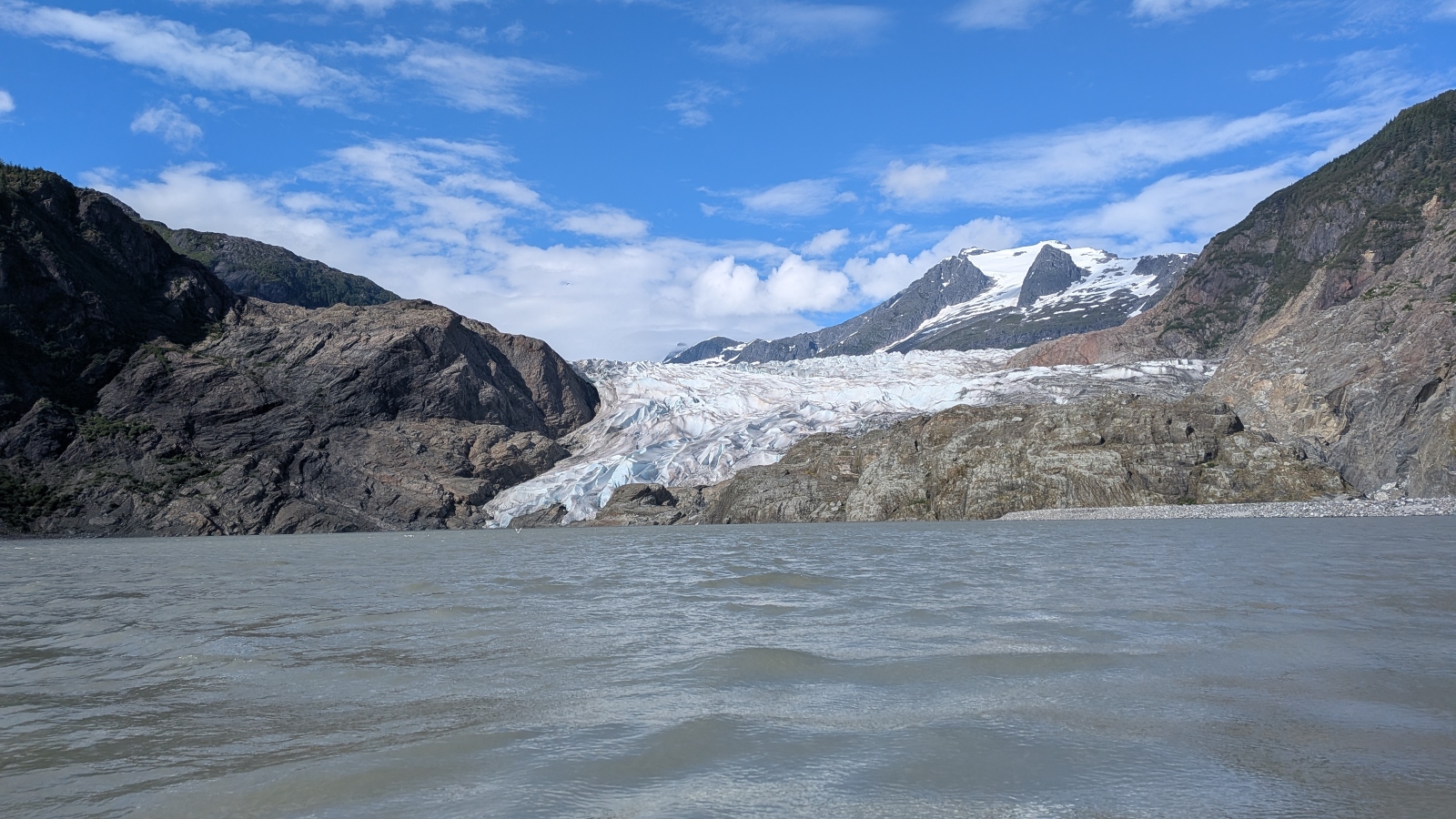
Juneau, Alaska’s capital city, has confronted an escalating flood crisis driven by climate change and glacial meltwater. Since 2011, the Mendenhall River has periodically overflowed, but the frequency and intensity of flooding events have increased dramatically. A flood in 2023 set a record water level of nearly 15 feet and damaged roughly two dozen homes. Subsequent years brought new benchmarks in 2024 and 2025, with another flood occurring in the previous month. Scientists anticipate these inundations will return annually for decades.
The flooding stems from the geography of Suicide Basin, a depression beside the Mendenhall Glacier where meltwater and rain accumulate each summer. Pressure from the accumulating water eventually lifts the glacier’s ice mass, creating a drainage channel that releases billions of gallons downstream toward residential neighborhoods. A single outburst can discharge approximately 15 billion gallons of water. Residential communities directly in the flood’s path have suffered significant losses, with some residents reporting damage costs exceeding $100,000 and others losing homes entirely to the surging water.
Facing an unprecedented challenge of preparing for disaster with certainty of recurrence, Juneau has implemented an innovative response. Local officials and scientists from the University of Alaska Southeast and the Alaska Climate Adaptation Science Center collaborated to create an online dashboard launched in 2025. The platform translates complex glacier and hydrology data into accessible forecasts that enable residents to make informed decisions about protecting property and evacuating. The tool has attracted over 15,000 users seeking real-time updates on flood conditions and predictions.
Residents have adapted to the recurring threat through various mitigation strategies, including elevating homes, constructing protective barriers, and installing sandbags at vulnerable entry points. The city constructed approximately six miles of flood barriers. Despite these efforts, property values in the flood zone remain depressed, with many residents having little choice but to remain in place. The dashboard provides both practical warning capacity and educational content explaining the glacial outburst mechanism, offering communities worldwide a potential model for managing climate-driven disasters that strike repeatedly rather than as isolated events.
Article Attribution | Read More at Article Source
Article summary produced by Claude AI