

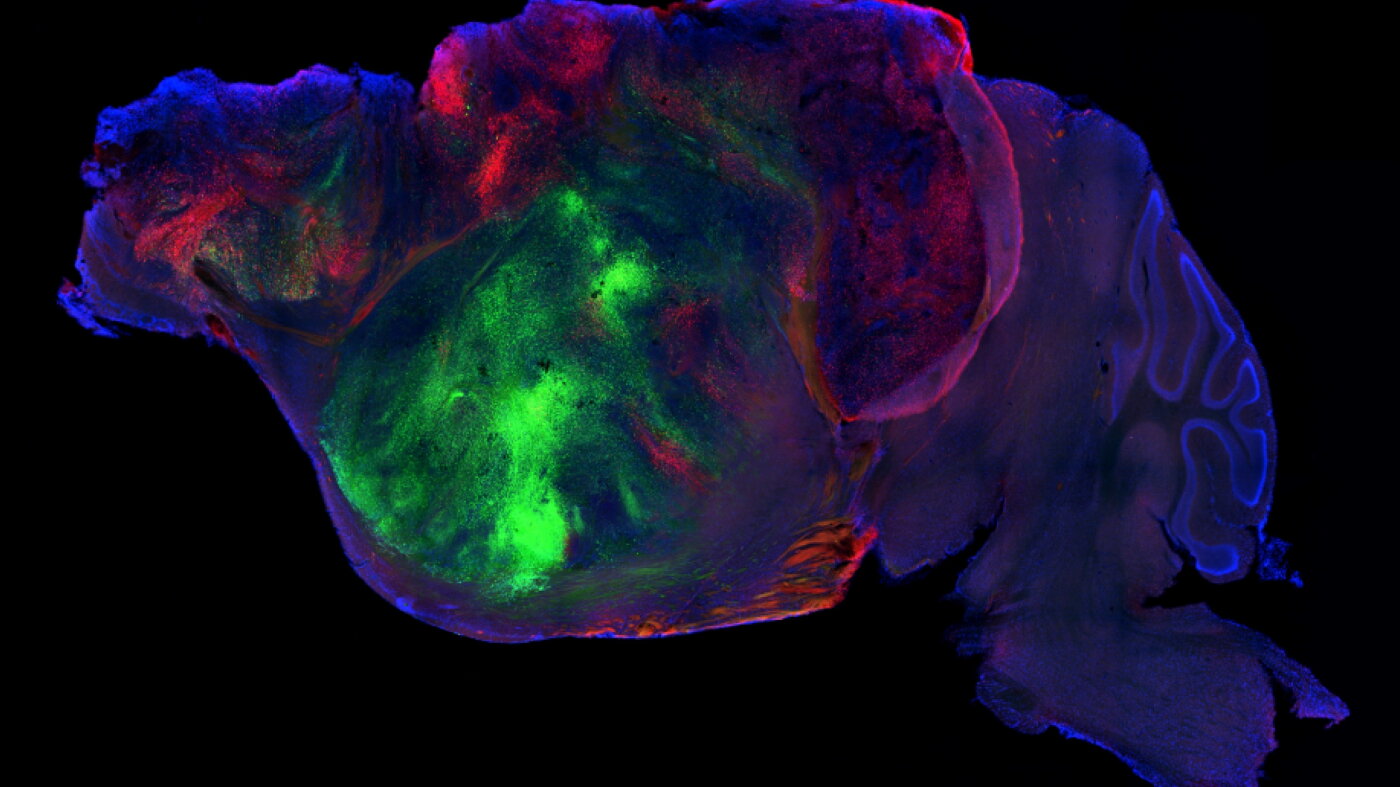
Scientists at Stanford University have developed a technique to implant millions of human brain cells into laboratory mice, creating a new research tool for studying human neurological conditions. The advancement addresses a longstanding challenge in neuroscience: human brain cells develop approximately 20 times slower than mouse brain cells, causing them to be outcompeted when placed in normally developing mice. To overcome this biological barrier, researchers used genetic engineering to breed mice lacking significant portions of their cerebral cortexes—the brain region associated with reasoning, memory, and consciousness.
The team then introduced lab-grown human cortical neurons into the depleted mouse brains through a simple surgical procedure. Within weeks to months, the human cells expanded to fill the vacant neural space and became integrated with the mouse nervous system. The resulting chimeric mice demonstrated improved performance on memory tasks and social interactions compared to mice with depleted brains alone, though they still differed from unaltered mice in certain respects.
Notably, mice containing human brain cells exhibited greater sensitivity to oxygen deprivation, exhibiting difficulty with motor function when oxygen was reduced—a response not seen in typical mice. This human-like vulnerability suggests the modified mice could serve as improved models for studying conditions such as cerebral palsy, intellectual disability, and epileptic encephalopathies. The research team notes the implanted human neurons remained less organized than natural brain tissue and lacked several important cell types, making the models most suitable for conditions originating in early human development.
While researchers emphasize the work proceeded under rigorous ethical oversight, outside experts have flagged emerging concerns about the technology’s future trajectory. As the technique becomes more sophisticated, questions have surfaced regarding potential applications in larger animals with longer lifespans and other possible developments. The findings were published in the journal Nature.
Article Attribution | Read More at Article Source
Article summary produced by Claude AI