

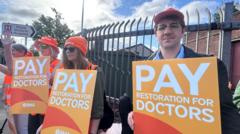
Resident doctors commenced industrial action in Northern Ireland in a dispute centered on compensation levels. The strike, which began Monday morning and was scheduled to end Tuesday morning, represents the latest escalation in ongoing tensions between medical professionals and health authorities over remuneration.
The action follows strike activity by consultants and specialist doctors the previous week, marking a significant moment for these physician groups in the region. The BMA conducted member ballots over a four-week period, with 92% of resident doctors voting in favor of strike action. Additionally, 79% of consultants and 90% of SAS doctors voted to proceed with industrial action. The strikes were called after doctors’ representatives rejected a 3.5% pay increase recommended by an independent pay review body.
Physicians cited substantial erosion of compensation over an extended period as justification for their position. Resident doctor representatives indicated that pay levels have declined by more than 20% since 2008, arguing that the proposed increase falls short of restoring previous compensation levels. Medical professionals also expressed concerns about workforce retention, noting that survey results showed over 54% of penultimate and final year medical students in Northern Ireland indicated plans to work outside the region. Some physicians described the situation as contributing to broader staffing challenges within the health service.
Health Minister Mike Nesbitt stated commitment to implementing the recommended pay award but noted an inability to proceed without an approved budget. He cautioned that exceeding the independent review body’s recommendations would create complications for other public sector workers. Strike organizers indicated that emergency and urgent care would remain prioritized during the action, though cancellations of operations and outpatient appointments were acknowledged as likely consequences. Medical representatives characterized the decision to strike as difficult but necessary, asserting that meaningful negotiations had not been offered to resolve the dispute.
Picket line activities occurred at multiple hospital locations across the region. Participating physicians emphasized concerns about health service sustainability, staffing levels, and working conditions alongside compensation issues.
Article Attribution | Read More at Article Source
Article summary produced by Claude AI