

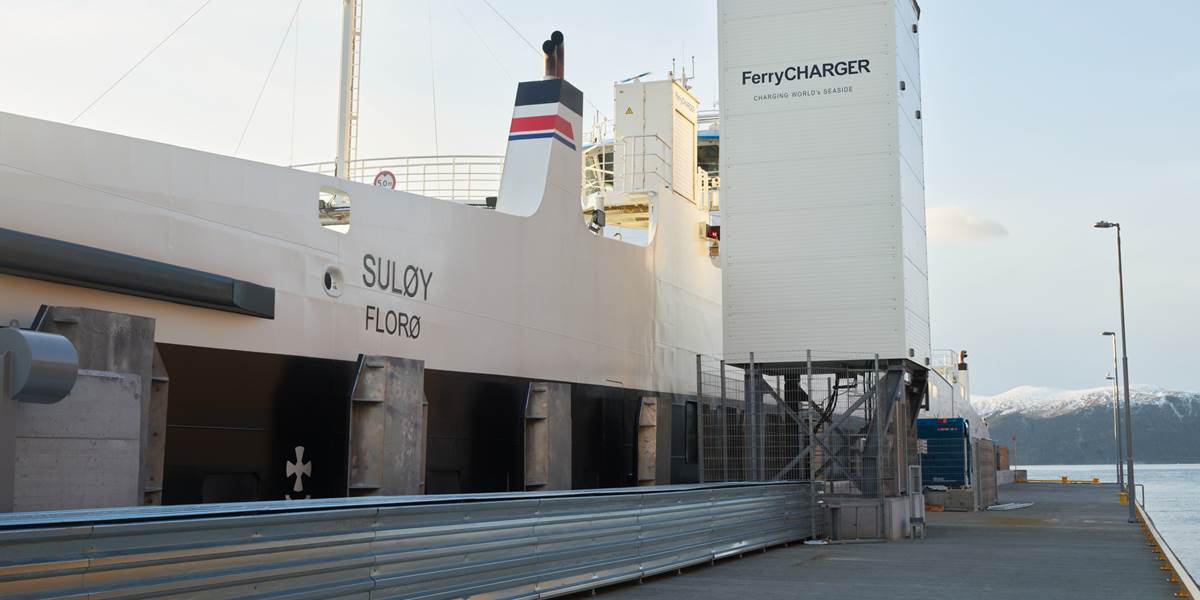
Interest in electric and hybrid ferry propulsion in the Philippines appears to be growing following a study visit to Norway by Philippine maritime officials and industry representatives, organized this month by the Royal Norwegian Embassy in Manila in partnership with Innovation Norway and Maritime Cleantech. The delegation, which included representatives from the Department of Transportation, the Maritime Industry Authority, and various ferry operators and consultancies, visited operating ferry sites and met with Norwegian technology companies and ferry operators to examine their experience with electric vessel operations.
Norway has operated electric ferries for more than a decade, with the MF Ampere entering service in 2015 as the world’s first fully electric car ferry. The country now operates approximately 180 electric ferries on more than 100 routes, providing substantial practical experience in the technology. Norwegian companies participating in industry discussions include Hyke, Zinus, Zeabuz, Kongsberg, Maritime Robotics and ZEM, among others. A notable outcome of recent engagement includes an agreement between the Philippines Association of Coastal and Inland Water Ferries, IMP Shipyard and Port Services, and Norwegian company ZEM to develop an electric-hybrid ferry prototype suited to Philippine conditions.
The Philippines already has operational experience with electric ferries, including the M/V Dalaray, a locally developed 13-meter aluminum catamaran operating on the Pasig River. The vessel carries up to 40 passengers and three crew members using a 160-kWh lithium-ion battery system. Operating costs for the Dalaray are reported at approximately P45 per kilometer compared to P130-P135 per kilometer for diesel ferries, though these figures represent energy costs only and do not constitute a complete operational cost comparison.
With 7,641 islands and roughly 36,000 kilometers of coastline, the Philippines has substantial potential for electric ferry deployment on shorter, predictable routes. Electric ferries are generally most suitable for routes with consistent schedules and defined distances that allow battery charging between trips at established terminals. Longer inter-island crossings and rough-water operations may continue to require hybrid propulsion or other low-carbon technologies until battery technology and charging infrastructure develop further.
Article Attribution | Read More at Article Source
Article summary produced by Claude AI