

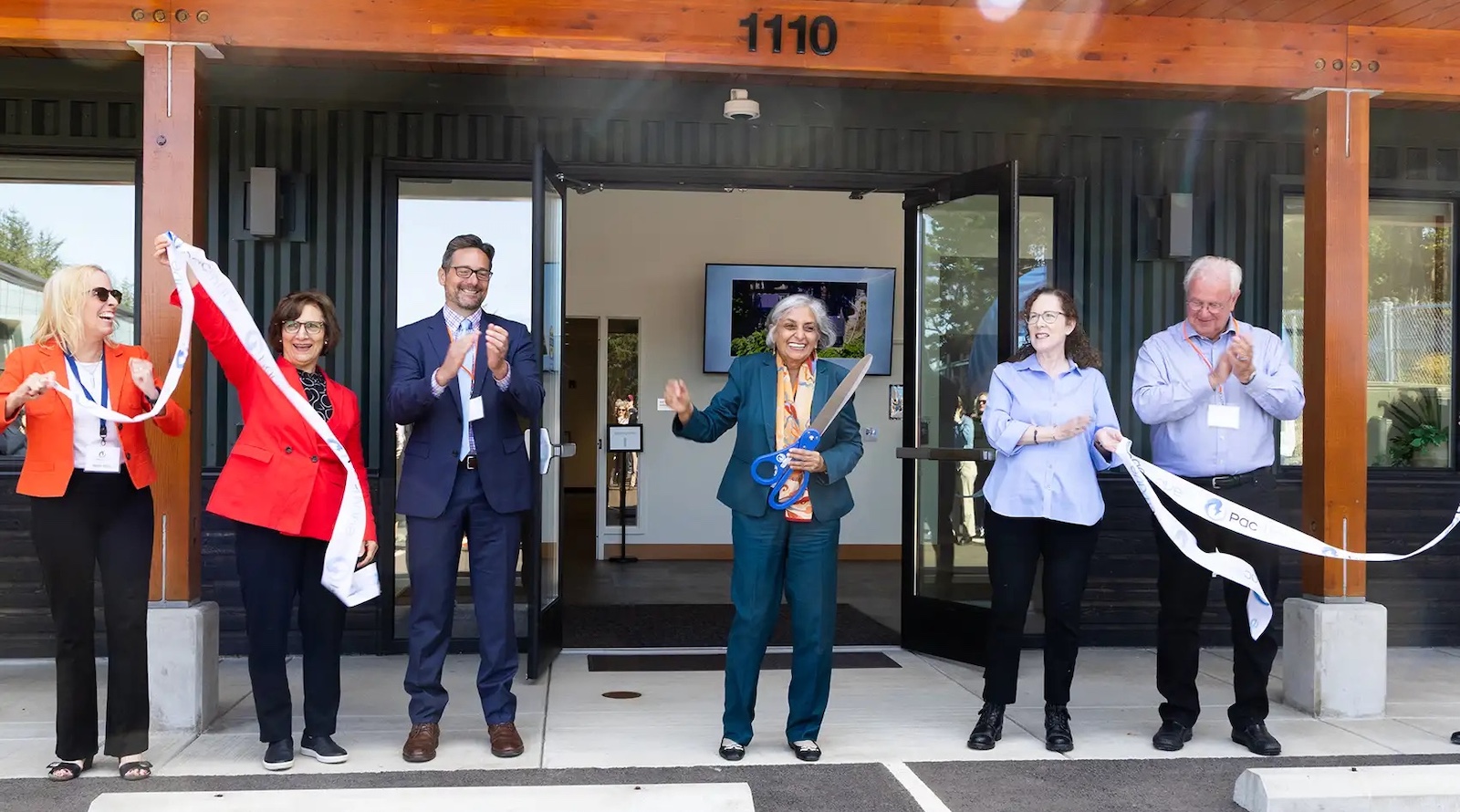
The National Laboratory of the Rockies and Oregon State University officially opened PacWave South on August 27, marking the debut of the nation’s first grid-connected, internationally accredited open-ocean wave energy test facility. The milestone came after 15 years of planning, design, and construction, with support from the U.S. Department of Energy’s Hydropower and Hydrokinetic Office and a consortium of national laboratories, utilities, and research institutions. The facility represents a significant advancement for the emerging marine energy industry.
PacWave South is equipped with four test berths, each featuring a 5-megawatt subsea transmission cable that connects to an onshore utility facility. The site operates under a 25-year Federal Energy Regulatory Commission license and has pre-permitting to accommodate up to 20 wave energy converters simultaneously. When operating at full capacity, the installed devices can transmit up to 20 megawatts of power to the grid. This infrastructure allows developers to test commercial-scale technologies without navigating separate environmental assessments and regulatory requirements independently.
A defining feature of the facility is its international accreditation framework, which the National Laboratory of the Rockies helped establish. By leveraging its ISO/IEC 17025-accredited status and working with the European Marine Energy Centre, the laboratory ensured PacWave meets globally recognized quality control standards. This accreditation enables the facility to generate third-party validated test data that commercial markets and investors trust for product certification.
Developers testing at PacWave South can demonstrate both their devices’ performance in open ocean conditions and their ability to safely transmit power to the electrical grid. While developers generally fund their own testing, opportunities exist to apply for Department of Energy funding support. The facility addresses what industry experts call the commercialization “valley of death”—the challenging transition between laboratory validation and commercial viability that has historically hindered marine energy technology advancement.
Article Attribution | Read More at Article Source
Article summary produced by Claude AI