

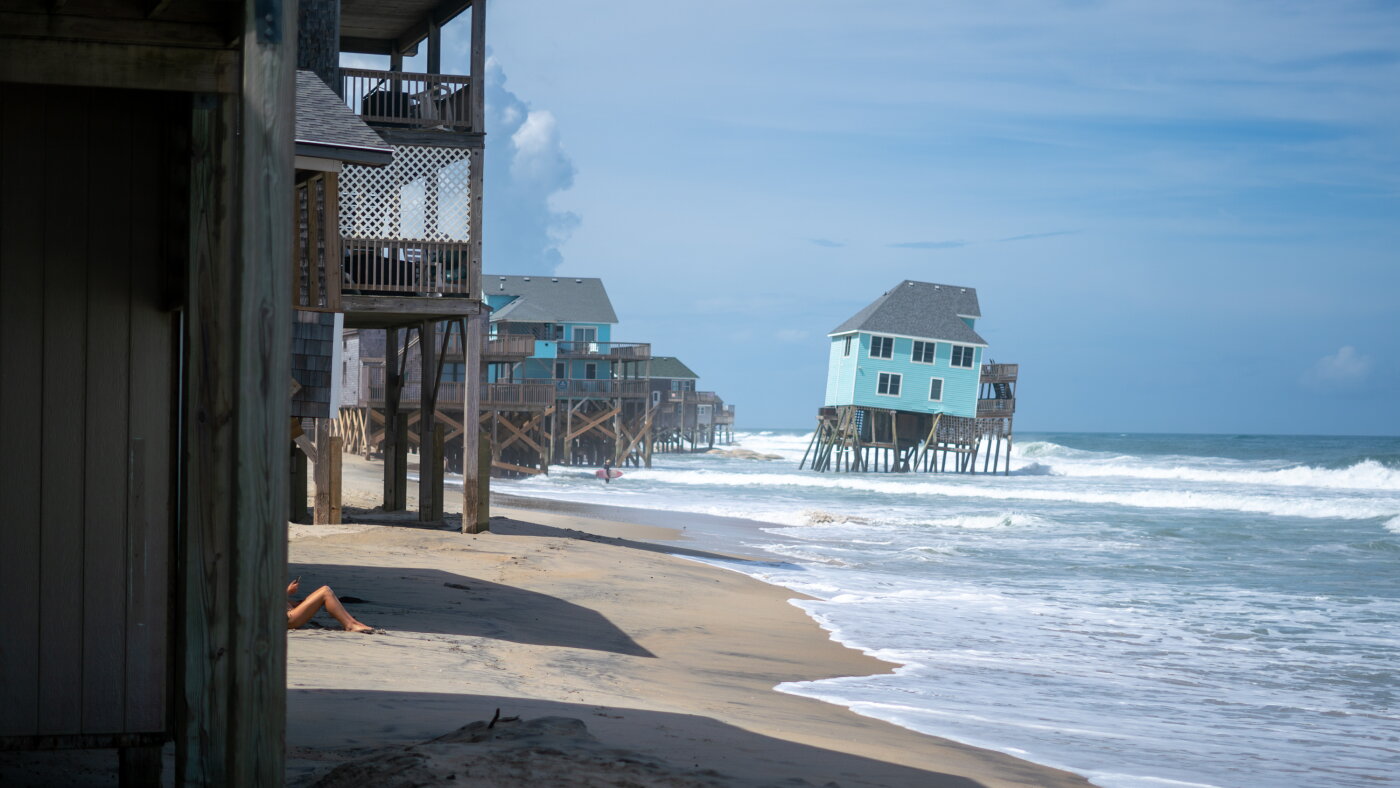
Waterfront communities along the U.S. coast are experiencing accelerating erosion and property loss driven by rising sea levels linked to climate change. In Rodanthe, North Carolina, a home known as Sea ‘n Delight now sits uninhabitable on stilts, stranded between the ocean at high tide and surrounded by sand at low tide. More than 30 homes have collapsed into the sea in coastal North Carolina since 2020, with at least 100 additional properties on the state’s barrier islands facing significant risk from erosion and sea level rise within the next decade, according to the National Park Service.
A structural problem with federal insurance policy has created perverse incentives that discourage preventive demolition. The Federal Emergency Management Agency, which administers most residential flood insurance in the United States, will compensate homeowners after their homes collapse but provides no financial assistance for voluntary removal before collapse occurs. This means property owners who demolish doomed houses voluntarily stand to lose tens or hundreds of thousands of dollars, while those waiting for ocean-induced collapse can receive insurance payouts. Policy analysts and flood insurance professionals note this structure leaves damaged goods and hazardous debris scattered across beaches, with the National Park Service collecting more than 480 tons of home debris in the area over an 18-month period.
The issue extends beyond North Carolina, with coastal erosion threatening neighborhoods in Maine, Massachusetts, Michigan, Illinois, Virginia, and California. Sea level rise is occurring faster on the East Coast than the global average, and the rate continues to accelerate. A bipartisan group of lawmakers introduced legislation in 2025 to address the issue by amending the National Flood Insurance Program, but the bill remains stalled in the House. FEMA has stated it cannot modify insurance rules for threatened properties without congressional action. The agency did not provide information regarding the taxpayer cost of allowing homes to collapse rather than funding preventive removal.
Article Attribution | Read More at Article Source
Article summary produced by Claude AI