

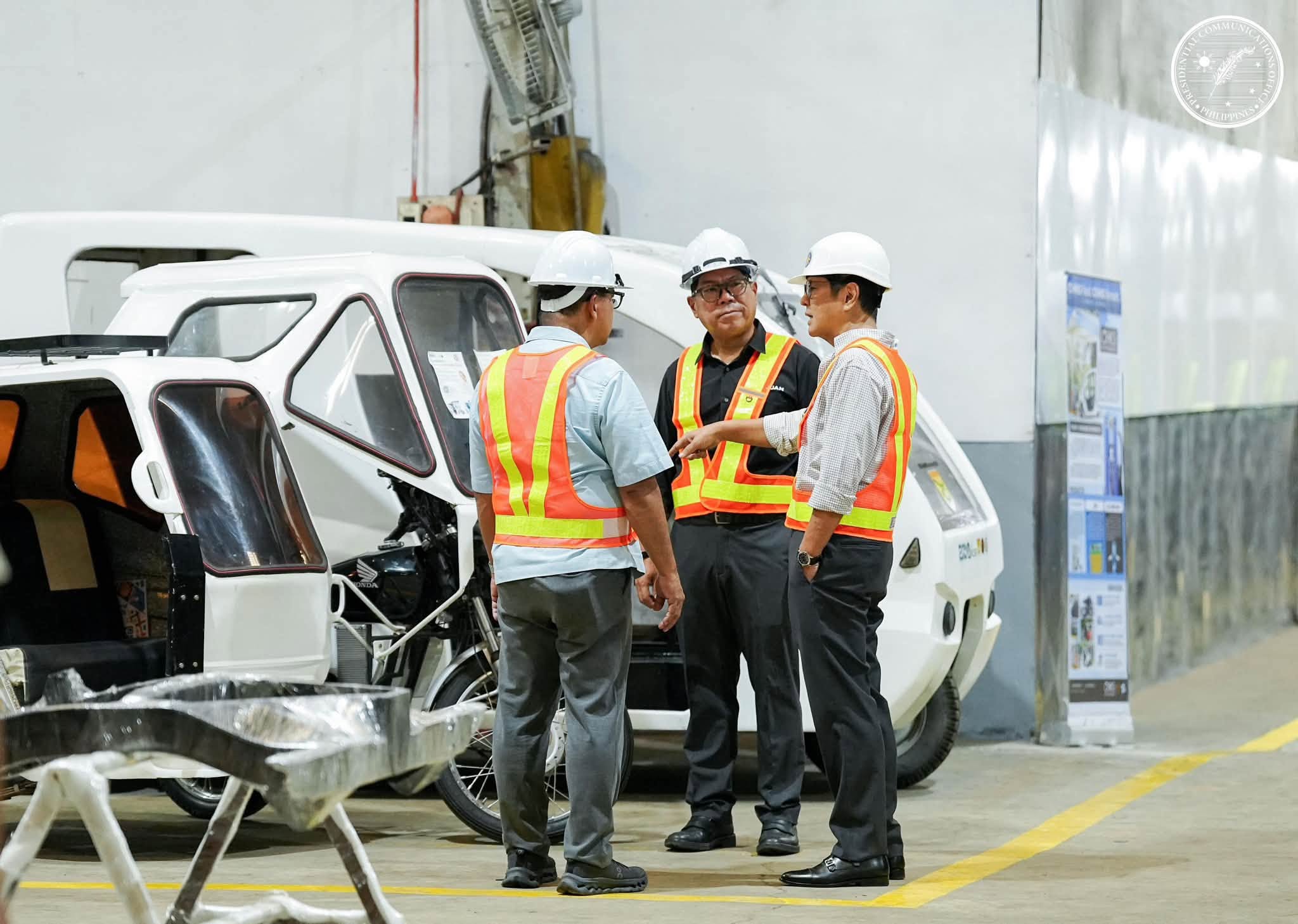
Philippine President Ferdinand Marcos Jr. is advancing a domestic initiative to manufacture electric tricycles and jeepneys locally, with government support aimed at linking industrial manufacturers with electric vehicle technologies developed through academic research. The president visited a manufacturing facility in August to discuss the company’s plans to enter the electric vehicle sector.
The Department of Science and Technology is working to provide equipment and technological resources necessary for local production. Officials noted that one company involved had previously manufactured electric vehicles but ceased operations due to limited market demand. Shifting fuel costs and increased consumer interest in electric transportation have since altered market conditions, prompting renewed efforts in the sector.
Cagayan State University has emerged as a key research partner, with its ElectroMobility Research and Development Center having developed an electric tricycle model and a system for retrofitting conventional vehicles with electric propulsion. The university’s seven-seater electric tricycle prototype costs approximately P600,000 to construct, though government officials indicated production costs would decrease substantially once manufacturing moves to commercial scale, as research and development expenses would be eliminated. The university has also created the C-Trike conversion system, which allows existing tricycles to be converted to electric power for approximately P120,000, providing a lower-cost alternative. Additionally, CSU has developed a battery-swapping system enabling operators to exchange depleted batteries for charged ones rather than waiting for vehicles to recharge.
The government effort represents a broader strategy to reduce petroleum import dependence while supporting public transportation operators. Local production would necessitate establishing supply chains for batteries, motors, controllers and other components. Officials acknowledged that actual commercial pricing would depend on production volume, component sourcing, labor costs and manufacturing efficiency. The administration’s approach connects previously developed research technologies with manufacturing capacity capable of reaching market scale and reducing unit costs for Philippine transportation markets.
Article Attribution | Read More at Article Source
Article summary produced by Claude AI