

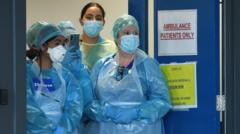
The Covid inquiry has concluded that significant failures in personal protective equipment management during the pandemic left NHS staff and patients at elevated risk while resulting in substantial financial waste. The inquiry’s chair, Baroness Hallett, identified approximately £9.9bn in wasted procurement costs out of the £14.9bn the government allocated specifically for PPE. When accounting for home testing kits and other medical equipment such as ventilators, total government expenditure between January 2020 and June 2022 exceeded £42bn.
The inquiry found that the UK’s emergency stockpile of PPE, designed to provide at least 15 weeks of supply before requiring replenishment, had deteriorated significantly by the pandemic’s onset. Only one-third of masks held in England’s stockpile were deemed usable, while Scotland possessed no high-grade respiratory masks suitable for hospital use. Care homes, general practitioner surgeries, and pharmacies were expected to source their own PPE during the crisis, a situation the report characterized as a major planning failure. Across the UK, approximately £9.9bn in PPE was ultimately written off due to being unused or expired, along with £157m in unused healthcare equipment.
The inquiry examined the controversial high priority lane, an expedited procurement pathway introduced in April 2020 that fast-tracked PPE offers accompanied by recommendations from ministers, members of Parliament, peers, or senior officials. Baroness Hallett criticized this approach as a misguided prioritization method that embedded unfairness into emergency procurement processes. However, the inquiry found no evidence of cronyism or corruption by ministers or officials in awarding final contracts. Certain suppliers received preferential treatment due to political connections, which the report stated undermined public trust at a critical time. The inquiry explicitly concluded that the high priority lane should not have been established and must not be repeated.
The inquiry’s recommendations include a comprehensive overhaul of emergency PPE procurement and distribution systems, development of a domestic industry strategy treating critical healthcare equipment as a strategic national asset, and improvements to the pandemic stockpile maintained in Merseyside. Government officials acknowledged the report presented difficult findings and committed to carefully reviewing the recommendations.
Article Attribution | Read More at Article Source
Article summary produced by Claude AI