

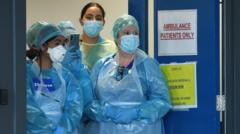
The Covid inquiry has concluded that substantial failures in personal protective equipment procurement and supply left National Health Service staff and patients exposed to unnecessary risk during the pandemic. The investigation determined that of the £14.9bn the government spent on PPE, approximately £9.9bn was wasted through inefficient purchasing practices. Additionally, when accounting for home testing kits and other medical equipment such as ventilators, total government expenditure between January 2020 and June 2022 exceeded £42bn.
The inquiry found that the UK entered the pandemic with a severely depleted stockpile of masks, gowns, and gloves, leaving the nation unprepared for global competition to secure supplies. By the end of March 2020, the emergency stockpile—intended to sustain at least 15 weeks of use before replenishment—was becoming exhausted as hospital demand surged. Only a third of masks held in England’s pandemic stockpile were found to be usable, while Scotland maintained no supplies of high-grade respiratory masks for hospital use. Care homes, general practitioner surgeries, and pharmacies were expected to secure their own equipment, which the report characterized as a significant planning failure.
The inquiry identified a “high priority lane” established in April 2020 as a misguided prioritization mechanism. This system expedited PPE contract awards when offers were accompanied by recommendations from ministers, MPs, members of the House of Lords, or other senior officials. While the government justified the approach as necessary given urgent supply requirements, the inquiry criticized it as embedding unfairness into emergency procurement and undermining public trust. The chair, Baroness Hallett, stated the system should not be repeated but noted finding no evidence of cronyism or corruption in final contract awards by ministers or officials.
Government contingency plans had never undergone stress testing, forcing officials to establish emergency procurement and distribution systems within days. The UK ultimately wrote off £9.9bn in unused or expired PPE and £157m in unused healthcare equipment. Across the devolved nations, Scotland documented £8m in write-offs, Wales £18m, and Northern Ireland £43m of masks, gowns, and gloves at risk of expiry. The inquiry recommended a radical overhaul of emergency procurement systems, development of a domestic industry strategy treating healthcare equipment as a strategic national asset, and improvements to the pandemic stockpile facility in Merseyside.
Article Attribution | Read More at Article Source
Article summary produced by Claude AI