

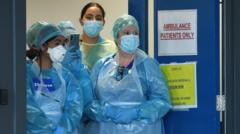
The Covid inquiry has concluded that the United Kingdom’s pandemic response was hampered by significant failures in personal protective equipment procurement and stockpiling. The chair, Baroness Hallett, found that the national PPE stockpile entered the pandemic in poor condition and proved inadequate as hospitals faced surging demand. By late March 2020, supplies were depleted, with only one-third of masks in England’s stockpile remaining usable, while Scotland possessed no high-grade respiratory masks for hospital use.
The government’s overall spending on PPE, home testing kits, and equipment including ventilators between January 2020 and June 2022 exceeded £42bn. However, the inquiry determined that £9.9bn of the £14.9bn spent specifically on PPE was wasted through poor procurement decisions. An additional £157m was written off for unused healthcare equipment, while the ventilator challenge programme, which sought to rapidly develop breathing equipment, resulted in £143m in charges for designs never put into production. Across the devolved nations, substantial sums were also squandered: Scotland wrote off approximately £8mn in healthcare equipment, Wales spent £18m on unused PPE, and Northern Ireland had £43m in masks, gowns, and gloves at risk of expiry.
The inquiry criticized the controversial high priority lane, established in April 2020, as a misguided attempt at prioritization that gave favorable treatment to suppliers with connections to government officials. Baroness Hallett stated the lane “embedded unfairness in emergency procurement” and should never be repeated, though she found no evidence of cronyism or corruption by ministers when contracts were ultimately awarded. A section of findings involving PPE Medpro, a firm linked to businessman Doug Barrowman and Baroness Michelle Mone, was withheld pending criminal investigation conclusions.
The inquiry recommended a comprehensive overhaul of emergency PPE procurement and distribution systems, development of a domestic industry strategy treating healthcare equipment as a strategic national asset, and improvements to the pandemic stockpile held in Merseyside. While acknowledging that purchasing excess PPE was preferable to shortages, the report concluded that better advance planning would have produced fairer, faster, and more cost-effective outcomes.
Article Attribution | Read More at Article Source
Article summary produced by Claude AI