

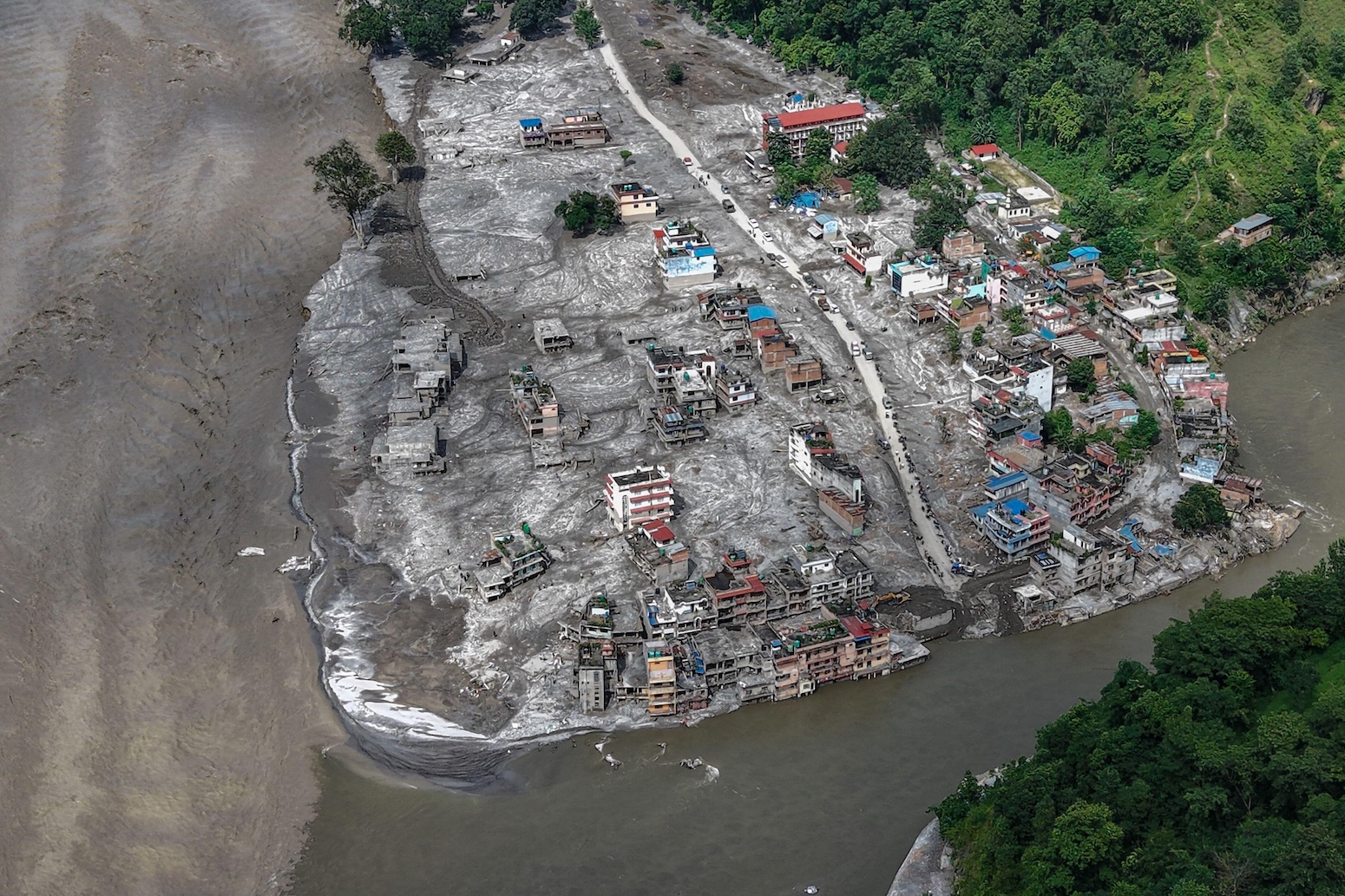
A catastrophic flooding event struck the Nepal-Tibet border region in late August, resulting in significant loss of life and destruction of infrastructure across multiple communities. The disaster originated when a large mass of bedrock, along with overlying glacier ice, detached from Langtang-Lirung mountain at approximately 5,200 meters elevation and descended to the valley floor. The impact created a debris flow that interacted with the Lhende Khola river system, generating an initial surge of water and rock material that traveled at speeds approaching 30 kilometers per hour downstream.
Initial investigations identified the event as a “multi-hazard cascade” rather than a simple glacial collapse as originally reported. The bedrock failure proved to be the primary trigger, with the overlying glacier becoming entrained in the debris flow as a secondary element. The resulting floodwaters devastated settlements, infrastructure, and hydropower facilities across Nepal and the Chinese region of Tibet. Subsequent barrier lake formations and subsequent outburst floods extended the hazard period over several days, with additional flooding occurring after the initial event.
The economic toll proved substantial, with authorities estimating property and infrastructure losses exceeding $2.5 billion. Reconstruction efforts encompassing roads, shelters, water systems, and power restoration presented significant challenges for affected regions. The floodwave’s exceptional speed, sediment load, and scale distinguished it as an extreme hydrological event, with documented water level rises of nine meters occurring within thirty-minute intervals in some locations.
Regarding climate change’s potential role, scientists acknowledged that formal attribution studies had not yet been completed. However, researchers identified warming-related factors including permafrost thaw, glacier retreat, and glacial thinning as conditions that may have contributed to increased susceptibility to such events. A subsequent rapid analysis indicated that permafrost degradation and glacial thinning represented key contributing factors. Experts noted that bedrock failures of this nature were becoming increasingly common occurrences in high-mountain regions undergoing rapid warming, though the specific trigger mechanisms for individual events remain subjects of ongoing investigation.
Article Attribution | Read More at Article Source
Article summary produced by Claude AI