

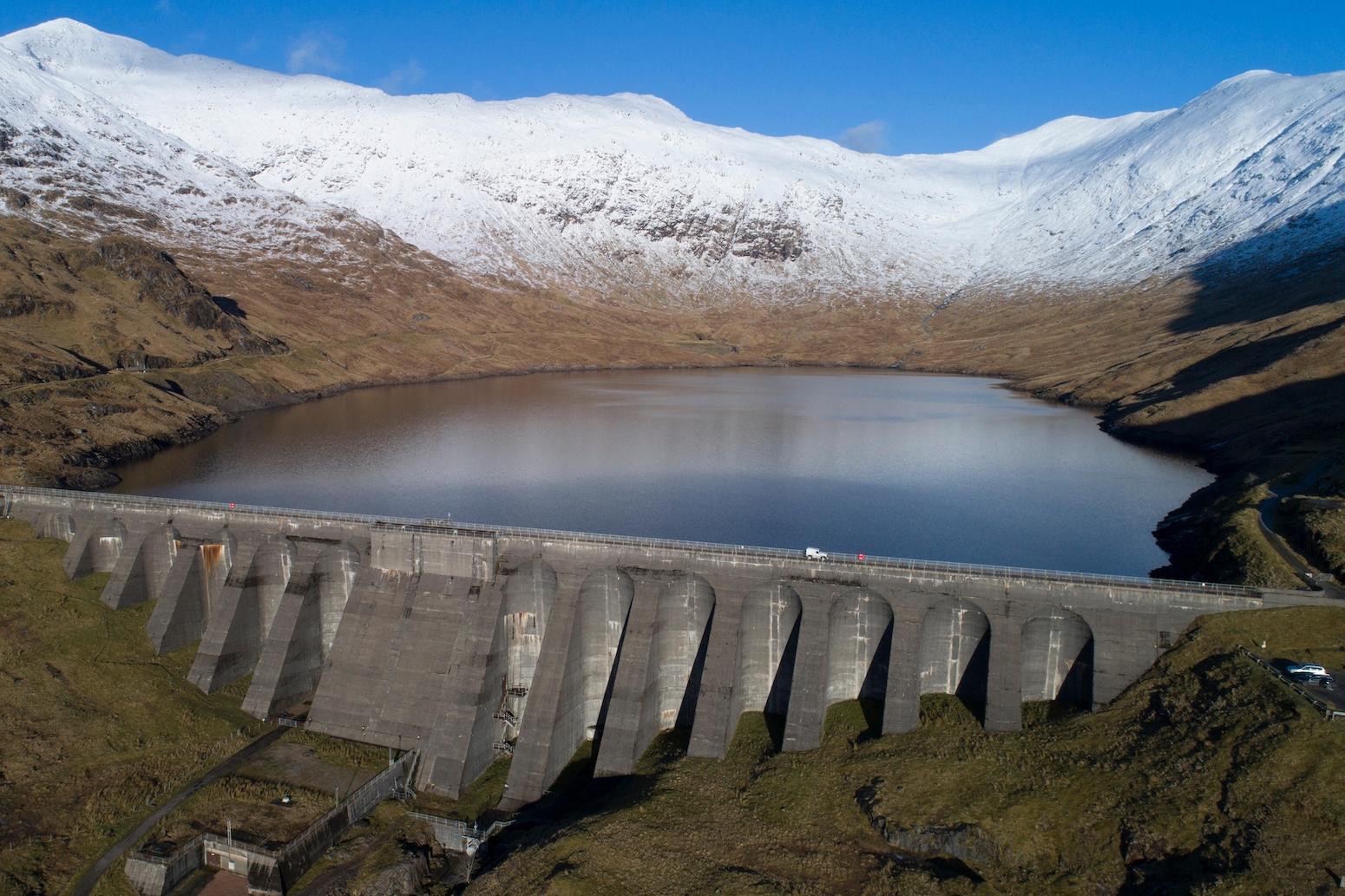
Long-duration energy storage (LDES) represents a category of technologies designed to store electrical energy over extended periods, addressing a critical need as the UK transitions toward net-zero emissions. Unlike conventional batteries that operate for a matter of hours, LDES systems can maintain energy reserves for days, weeks, or even longer periods, helping to manage extended gaps in renewable generation. Such extended low-output periods, known colloquially by the German term “dunkelflaute” or “dark doldrums,” occur when neither wind nor sunshine produces adequate power.
The UK government and energy regulator Ofgem have defined LDES with slightly varying parameters, though the government’s threshold extends from four hours to years of storage capability, while Ofgem uses an eight-hour minimum. Current LDES capacity in Great Britain totals 2.8 gigawatts, primarily composed of four pumped-hydro installations in Scotland and Wales. The Dinorwig power station in North Wales, opened in the 1980s, remains the largest facility at 1,728 megawatts and has been instrumental in managing sudden electricity demand fluctuations.
Ofgem has identified 16 LDES projects for potential support through a new “cap-and-floor scheme.” These projects employ diverse technological approaches, including pumped hydro, large-scale lithium-ion batteries, flow batteries with innovative chemistry, and compressed-air storage systems. A notable recent development occurred earlier this summer when the UK’s largest vanadium flow battery facility opened in Uckfield, East Sussex, capable of storing 21 megawatt-hours alongside a 3-megawatt solar installation.
The expansion and diversification of LDES technologies serve multiple functions within the electricity grid, from managing short-term demand surges to utilizing surplus renewable generation and providing seasonal flexibility. Energy storage technologies generally fall into four categories: mechanical systems like pumped hydro, thermal approaches using heated materials, chemical storage such as hydrogen production, and electrochemical batteries. Modeling experts indicate that wind-driven renewable systems particularly benefit from LDES capacity to manage variable output patterns. Analysts project that expanding LDES infrastructure could reduce UK energy system costs by more than £24bn between 2030 and 2050.
Article Attribution | Read More at Article Source
Article summary produced by Claude AI