

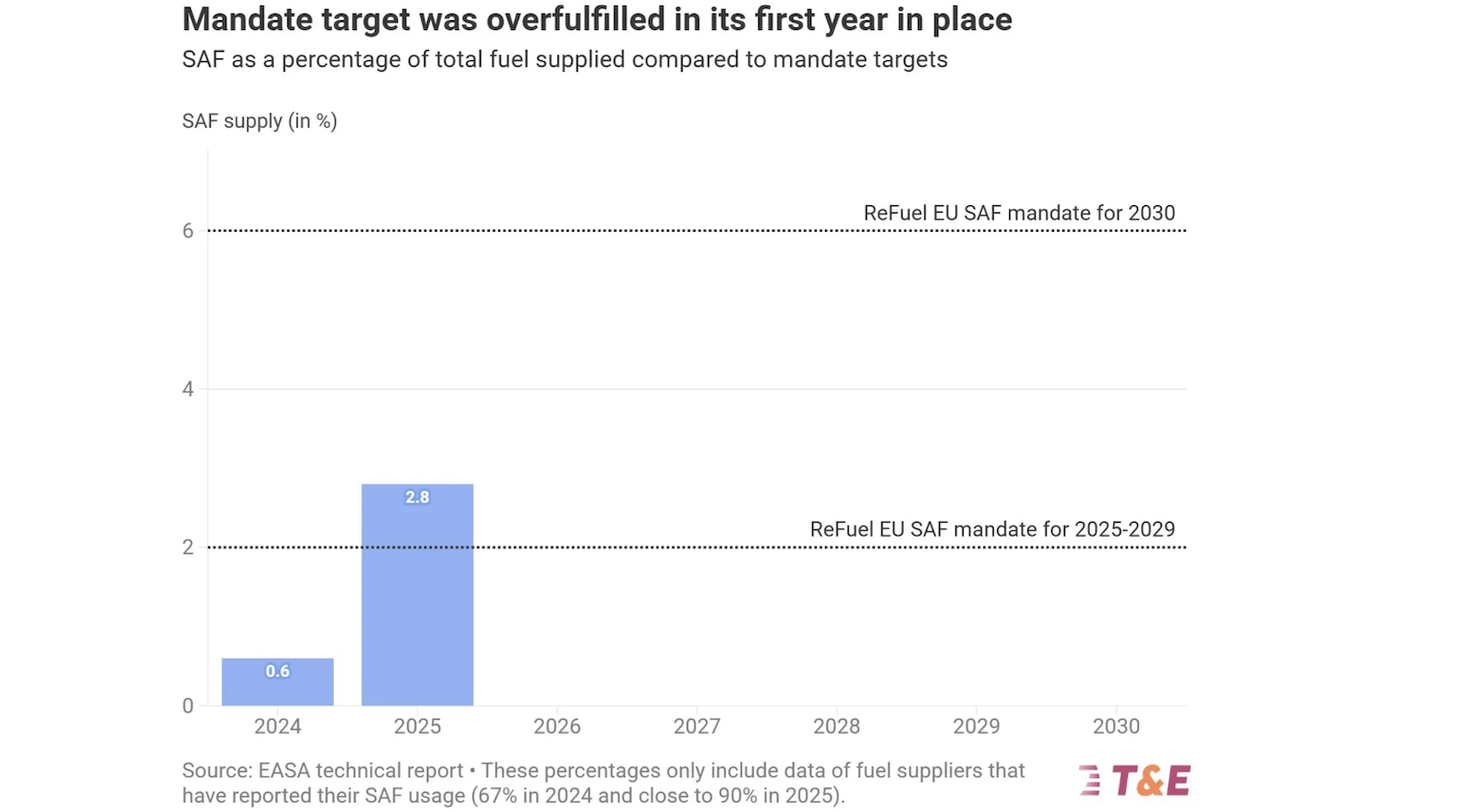
The European Union Aviation Safety Agency released its first comprehensive report on the ReFuelEU Aviation regulation, covering 2025 data since the mandate’s implementation began. The results indicate that the EU’s mandatory SAF targets are effective, with approximately 1.1 million tonnes of sustainable aviation fuel supplied at European airports during the period, representing 2.8% of total aviation fuel compared to the 2% requirement and a substantial increase from 0.6% the previous year.
However, the report reveals structural vulnerabilities in Europe’s supply chain. The vast majority of SAF continues to derive from hydroprocessed esters and fatty acids using waste oils and fats, with used cooking oil dominating at roughly 80% of supply. Category 3 animal fats account for around 11% of production, while palm oil mill effluent comprises approximately 6%. This concentration on waste-based feedstocks presents sustainability concerns, including fraud risks in used cooking oil sourcing and the potential to displace emissions rather than reduce them overall.
A critical geographic concern emerges from import dependency. While 84% of SAF refining occurs within the EU, 85% of feedstocks originate outside Europe, up significantly from 69% previously, with China serving as the primary source. This external reliance contradicts a credible long-term decarbonization strategy for aviation.
The report identifies a more pressing gap: the complete absence of commercial-scale synthetic aviation fuel investment. Despite roughly 60 e-SAF projects under development across Europe, none has reached a final investment decision. Industry analysis suggests all credible projects must materialize soon to meet forthcoming synthetic fuel targets.
Recommendations include maintaining the regulatory framework and e-SAF sub-targets to provide investor confidence, implementing de-risking mechanisms such as double-sided auctions to move projects toward production, and diversifying SAF sources beyond imported waste materials through policy measures like phasing out EU emissions trading system support for used cooking oil-based SAF.
Article Attribution | Read More at Article Source
Article summary produced by Claude AI