

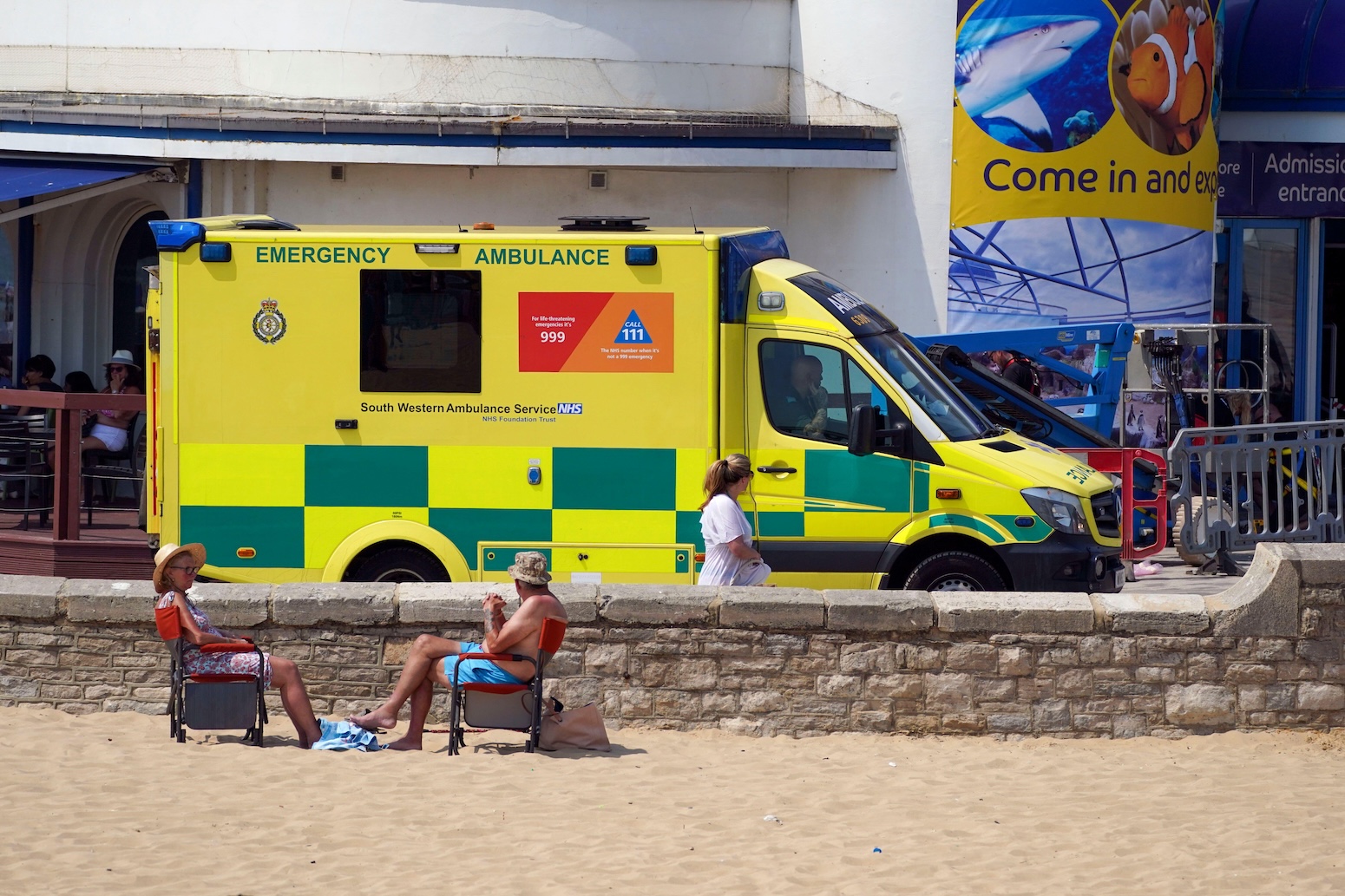
England’s National Health Service ambulance services faced unprecedented demand during a record-breaking heatwave in June, according to data obtained through freedom-of-information requests by Carbon Brief. Temperatures climbed above 37 degrees Celsius in parts of the country, prompting authorities to declare only the second ever red extreme heat warning. Between 23 and 27 June, four of the ten NHS ambulance services in England, including London’s, responded to the highest numbers of life-threatening emergencies on at least one day during that period. Two additional services, operating in the south-west and east regions, recorded their highest overall 999 call volumes since records began.
The strain on emergency services during this period exceeded levels typically seen during winter months in previous years and even surpassed demand witnessed during the height of the Covid-19 pandemic for many services. On 26 June, the busiest day of the heatwave, ambulances across England responded to 4,084 life-threatening emergencies, compared to an average daily volume of approximately 2,500 during summer months. Researchers estimated nearly 3,000 heat-related deaths occurred in the UK during the summer. Extreme heat conditions increase the risk of various life-threatening medical conditions, including heart disease and respiratory problems, with vulnerable populations such as older people, young children, and pregnant individuals facing heightened risk.
The data demonstrates a significant shift in seasonal ambulance demand patterns. Historically, winter months have been busier for emergency services due to cold weather and seasonal illnesses. However, the June heatwave data shows that extremely hot days are beginning to match or exceed winter demand levels. While general demand for ambulance services has been rising for years due to factors including an aging population and more complex health conditions, the heatwave spike represents an exceptional event. Beyond the immediate crisis, 2026 is tracking as a record year overall for ambulance demand. Ambulance workers themselves faced additional pressures, with unions noting crews worked in stifling conditions with inadequate air conditioning while managing back-to-back emergency calls.
Article Attribution | Read More at Article Source
Article summary produced by Claude AI