

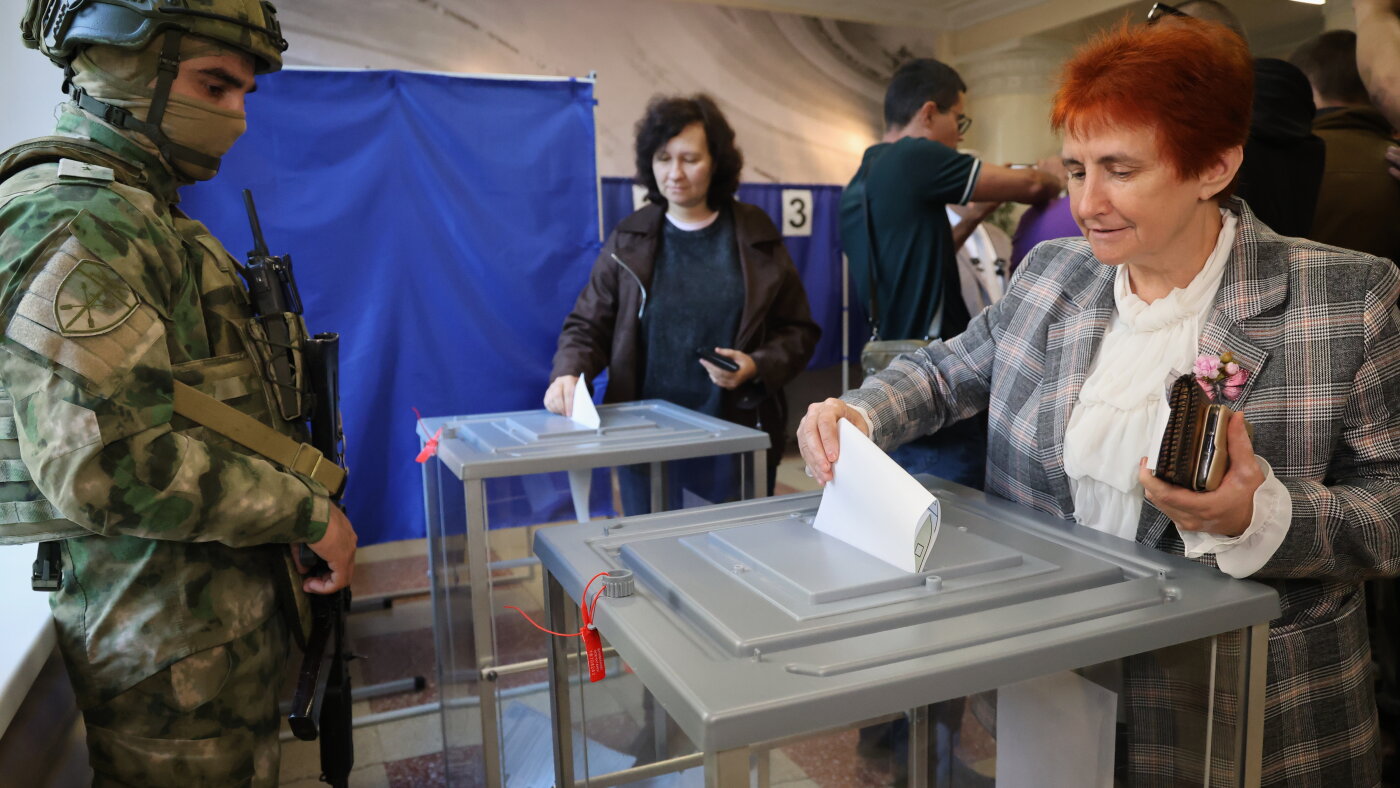
Russia conducted its parliamentary election with balloting that extended across multiple days, with voting beginning Friday and continuing through Sunday in most regions. However, residents of territories Moscow annexed from Ukraine—specifically the Donetsk, Luhansk, Kherson, and Zaporizhzhia regions—had already been voting since the end of last month, with authorities citing security considerations for the extended timeframe. The four territories, which Moscow refers to as the “new regions,” contain over 3.5 million registered voters. The Kremlin also included Crimea, the Black Sea peninsula annexed in 2014, in the parliamentary voting process.
Russian President Vladimir Putin characterized the election as a significant moment for territories he described as recently reunified with Russia, emphasizing that the voting would demonstrate public support for ongoing military operations. He further noted that soldiers engaged in combat would also participate in the electoral process. The Kremlin framed the election as a means to consolidate political dominance and validate its military activities.
Ukrainian authorities rejected the legitimacy of the voting entirely, calling it a violation of international law and urging their citizens not to participate. A coalition of nine Ukrainian human rights organizations issued statements warning residents of Russian-controlled territories about potential consequences of involvement in the electoral process. Officials in Kyiv also cautioned foreign governments and international bodies against recognizing the election results.
Human rights monitors documented accounts of coercive voting practices in occupied territories, including reports that election commission members, accompanied by Russian military personnel and security forces, visited residents to compel participation. Concerns were raised about pressure on public sector employees and conditions linking social assistance to voting participation. The European Commission formally declared the voting “a blatant violation of international law” and stated the European Union would not recognize either the elections or their results. Political analysts characterized the process as fundamentally incompatible with democratic standards given the military context and reported pressure tactics employed.
Article Attribution | Read More at Article Source
Article summary produced by Claude AI