

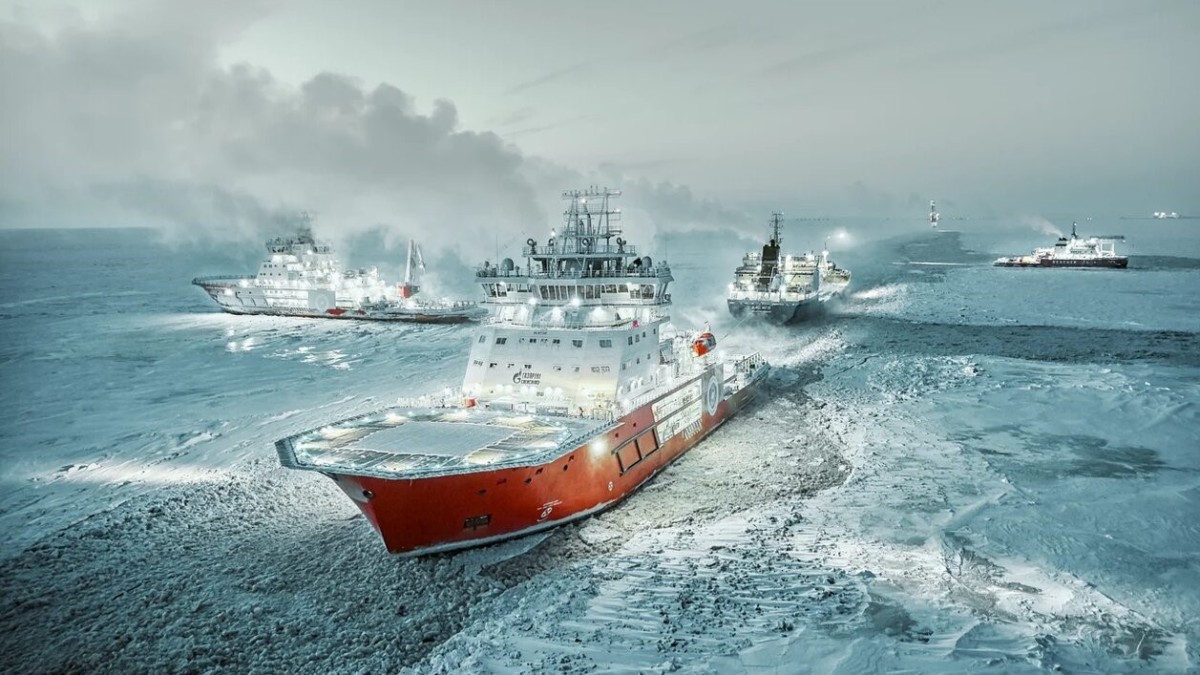
Russia’s Northern Sea Route is positioning itself as a critical pathway for energy exports as geopolitical and commercial pressures reshape Eurasian trade flows. The route, extending approximately 5,600 kilometers along Russia’s Arctic coast from the Kara Strait to the Bering Strait, offers significant time and distance advantages compared to traditional alternatives. A voyage from Murmansk to China’s eastern coast covers roughly 6,400 kilometers in approximately 20 days via the Arctic, compared with 12,400 kilometers and around 39 days via the Suez Canal. The route operates entirely within Russian jurisdiction and bypasses international chokepoints, providing Moscow with direct control over export infrastructure and operations.
The acceleration of Arctic shipping is being driven by Europe’s January 2027 ban on Russian liquefied natural gas, which is compelling Moscow to redirect energy flows toward Asian markets more rapidly than previously planned. Arctic LNG 2, a major production facility on the Gydan Peninsula designed to output 19.8 million tonnes annually, has emerged as a cornerstone of this strategy. Year-to-date traffic through the route already exceeds previous annual volumes, with 41 cargoes totaling approximately 3.1 million tonnes loaded so far. Russia is supporting expanded capacity through domestic shipbuilding initiatives, including the construction of Arctic-capable LNG carriers at the Zvezda shipyard, which has localized production capabilities previously dependent on South Korean suppliers.
Yamal LNG, which historically supplied European markets under long-term contracts, is increasingly redirecting eastbound shipments through the Arctic. Approximately 500,000 tonnes sailed eastward through the route in August 2026, compared with 350,000 tonnes in the same month the previous year. Beyond liquefied natural gas, crude oil traffic is diversifying the route’s cargo base. Various crude streams from fields operated by Gazprom Neft and occasional shipments from Primorsk and Ust-Luga are being routed through the Arctic to Asian destinations, with frequency increasing notably.
Rosneft’s Vostok Oil project represents the potential for substantially expanded Arctic shipping volumes. The development covers 52 license areas and 13 fields with estimated reserves exceeding 48 billion barrels, positioning it as Russia’s largest new production source in the 2020s. The crude is characterized as light and sweet, potentially commanding quality premiums. From anticipated production facilities, crude would likely be transported eastward through the Northern Sea Route during the primary shipping season from July through October.
Operational constraints remain significant. The route’s navigability is seasonal, with concentrated traffic occurring between June or July and October, though warming conditions and improved vessel capabilities are gradually extending the operational window. Fleet shortages and dedicated tanker availability have constrained capacity utilization, though specialized Arc7-class carriers and floating storage and regasification units are enabling more efficient logistics patterns, including shorter voyages and transfer operations near Kamchatka and Murmansk.
Article Attribution | Read More at Article Source
Article summary produced by Claude AI