

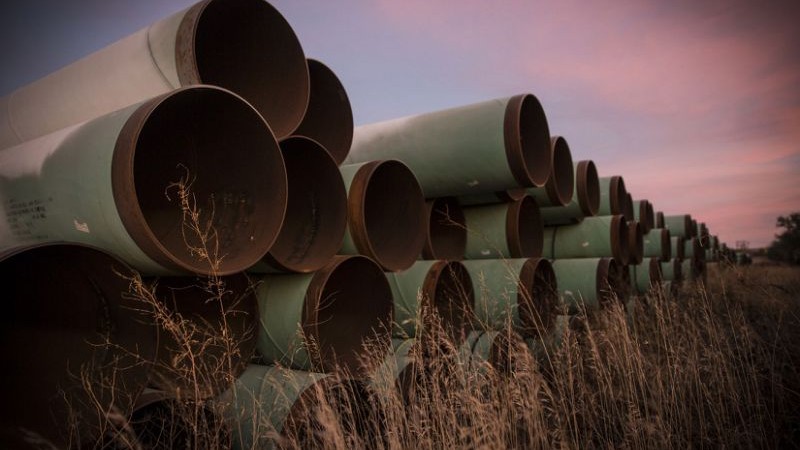
A temporary closure of Saudi Arabia’s East-West pipeline has compounded existing supply pressures in global oil markets already affected by six months of Middle East disruptions. The pipeline, which operates as a bypass to the Strait of Hormuz, was attacked on September 10, with initial assessments underestimating the damage. Revised satellite imagery and industry sources now indicate three pumping stations sustained damage rather than two, with repair timelines estimated between five to six weeks, though partial operations could resume sooner.
Before the attack, the pipeline was transporting between 4 million and 5 million barrels per day, representing approximately 4-5% of global oil supply. The system has a total capacity of around 7 million barrels per day. Saudi Aramco is attempting to restore roughly half the pipeline’s capacity within days through infrastructure workarounds, with complete restoration potentially requiring six weeks. The outage prompted Brent crude prices to surge to around $108 per barrel earlier in the week as traders assessed the loss of a major Middle Eastern export route that does not depend on Hormuz passage.
The pipeline shutdown has exposed supply vulnerabilities that alternative infrastructure was designed to mitigate. Crude inventories at Yanbu, the Red Sea export hub, provide limited buffering capacity, having declined nearly 6 million barrels over two months to approximately 15 million barrels. This represents roughly four days of theoretical supply at reduced throughput levels. Paradoxically, the pipeline outage has forced Saudi Arabia to increase reliance on the Hormuz waterway it sought to bypass, with spot market sales of up to 20 million barrels arranged for ship-to-ship transfers outside the Persian Gulf.
Physical crude and refined product markets are showing acute stress signals. Commodity analysts indicate that while Brent prices near $110 signal considerable strain, Dated Brent above $130 and diesel prices exceeding $200 provide clearer indicators of immediate scarcity. Diesel shortages are particularly acute, with U.S. prices reaching record levels despite the nation being a major net exporter of distillates, as global shortages pull American inventory into international markets. These energy price increases are contributing to inflationary pressures, prompting the Federal Reserve to raise its benchmark interest rate this week for the first time since 2023.
Article Attribution | Read More at Article Source
Article summary produced by Claude AI