

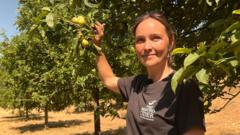
Somerset’s cider industry is facing a significant crisis as extended drought conditions have damaged orchards across the region. Multiple producers reported dramatic reductions in apple yields, with some orchards producing as little as 10 percent of their normal harvest. The stress on trees from consecutive dry years has led to widespread early fruit drop and rot, rendering much of what does grow unsuitable for processing.
At established operations, the impact has been substantial. One major producer typically harvesting 20 to 30 tonnes reported almost no usable fruit this season, while neighboring suppliers normally yielding 200 tonnes fell to approximately 30 tonnes. A farm manager responsible for over 1,000 acres noted that roughly half his apples dropped prematurely due to drought stress, with remaining fruit rotting before ripening. Despite strong consumer demand for cider during the hot weather, producers lack sufficient fresh fruit to maintain production levels and replenish inventory stocks.
Climate scientists indicate this represents a shifting baseline rather than an isolated event. Meteorological experts note that conditions previously considered extreme weather are increasingly becoming normalized patterns. Cider growers face mounting pressure to adapt agricultural practices, including irrigation systems traditionally employed by eating apple producers. However, irrigation at the scale required for extensive cider orchards presents economic challenges for an industry operating on narrower profit margins than fresh apple production.
Beyond yield concerns, climate change threatens the fundamental character of regional cider. Certain traditional apple varieties essential to Somerset cider’s distinctive flavor profile, particularly Dabinett, require cold winter periods that recent seasons have not provided. Producers are beginning to graft alternative varieties better suited to warmer, drier conditions onto established trees, potentially altering the taste profile that has defined West Country cider for generations. Industry observers acknowledge that adaptation strategies will require significant rethinking of long-established growing practices and economic models.
Article Attribution | Read More at Article Source
Article summary produced by Claude AI