

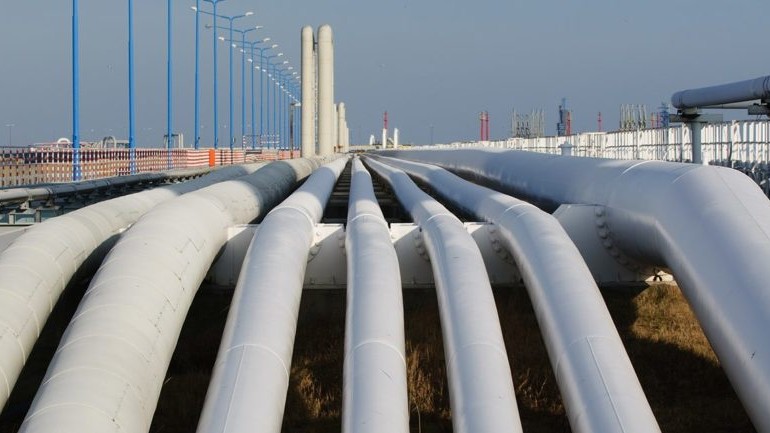
The Houthis have taken control of strategic positions along the Red Sea, including the port of Mokha and Perim Island at the Bab el-Mandeb Strait, positioning themselves to threaten one of the world’s most critical shipping corridors. This development occurs as the Strait of Hormuz already faces severe disruption, forcing Saudi Arabia to rely more heavily on alternative pipeline infrastructure. When the Saudi East-West pipeline was subsequently attacked, it illustrated a structural pattern in global energy markets: as one transit route becomes dangerous, alternatives are developed, only to become targets themselves. This creates an expanding network of vulnerable infrastructure that must be defended across unstable borders.
Energy markets have historically treated each geopolitical disruption as an isolated incident, but a pattern of repeated crises has emerged. Europe’s decades-long dependence on inexpensive Russian pipeline gas ended in crisis during 2022, prompting a shift toward US liquefied natural gas. While this diversification provided essential relief, it did not eliminate dependency itself. Recent trade frameworks show how energy purchases become leverage points in broader negotiations, demonstrating that reliance on foreign suppliers confers strategic power regardless of whether suppliers are currently friendly. The structural reality remains unchanged: those controlling fuel supplies needed daily acquire influence over consumer economies.
The current energy vulnerability is not a failure of foresight. The 1973 Arab oil embargo, the Iranian Revolution, conflicts in the Gulf, and more recent attacks on Saudi facilities have repeatedly exposed the risks of fossil fuel dependence over the past half-century. Approximately 20 million barrels of oil per day currently pass through Hormuz, representing roughly one-fifth of global petroleum consumption. Rerouting through alternative passages adds weeks of transit, increases fuel consumption, and raises insurance and freight costs. Strategic reserves and alternative supply sources provide buffers against immediate shortages, but these measures deplete over time and do not fundamentally alter the dependency model.
Electrification of transport and heating systems offers a structural solution to this vulnerability. Electric vehicles operate independent of specific shipping routes, while heat pumps eliminate the requirement for regular fuel deliveries. Renewable energy generation embeds production capacity in fixed infrastructure rather than relying on consumable flows. The European Commission estimates that accelerated clean-energy deployment could reduce the EU’s fossil-fuel import bill by 130 billion euros annually by 2030. However, this transition introduces a new dependency risk: China is projected to supply over 60 percent of refined lithium and cobalt by 2035, along with approximately 80 percent of battery-grade graphite and rare earth elements. Europe must therefore pursue renewable deployment while simultaneously avoiding concentration of mineral supply chains in any single foreign supplier.
Article Attribution | Read More at Article Source
Article summary produced by Claude AI