

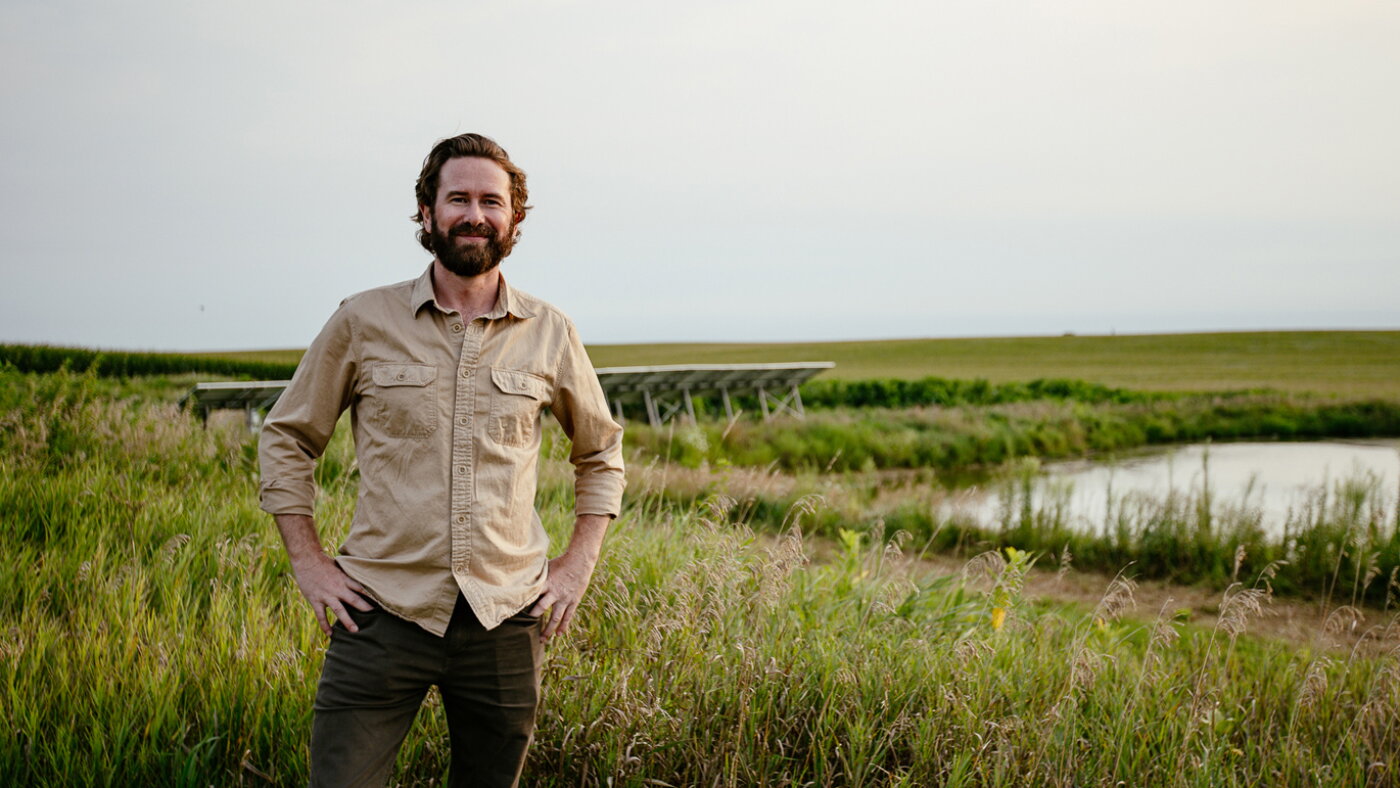
The Faaborg family farm in central Iowa has shifted its operations from concentrated animal feeding to specialty mushroom cultivation. The operation, called 1100 Farm, is named after the number of hogs that each of two barns previously housed. The family now produces mushrooms that are sold as tinctures, coffee blends, and flavored salts, with production taking place in retrofitted pig barns.
The Transfarmation Project, an initiative of the charitable organization Mercy for Animals, provided technical and financial assistance for the transition. The project helps industrial animal farmers convert to sustainable agricultural practices, including mushroom growing, diversified vegetable production, and agroecology. Transfarmation offers online resources, expert networks, and open-source blueprints for converting existing industrial barns into facilities for alternative crops.
The Faaborgs recently completed conversion of half of one 200-foot-long hog barn this summer and plan to scale up production following a successful pilot phase. The farm serves as Transfarmation’s second demonstration hub in the United States, designed to showcase viable alternatives to industrial animal farming. A Transfarmation representative indicated the Faaborgs are receiving $216,000 over a four-year contract period for tracking production data and sharing operational information with other farmers in the program.
The family’s background illustrates the pressures driving farm consolidation. The Faaborgs initially homesteaded on their 25-acre property acquired in the 1980s. When early efforts to raise market hogs for supplemental income proved unprofitable, they adopted contract feeding arrangements, which are central to concentrated animal feeding operations. The farm eventually borrowed $400,000 to construct two specialized hog barns. Data from Transfarmation indicates that farms transitioning to specialty crops can achieve profitability, with the organization providing estimated budgets for operations growing strawberries, tomatoes, and microgreens.
Article Attribution | Read More at Article Source
Article summary produced by Claude AI