

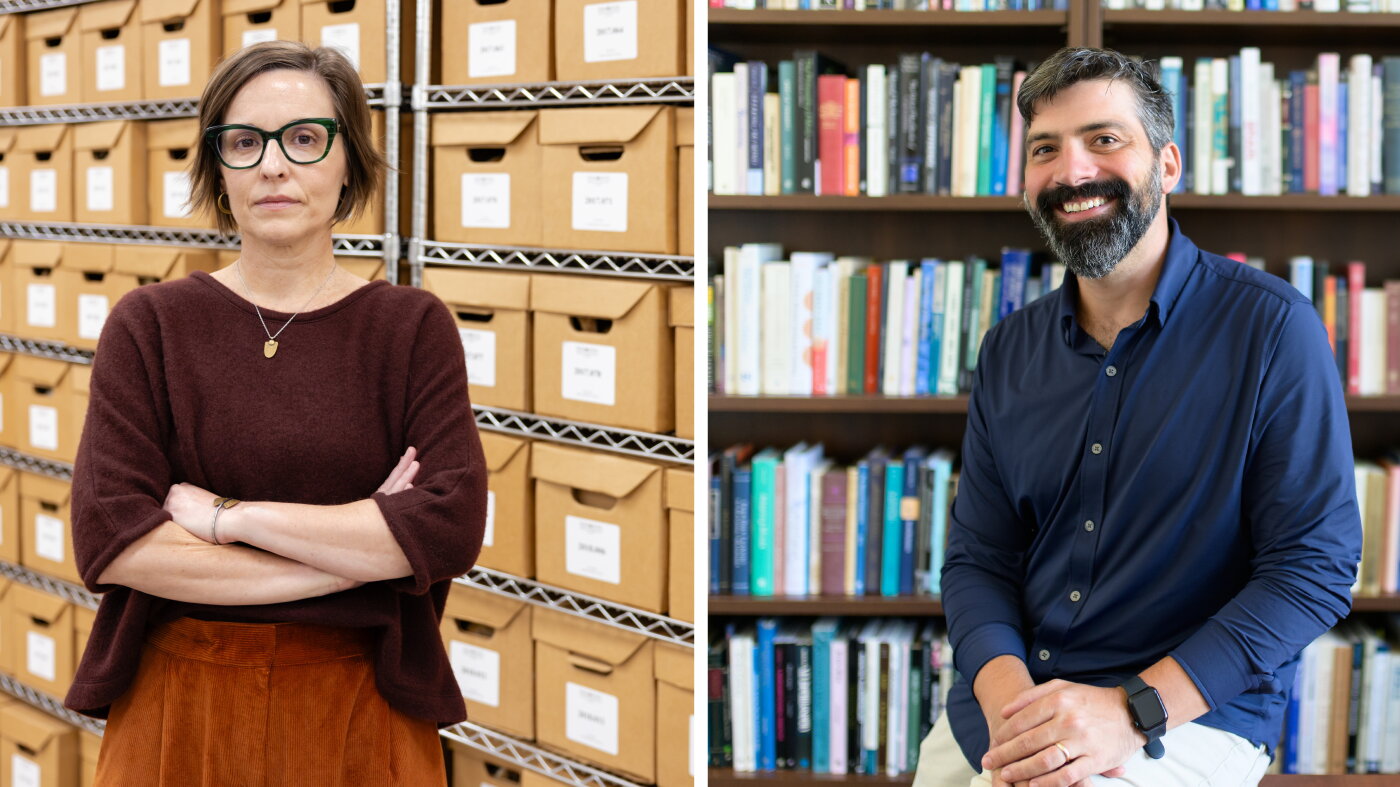
Kate Spradley, a forensic anthropologist at Texas State University, and Felipe De Brigard, a philosopher and cognitive neuroscientist at Duke University, have been named MacArthur Fellows this year. The MacArthur Foundation awarded each of the 20 fellows in this cohort $800,000 over five years with no strings attached. Both are being recognized for their work at the intersection of science and justice.
Spradley’s work centers on identifying remains of Central American migrants who have died crossing the southern U.S. border. Her efforts began in 2013 when she encountered a funeral home in Brooks County, Texas that could not locate the burial sites of more than a hundred migrants who had died. The county had buried the individuals without maintaining records of their identities or locations, a phenomenon Spradley describes as “administrative loss.” She resolved to exhume the entire cemetery to identify the remains and return them to families. One case involved Elmer Esau Barahona, a young man from El Salvador who died during a border crossing after becoming separated from his group.
Spradley created an organization called Operation Identification to convert unidentified remains into named individuals and helped establish the Forensic Border Coalition to advocate for policy changes. These efforts have yielded significant results, including an FBI policy change to include DNA from Latin American families in its federal database. Her identification methods employ ground-penetrating radar, skeletal analysis, fingerprinting using advanced rehydration techniques, and other forensic approaches to extract identifying information from remains in various states of decomposition.
De Brigard’s research challenges conventional understanding of human memory. Traditionally, memory was conceived as archival—a storage system where experiences are preserved unchanged and retrieved intact. De Brigard argues this model is fundamentally flawed and advocates instead for a reconstructive theory of memory, a perspective he notes is gaining broader acceptance in the scientific community. His work explores how memory functions and how individuals who have experienced trauma may use memory reconstruction to create peace for themselves.
Article Attribution | Read More at Article Source
Article summary produced by Claude AI