

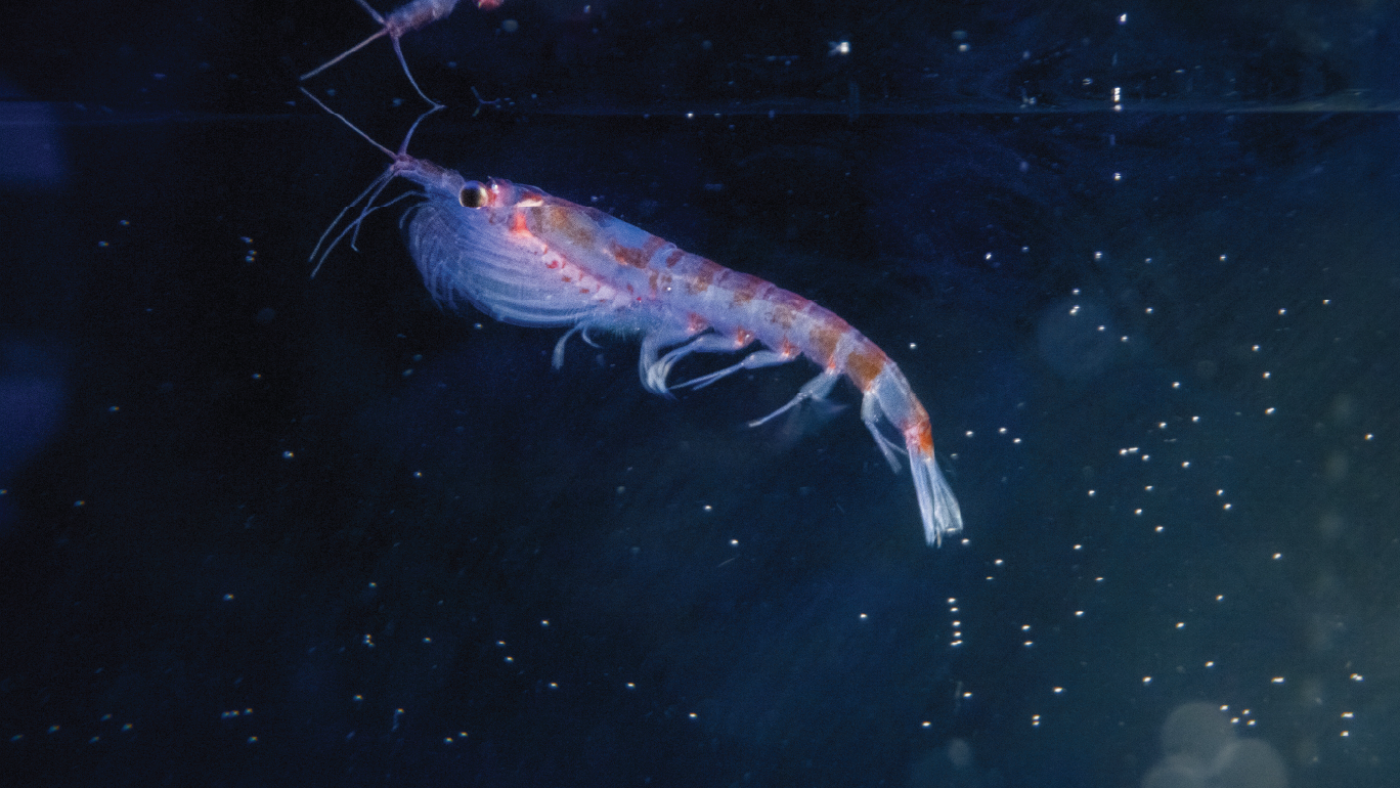
Researchers have documented Antarctic krill at a hydrothermal vent approximately 3,600 feet below the surface in Bransfield Strait off the Antarctic Peninsula, marking the first confirmed observation of the species at such a location. Antarctic krill serve as a fundamental component of the Southern Ocean food web, providing essential nutrition for penguins, seals, whales, and other marine life, while also cycling nutrients that support phytoplankton growth. The species is also commercially harvested for aquaculture feed and dietary supplements.
During a research expedition in late 2024, biological oceanographer Kim Bernard from Oregon State University observed krill while monitoring a hydrothermal vent with a remotely operated vehicle. The team collected four specimens, all reproductive females carrying eggs, suggesting the vent may serve as a breeding habitat. This discovery contradicts previous assumptions that females released eggs near the ocean surface in deeper waters, though such behavior had never been directly observed before.
Bernard’s analysis of the collected specimens revealed several factors that may explain why krill venture to these extreme depths. The four females had been feeding on microbes present at the vent site, which are available year-round unlike seasonal surface phytoplankton. Additionally, the krill tissue showed elevated levels of manganese and other metals released by the hydrothermal activity—minerals that are scarce in the Southern Ocean but critical for crustacean embryo development. The warmer water temperatures near the vents may also accelerate embryo development rates.
Understanding the role of deep-sea environments in Antarctic krill reproduction and development is increasingly important as the Southern Ocean experiences rapid warming from climate change, which is affecting krill populations and cascading through the broader ecosystem. The findings, published in the journal Communications Biology, may inform conservation strategies for these ecologically vital crustaceans.
Article Attribution | Read More at Article Source
Article summary produced by Claude AI