

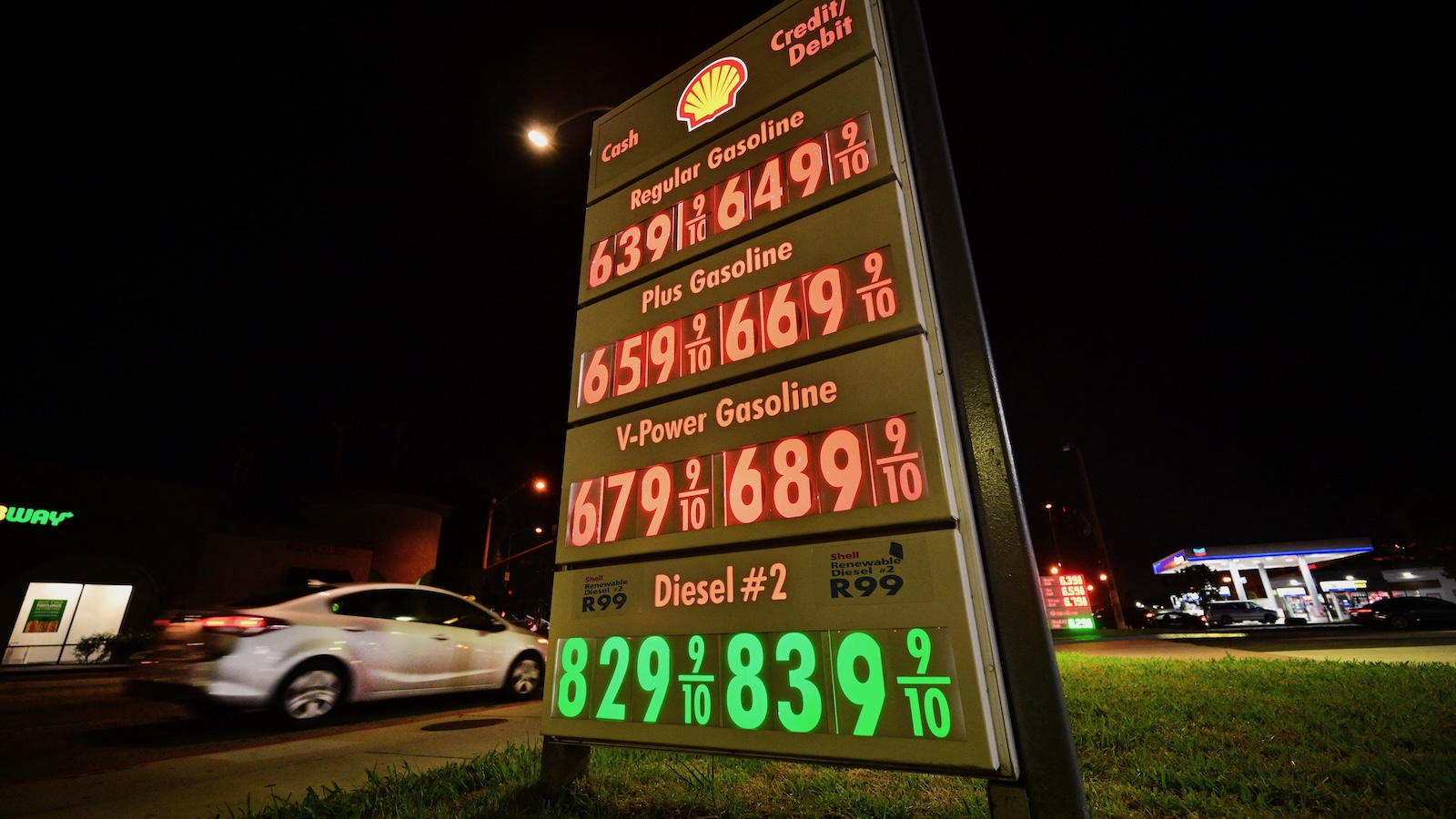
Diesel prices across the United States have climbed to record levels throughout the month, with the national average reaching $6.52 per gallon as of Tuesday, according to AAA. President Trump stated his support for restricting diesel exports while speaking at the United Nations General Assembly in New York, indicating he had called for such measures within his administration.
Although diesel consumption in personal vehicles remains relatively limited, the fuel plays a critical role in the broader economy, powering commercial trucks, ships, trains, and agricultural equipment that move goods and services nationwide. Diesel costs have increased approximately 80 percent since the United States and Israel began military operations against Iran earlier this year. The conflict has disrupted shipping lanes, particularly through the Strait of Hormuz, which handles roughly one-tenth of global seaborne diesel traffic. Ukrainian military operations against Russia have further constrained worldwide supply. During the week of September 11, U.S. production exceeded 5 million barrels of distillate fuels daily, with approximately 1.6 million barrels exported, while domestic oil reserves reached their lowest levels since 1982.
Several Republican lawmakers from agricultural and energy-producing states have expressed support for an export ban. Senators and representatives from Iowa and South Dakota have publicly backed the proposal, arguing that restricting exports would help farmers and truckers facing elevated fuel costs. A tracking initiative has estimated that rising diesel prices have cost American households nearly $400 per household, totaling over $51 billion nationally.
However, significant disagreement exists regarding the measure’s practical impact. Some analysts contend that diesel prices are determined by global supply and demand rather than domestic factors alone, suggesting an export ban would have minimal effect. Industry organizations, including the American Fuel & Petrochemical Manufacturers association, argue that restrictions would reduce domestic production and weaken energy security. Some Republican officials, including those from major oil-producing states, have characterized the proposal as ineffective or potentially counterproductive.
The concept of restricting fuel exports has historical precedent, following the 1975 Energy Policy and Conservation Act, which effectively banned crude oil exports until the restriction was lifted in the early 2010s. While the White House had previously indicated the administration was not considering an export ban, Trump’s recent comments raise questions about potential policy direction and congressional willingness to pursue legislative action on the matter.
Article Attribution | Read More at Article Source
Article summary produced by Claude AI