

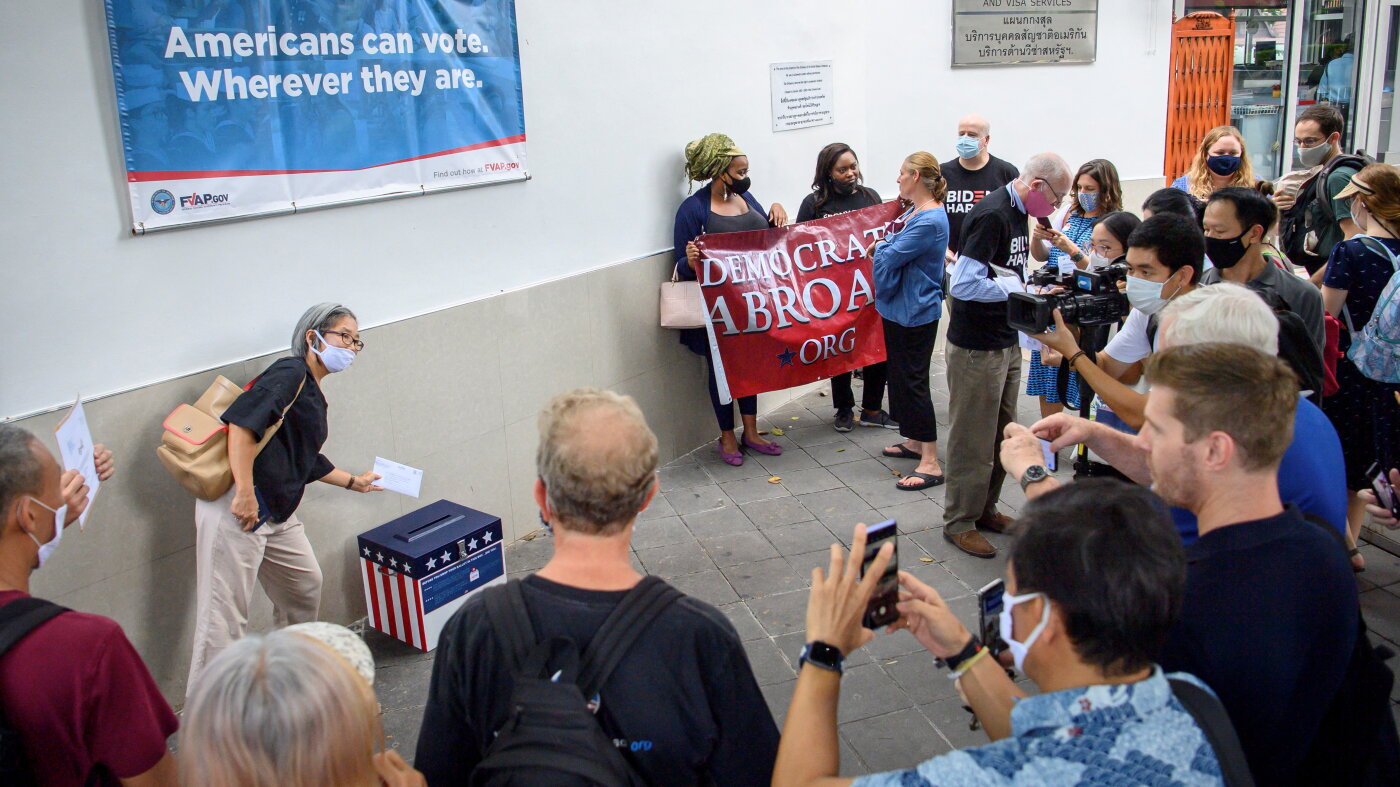
The Pentagon made last-minute changes to federal absentee voting forms used by U.S. citizens living abroad, military members, and their families during the recent midterm election cycle. The revisions, submitted in late August through expedited “emergency” requests that bypassed standard approval procedures, altered two critical forms: the Federal Post Card Application and the Federal Write-In Absentee Ballot.
Among the modifications was the elimination of a checkbox allowing overseas citizens to identify as having never lived in the United States. The removal leaves individuals without active military connections with only two response options, both requiring sworn declarations about intentions to return to the country. This change affects U.S. citizens born abroad who have never resided in the nation, including those eligible to vote through relatives who previously lived in states or territories.
Republican officials have pursued legal challenges since 2024 to restrict voting rights for never-resided citizens, arguing such provisions violate state constitutions and disproportionately benefit non-Republican voters. While these efforts succeeded in North Carolina, courts rejected similar challenges twice in Michigan, with additional litigation continuing in Arizona and at least five other states.
Voting advocates and military families expressed concerns about the timing and transparency of the form changes. Pentagon leadership stated the modifications were intended to eliminate voter confusion regarding eligibility requirements under federal law. However, critics questioned whether sufficient outreach occurred to notify affected voters and election officials, particularly given that the public comment period began more than a week after the forms were updated and state guidance followed approximately one month later.
Election officials retain the ability to process previous form versions, and eligible never-resided voters can continue registering through alternative state and territorial procedures. Advocates called for expanded Pentagon communication efforts during the active voting period and criticized the lack of stakeholder input from military families and overseas voting organizations.
Article Attribution | Read More at Article Source
Article summary produced by Claude AI