

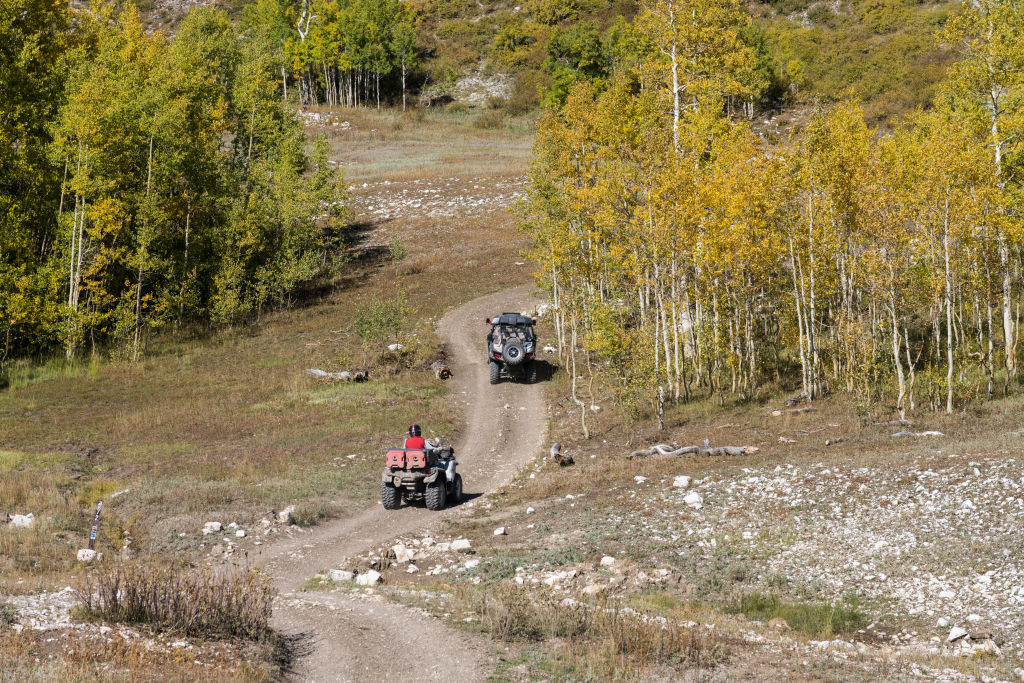
The Trump administration announced plans in late August to fundamentally alter how the U.S. Forest Service manages recreational access on national lands. Currently, the Forest Service operates under a travel management rule that keeps trails closed to motorized vehicles such as ATVs, dirt bikes, and side-by-sides unless they are explicitly designated open. The proposed revision would flip this approach, making trails open to motorized recreation by default unless specifically closed. According to the Department of Agriculture, which oversees the Forest Service, the change aims to increase recreational opportunities and reduce regulatory complexity.
The proposal has generated significant opposition from diverse stakeholder groups. Sportsmen, backcountry horsemen, conservation organizations, and nonmotorized recreation advocates have raised concerns about potential environmental consequences. Critics argue that the change could compromise ecosystem health and wildlife habitat. Advocates for the current system emphasize that detailed travel management plans provide necessary clarity about which trails support which types of recreation, preventing conflicts between users and protecting sensitive areas.
Environmental impacts of unrestricted motorized access are illustrated by documented cases in Montana. A watershed project manager described how vehicle crossings on the Middle Fork of the Judith River caused extensive erosion and sediment runoff that degraded fish populations and river quality. Prior restrictions on motorized access allowed for restoration efforts that successfully rebuilt riverbanks, reduced crossings, and improved fish populations. Restoration advocates note that without protective designations, similar efforts would become difficult to justify or sustain.
The Forest Service is currently accepting public comments on the proposed rule revision, with a deadline of September 23. The process for implementing federal regulatory changes is lengthy, meaning significant time remains before any modifications would take effect. The proposal has sparked broader debate about balancing recreational access with environmental conservation on public lands.
Article Attribution | Read More at Article Source
Article summary produced by Claude AI