

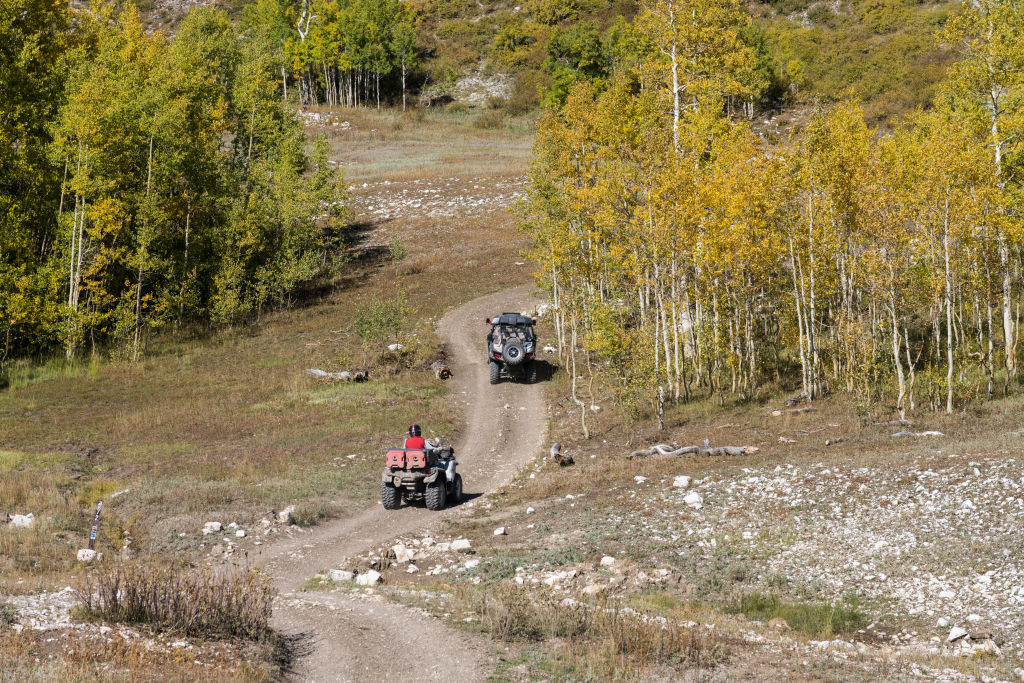
The Trump administration announced plans in late August to revise Forest Service travel-management policies that would fundamentally alter how off-highway vehicles are permitted on national forest lands. Currently, the Forest Service operates under a “closed unless designated open” framework, requiring explicit authorization before trails can accommodate motorized recreation such as ATVs, dirt bikes, and snowmobiles. The proposed change would reverse this approach, making trails open to motorized use by default unless specifically closed.
Administration officials from the Department of Agriculture, which oversees the Forest Service, argue the revision would expand recreational access and reduce regulatory complexity. However, the proposal has faced opposition from diverse stakeholder groups including sportsmen, backcountry horsemen, conservation organizations, and nonmotorized recreation advocates. Critics contend that opening forests to unrestricted motorized access could harm sensitive ecosystems and wildlife populations that depend on these protected areas.
Opponents point to specific examples of environmental degradation resulting from motorized activity. Along the Middle Fork of the Judith River in central Montana, decades of unrestricted vehicle crossings caused severe erosion and sediment accumulation that suppressed fish populations and aquatic insect life. A collaborative restoration effort between 2023 and later reduced crossing points by eighty percent and relocated vehicle trails away from the river corridor, resulting in improved water quality and recovering fish populations.
Critics also express concerns about implementation clarity. Policy advocates argue that the proposed rule language lacks precision, potentially allowing motorized users to access any feature interpretable as a trail or road. They contend that existing travel-management plans provide essential clarity for all forest users, from recreationalists to timber industry participants, and that eliminating these guidelines could generate conflict among different user groups.
The Forest Service is currently accepting public comments on the proposed rule revision, with the comment period closing on September 23. The formal process for changing federal regulations requires multiple steps beyond the public comment phase.
Article Attribution | Read More at Article Source
Article summary produced by Claude AI