

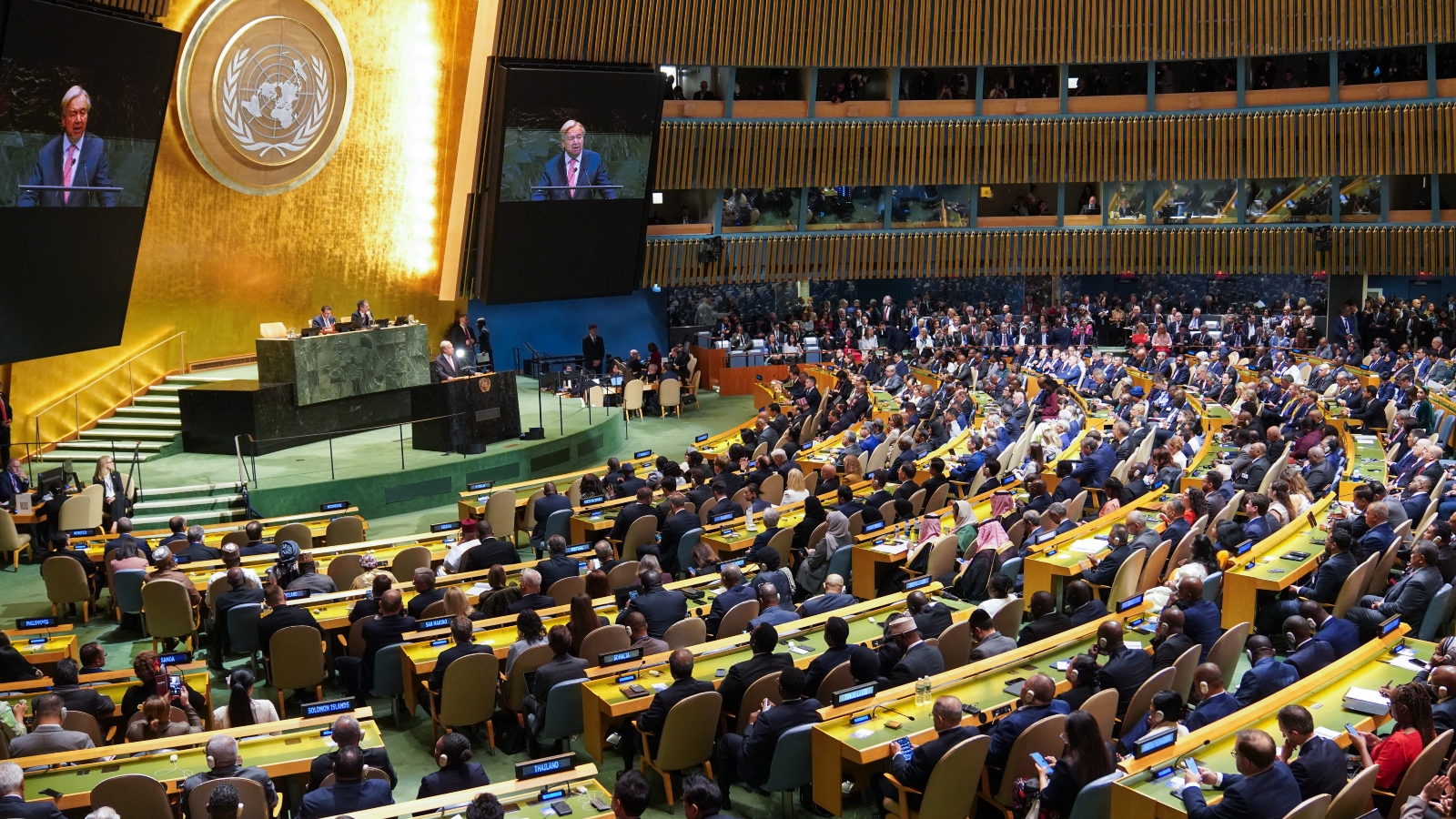
World leaders at the United Nations General Assembly approved a unanimous resolution on Thursday addressing how nations should manage the impacts of rising sea levels. The agreement marks a rare instance of international consensus during a period marked by significant divisions over climate action and multilateral cooperation.
The declaration provides substantial protections for low-lying island states that face existential threats from rising ocean waters. Under the agreement, nations that experience complete or near-total land loss due to sea level rise will retain their status as sovereign states and continue to control their maritime borders—the stretches of ocean extending from coastlines where countries exercise exclusive authority over fishing, energy development, and other economic and military activities. This clarifies ambiguities that previously surrounded whether island nations would cease to exist as political entities if their physical landmass disappeared beneath the waves.
The Bahamas’ prime minister stated that the agreement could accelerate global efforts to address the needs of vulnerable island states, particularly regarding climate finance and adaptation measures. The declaration includes language affirming that developed nations and countries with historical responsibility for emissions have an urgent obligation to expand access to adaptation funds. These resources could support infrastructure projects such as seawalls, coastal restoration efforts, or population relocation programs. However, experts note that while the declaration provides legal affirmation, it does not automatically increase funding available to affected nations. Currently, wealthy countries provide approximately $130 billion annually in climate finance to developing nations, below levels experts consider necessary to prevent severe impacts.
The agreement builds upon a recent International Court of Justice ruling and represents the result of a sustained campaign by the Alliance of Small Island States. Legal protections for maritime borders and continued statehood hold significance for all nations, including wealthy countries that could experience land loss or see maritime borders shift in ways affecting access to natural resources such as oil, minerals, or offshore wind energy. This universal interest in preserving maritime territories may explain why the United States declined to block the resolution despite the Trump administration’s broader opposition to international climate agreements and aid commitments.
Article Attribution | Read More at Article Source
Article summary produced by Claude AI