

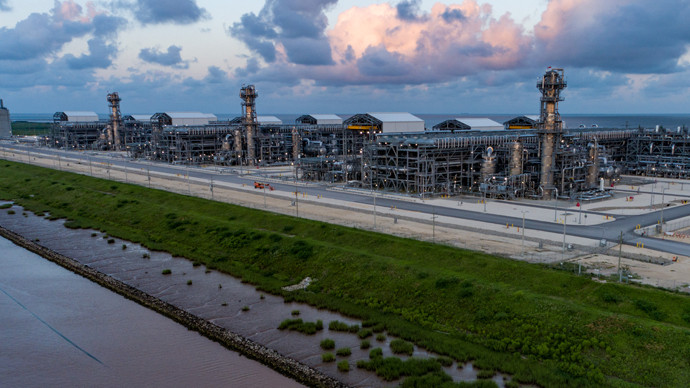
Chinese President Xi Jinping is scheduled to arrive in Washington on September 24 to discuss potential revival of US liquefied natural gas exports to China. The negotiations center on a 15% Chinese tariff imposed in February 2025 that effectively eliminated American LNG shipments to the Chinese market, reducing recorded US cargoes from 64 vessels in 2024 to zero the following year.
At their 2021 peak, US LNG exports to China were valued at $6.2 billion annually and comprised 12% of China’s total imports. However, Chinese buyers continued honoring existing contracts by reselling the cargoes into European and Asian markets rather than pay the tariff to import them domestically. The tariff years prompted China to diversify its LNG sourcing, with Australia capturing 36% of imports between January and July this year, Southeast Asia 20%, Russia 12%, and Canada 4%, while US cargoes represented only 0.2%.
The trade disruption occurred amid significant supply disruptions. Iranian missile strikes on Qatar’s Ras Laffan Industrial City on March 18-19 destroyed approximately 17% of that country’s LNG export capacity, equivalent to two of fourteen production trains. A subsequent explosion on June 22 killed at least 13 workers. Qatar subsequently declared force majeure on long-term contracts and purchased nearly three dozen US spot cargoes to meet existing delivery commitments.
Recently, China Gas Holdings signed a 20-year deal with US producer Venture Global on September 14 for 500,000 metric tons annually beginning in 2030, though this contract was signed with the 15% tariff still in effect and contains no tariff-related terms. Broader trade discussions are underway regarding a package that would lower tariffs on approximately $30 billion of each nation’s exports. However, multiple forecasters have reduced their China LNG demand projections for the early 2030s by 14 to 22 million tons, with China’s 2025 imports reaching a three-year low as Beijing shifts toward piped gas and renewable energy sources.
Article Attribution | Read More at Article Source
Article summary produced by Claude AI