

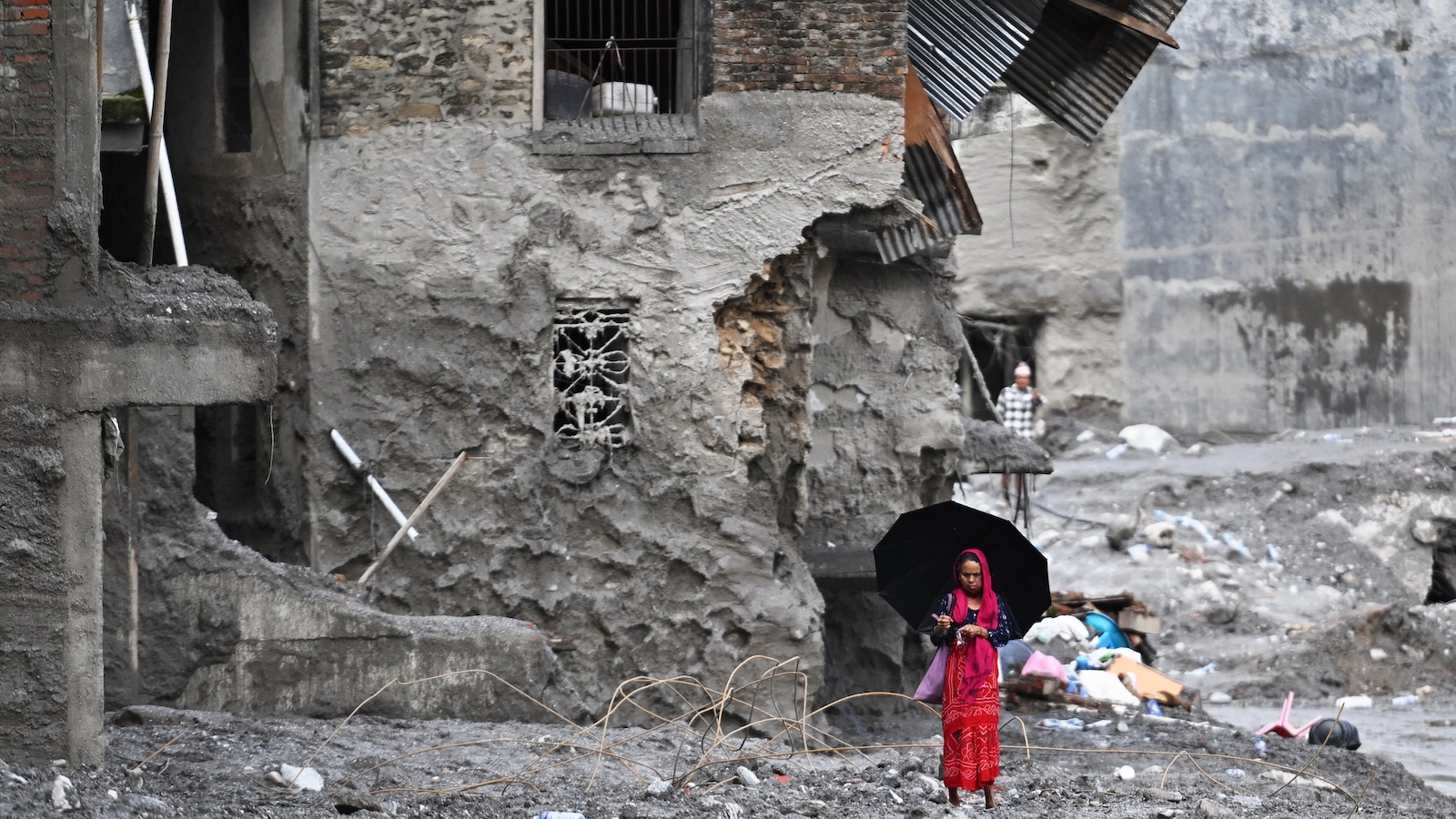
On August 26, a mountainside near the Nepal-Tibet border collapsed, releasing approximately seven billion cubic feet of glacial ice and rock that plummeted into a river valley. The resulting surge of muddy water traveled at speeds exceeding 100 miles per hour downstream, destroying communities across dozens of miles and causing more than 1,300 deaths, with thousands additional missing. The catastrophe ranks among the most severe disasters in a region already vulnerable to dangerous flooding and landslides.
Scientists indicate that while precise circumstances require further investigation, the disaster underscores an emerging threat as climate change accelerates glacier retreat worldwide. Glacial shrinkage destabilizes mountain slopes through multiple mechanisms: retreating ice removes structural support from mountainsides, exposure of unconsolidated sediment creates instability, permafrost thaw weakens slope integrity, and meltwater erosion degrades bedrock. Additionally, glaciers often dam valleys and lakes that can breach catastrophically. These processes can trigger sudden avalanches, rockslides, and floods that strike with little or no warning.
Prevention and early warning have succeeded in some locations through intensive monitoring and infrastructure investment. In Alaska’s Juneau, continuous surveillance of a glacier-dammed basin using cameras, lasers, and drone mapping enables authorities to alert residents when dangerous drainage occurs. Peru has protected tens of thousands through decades of methodically draining high-risk glacial lakes. Swiss authorities recently evacuated residents before a glacier collapse in the Alpine village of Blatten.
However, the Himalayan region presents extraordinary challenges for comparable protection efforts. The mountain range contains thousands of glaciers dispersed across remote, difficult-to-access terrain with limited resources for comprehensive monitoring. Current early-warning systems track water levels in certain high-risk rivers and lakes but cannot continuously observe the type of sudden rock-and-ice failure that occurred in Nepal. Emerging technologies offer potential solutions, including repurposing seismic networks to detect landslides and floods, deploying fiber-optic cables to monitor ice fractures, and utilizing new satellite observations. Yet experts acknowledge that establishing universal protection across such vast landscapes remains impractical with present capabilities.
Article Attribution | Read More at Article Source
Article summary produced by Claude AI