

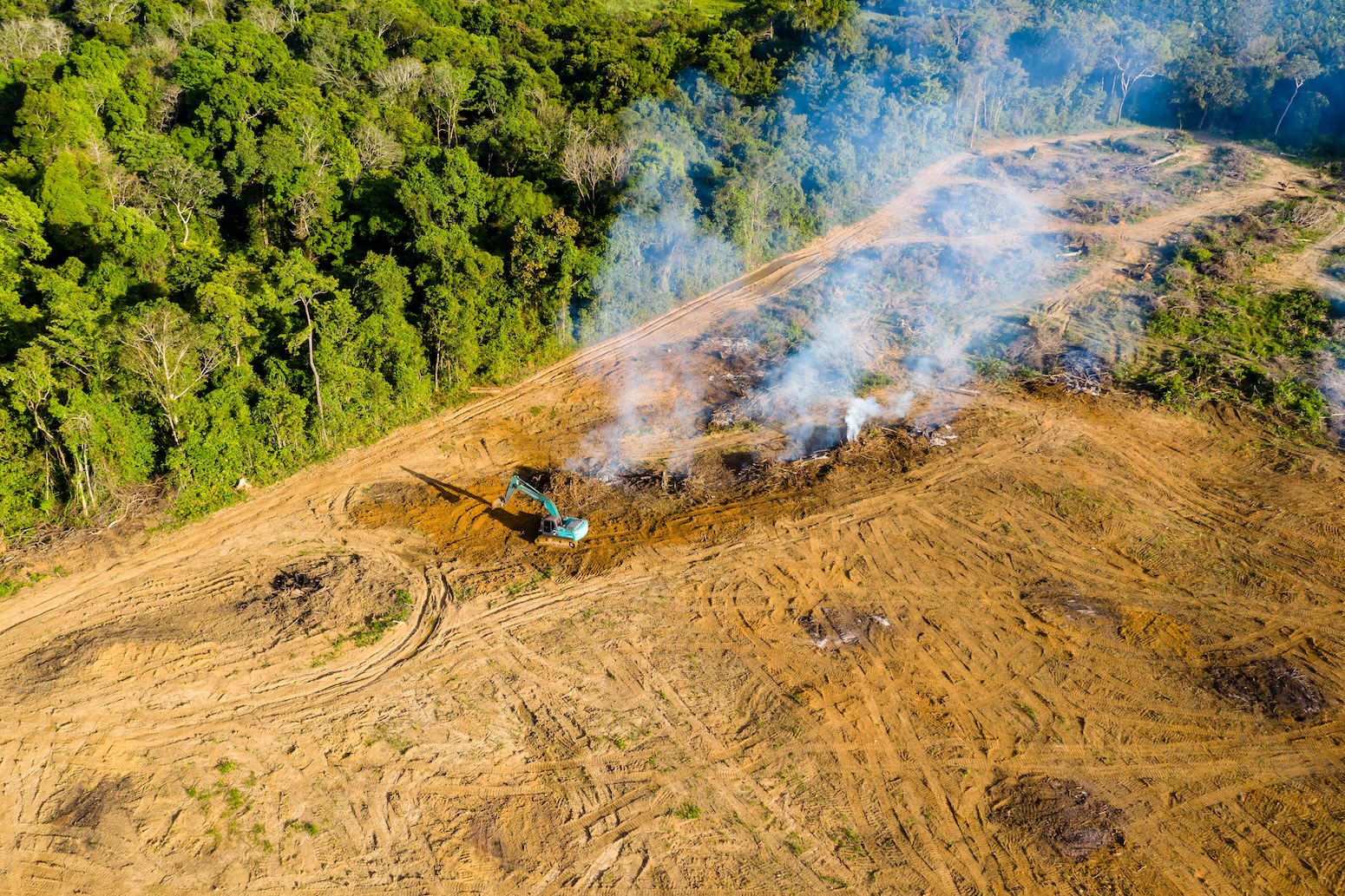
According to the latest Global Carbon Budget report, emissions from land-use change have experienced a statistically significant decline since the late 1990s, with acceleration in recent years. The report, formally published in May in the journal Earth System Science Data, documents how land-use emissions—stemming from deforestation, peatland loss, and forest degradation—have evolved over the past quarter-century.
Global land-use emissions averaged approximately 6.6 billion tonnes of CO2 annually during the four decades leading up to 1999. Since then, emissions have trended downward substantially. Over 2015-24, land-use emissions averaged 5 gigatonnes of CO2 per year, representing a 23% decrease compared to the 1995-2004 average. Preliminary data for 2025 shows land-use emissions at 4.1 gigatonnes, continuing the downward trajectory despite record fossil-fuel emissions reaching 38.1 gigatonnes the same year.
The decline in land-use emissions stems primarily from reduced permanent deforestation—the complete removal of trees for conversion to other uses such as agriculture—combined with increased carbon removal through forest regrowth. Between 2015 and 2024, deforestation emissions averaged 6.96 gigatonnes annually, while forest growth removed 4.76 gigatonnes yearly. Notably, carbon removals from reforestation and afforestation efforts offset approximately two-thirds of deforestation emissions during this period, with the remainder coming from natural forest regrowth following abandoned agricultural plots.
A particularly steep decline occurred after 2015, attributed to the combined effect of peak peat fire emissions in that year and long-term deforestation reductions across multiple countries. Short-term projections suggest continued declines, with expectations that the end of El Niño conditions will further reduce land-use emissions between 2024 and 2025. Brazil, the Democratic Republic of the Congo, and Indonesia collectively accounted for 57% of global land-use emissions over 2015-24.
Article Attribution | Read More at Article Source
Article summary produced by Claude AI