

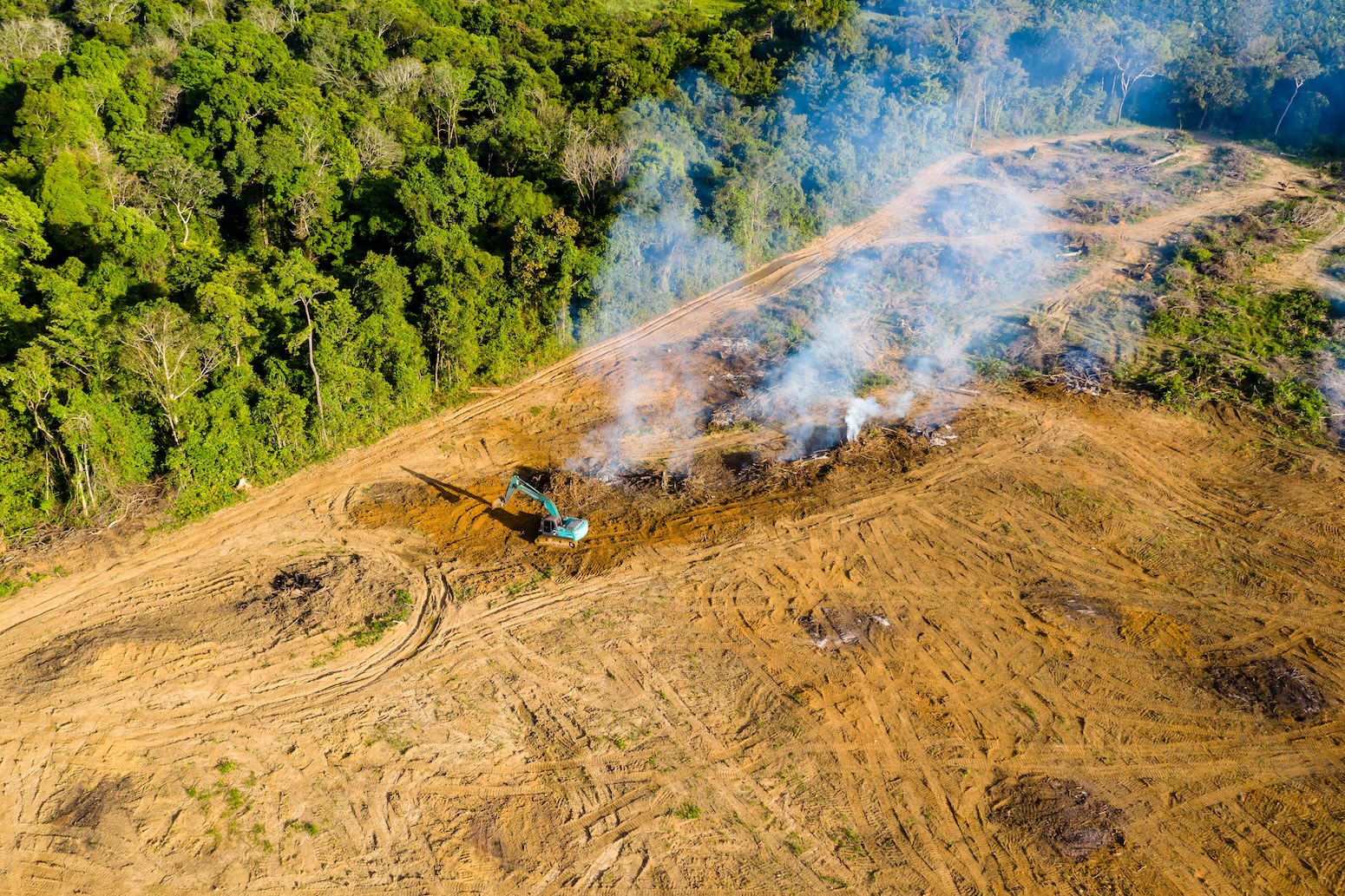
Emissions from land-use change, encompassing deforestation, peatland degradation, and forest loss, have experienced a significant decline throughout the 21st century, according to findings from the Global Carbon Budget report. The report, formally published in May in Earth System Science Data, documents a “statistically significant decrease” in these emissions since the late 1990s. Scientists noted that land-use emissions in 2025 decreased by approximately 32% compared to average levels in the 2000s, with the rate of decline accelerating particularly after 2015.
Historically, net carbon dioxide emissions from land-use change remained relatively stable at approximately 6.6 billion tonnes annually through the 1990s. Since that period, however, a consistent downward trend has emerged. Data indicates that land-use emissions averaged 5 billion tonnes annually between 2015 and 2024, representing a 23% reduction compared to 1995-2004 levels. Preliminary data suggests 2025 emissions were even lower at 4.1 billion tonnes. This contrasts sharply with fossil fuel and cement emissions, which have risen consistently each decade since the 1960s and reached 38.1 billion tonnes in 2025.
The Global Carbon Budget attributes the decline primarily to reductions in permanent deforestation—the complete conversion of forests to other land uses—combined with increased carbon removal through forest regrowth and regeneration efforts. Between 2015 and 2024, deforestation generated 6.96 billion tonnes of emissions annually, while forest growth removed 4.76 billion tonnes, with reforestation and afforestation efforts accounting for approximately 2.2 billion tonnes of that removal. A recent acceleration in emissions reductions since 2015 reflects the combined effect of declining deforestation rates across multiple countries and the end of a peak period for peat fire emissions.
Brazil, the Democratic Republic of the Congo, and Indonesia collectively accounted for 57% of global land-use emissions between 2015 and 2024. Falling emissions in Brazil and Indonesia, coupled with increased afforestation and reforestation initiatives in China, have driven the overall downward trajectory. While recent trends have moved in a positive direction, future developments remain uncertain, with continued decreases dependent on maintaining current land-use policies globally.
Article Attribution | Read More at Article Source
Article summary produced by Claude AI