

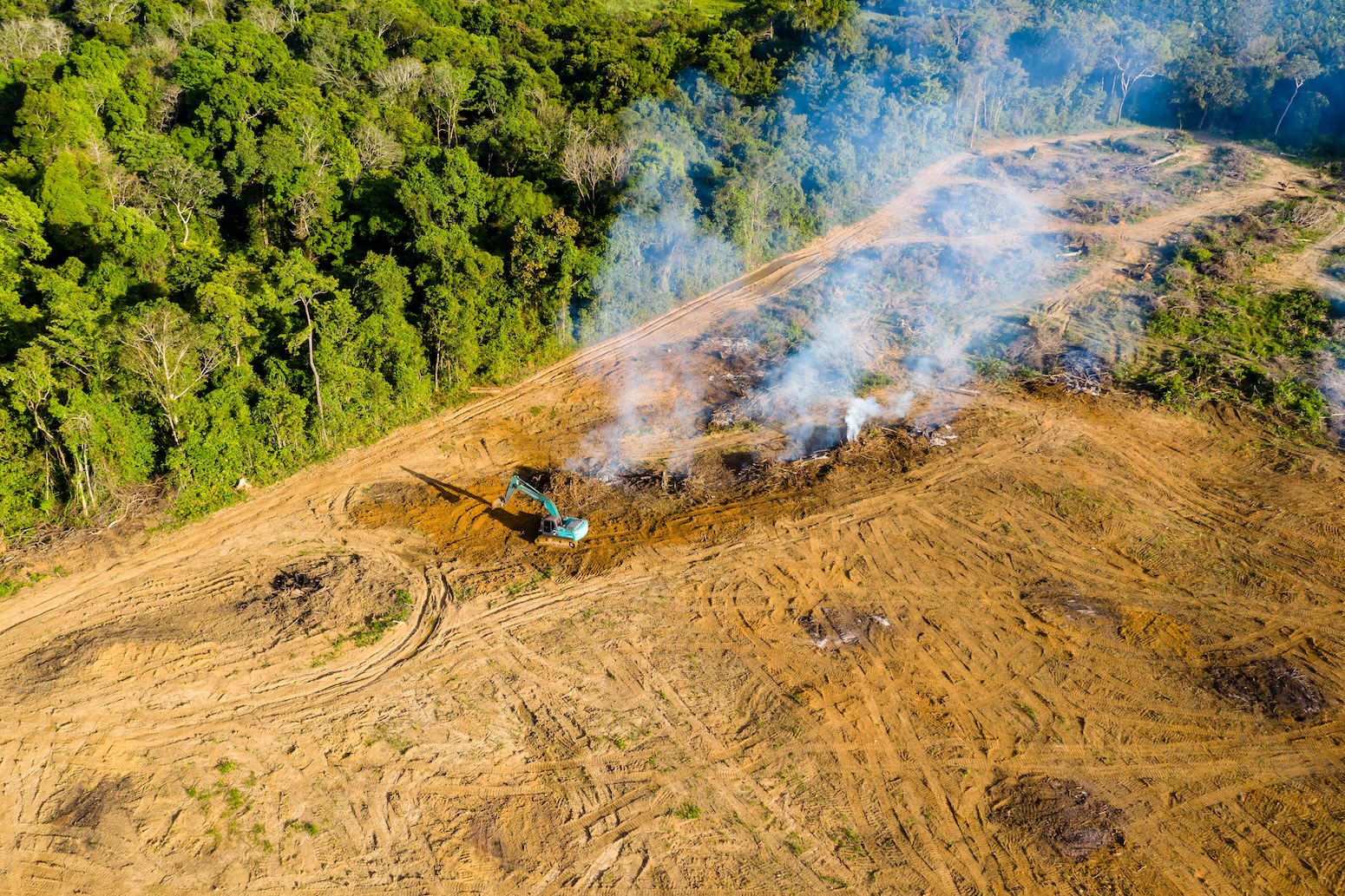
Emissions stemming from land-use changes have experienced a notable decline throughout the 21st century, marking a shift from relatively stable levels in preceding decades. The Global Carbon Budget report, formally released in May in the journal Earth System Science Data, documents a statistically significant decrease in land-use change emissions beginning in the late 1990s. The downward trend has intensified in recent years, with a particularly steep reduction occurring after 2015. Scientists analyzing the data found that land-use emissions in 2025 were approximately 32% lower than their average levels during the 2000s.
Historically, emissions from land-use activities remained relatively constant at around 6.6 billion tonnes of carbon dioxide annually during the four decades leading to 1999. Since then, however, a sustained decline has emerged. Recent estimates indicate that land-use emissions over 2015-24 averaged 5 billion tonnes annually, representing a 23% decrease compared to the 1995-2004 period. Preliminary data suggests 2025 emissions reached 4.1 billion tonnes, continuing the downward trajectory. This contrasts sharply with fossil fuel and cement emissions, which have risen consistently, reaching 38.1 billion tonnes in 2025.
The primary driver of falling land-use emissions is reduced permanent deforestation—the conversion of forests to alternative uses such as agriculture or urban development. Additionally, expanding forest regrowth and deliberate reforestation efforts have increasingly offset deforestation-related carbon releases. Between 2015 and 2024, forest growth and carbon sequestration removed approximately 4.76 billion tonnes of carbon dioxide annually, offsetting roughly two-thirds of deforestation emissions during the same period.
Recent accelerated declines have been attributed to the culmination of peak peat fire emissions in 2015 and long-term decreases in deforestation across multiple countries. Short-term improvements in 2024-2025 have been linked to the conclusion of El Niño conditions, which typically exacerbate peatland drying and uncontrolled fire spread. Three nations—Brazil, the Democratic Republic of the Congo, and Indonesia—accounted for more than half of global land-use emissions over 2015-24, though emissions reductions in Brazil and Indonesia have contributed significantly to overall declining trends.
Article Attribution | Read More at Article Source
Article summary produced by Claude AI