

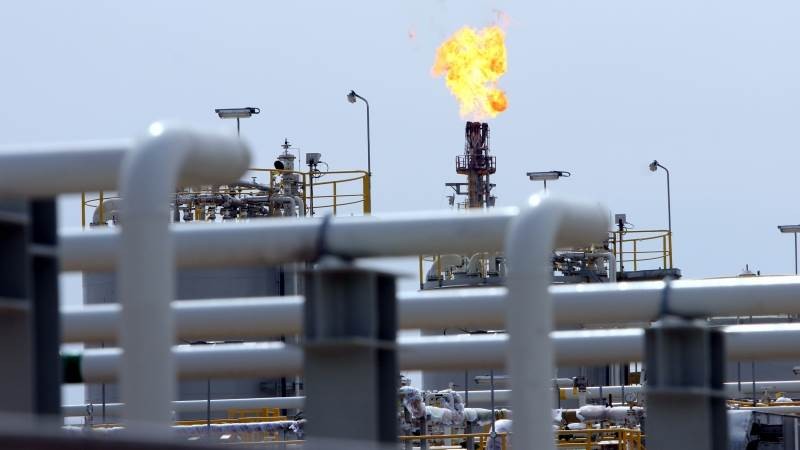
Iraq’s newly installed Prime Minister Ali al-Zaidi has opened the country to expanded Western energy partnerships, positioning U.S. companies to lead development of the strategically significant Akkas gas field in the western Anbar province. The Iraqi government aims to increase production from the field to 400 million standard cubic feet per day by 2030, up from current output of 43 million standard cubic feet per day, with an interim target of 143 million standard cubic feet per day by mid-2027.
In late July, Iraq’s Oil Ministry signed a memorandum of understanding with a consortium including U.S. companies ConocoPhillips and TI Capital, along with Novaterra Energy, to assess the Akkas field’s exploration and development potential. This agreement follows ConocoPhillips’ acquisition of a 42 percent stake in BP Energy Company of Kirkuk Limited to redevelop five producing oil fields in northern Iraq’s Kirkuk region. TI Capital is simultaneously partnering with Chevron to construct a crude oil pipeline from Kirkuk to Syria’s Mediterranean port of Baniyas, designed to transport up to 2 million barrels per day to European and global markets.
These initiatives represent part of a broader geopolitical realignment in which the U.S. is increasing its energy sector presence in Iraq while reducing Russian and Iranian influence. The recent removal of Russian firms Lukoil and Rosneft from Iraqi operations through U.S. and UK sanctions, combined with the July approval of Starlink satellite communications services, reflects coordinated efforts to strengthen Western economic and strategic positioning. The Akkas field’s location within a triangle of major gas fields spanning from the Iranian border to Syria makes it particularly valuable for securing energy infrastructure and communications networks independent of regional actors.
These developments align with broader U.S. strategy in the Middle East, including normalization agreements between Arab states and Israel and the containment of Iranian regional influence under its current government.
Article Attribution | Read More at Article Source
Article summary produced by Claude AI