

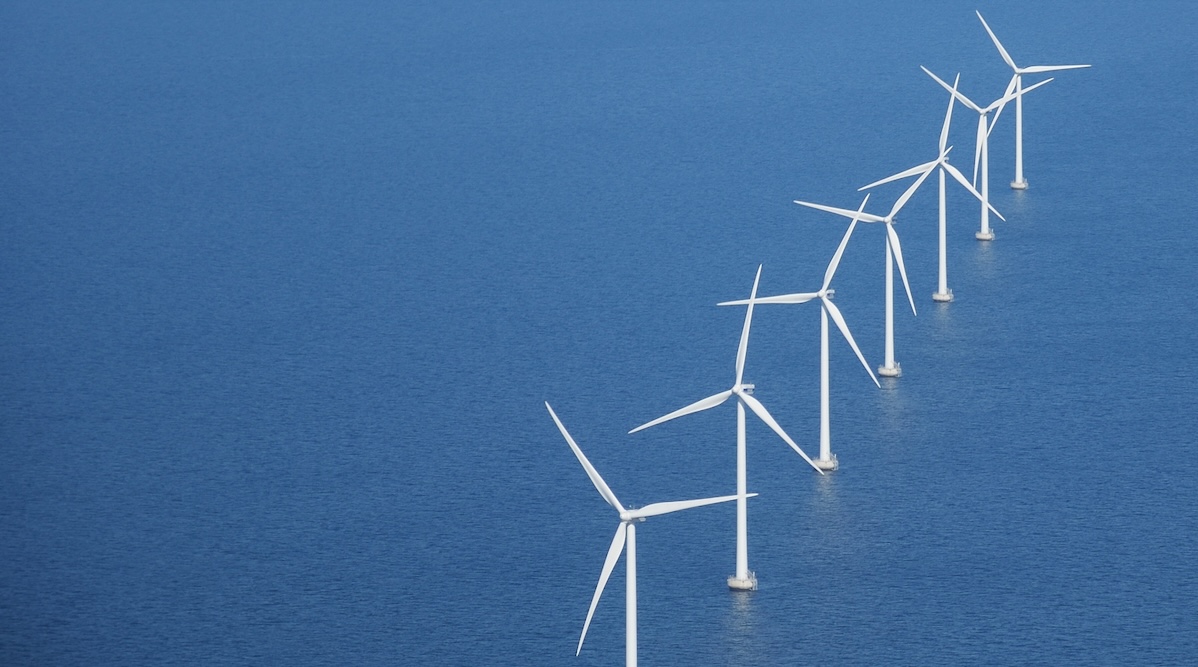
Denmark achieved a wind power generation milestone last Friday when turbines produced electricity equivalent to 140% of the nation’s demand. The surplus occurred during early morning hours when wind speeds were elevated and electricity consumption was minimal. The Danish Energy Agency is now advancing plans to construct two offshore energy hubs in the North and Baltic seas that would serve as wind power generation and distribution centers.
The proposed facilities are designed to manage wind resources for approximately 5 million households. The North Sea hub would handle 3 to 4 gigawatts of power generation capacity with potential expansion to 10 gigawatts, while the Baltic Sea installation would contribute an additional 3 gigawatts. These islands are intended to transmit electricity to coastal grids while supporting green hydrogen production and other offshore industrial activities, positioning Denmark as a supplier of renewable energy across Europe.
The United States possesses substantial offshore wind resources along both Atlantic and Pacific coasts, with federal energy estimates placing potential capacity at over 35,000 megawatts. Coastal waters off Maine support floating offshore turbine technology, while traditional monopile structures are viable in shallower Atlantic waters. The Gulf of Mexico also represents a development opportunity, with industry stakeholders planning conversion of decommissioned oil and gas infrastructure for renewable energy use.
Despite this potential, federal policy has shifted away from offshore wind development. Upon taking office, the President directed the Interior Department to cease issuing new offshore wind leases and subsequently purchased existing leases to prevent further project advancement. Federal courts have upheld the lease moratorium while questioning the legal basis for certain emergency authority measures employed to block existing projects.
The administration’s stated energy policy prioritizes geothermal, biomass, hydropower, and nuclear energy while excluding wind and solar based on reliability standards. Energy storage technology advancement continues within federal agencies despite the policy reorientation, with storage systems increasingly benefiting wind and solar applications nationwide.
Article Attribution | Read More at Article Source
Article summary produced by Claude AI