

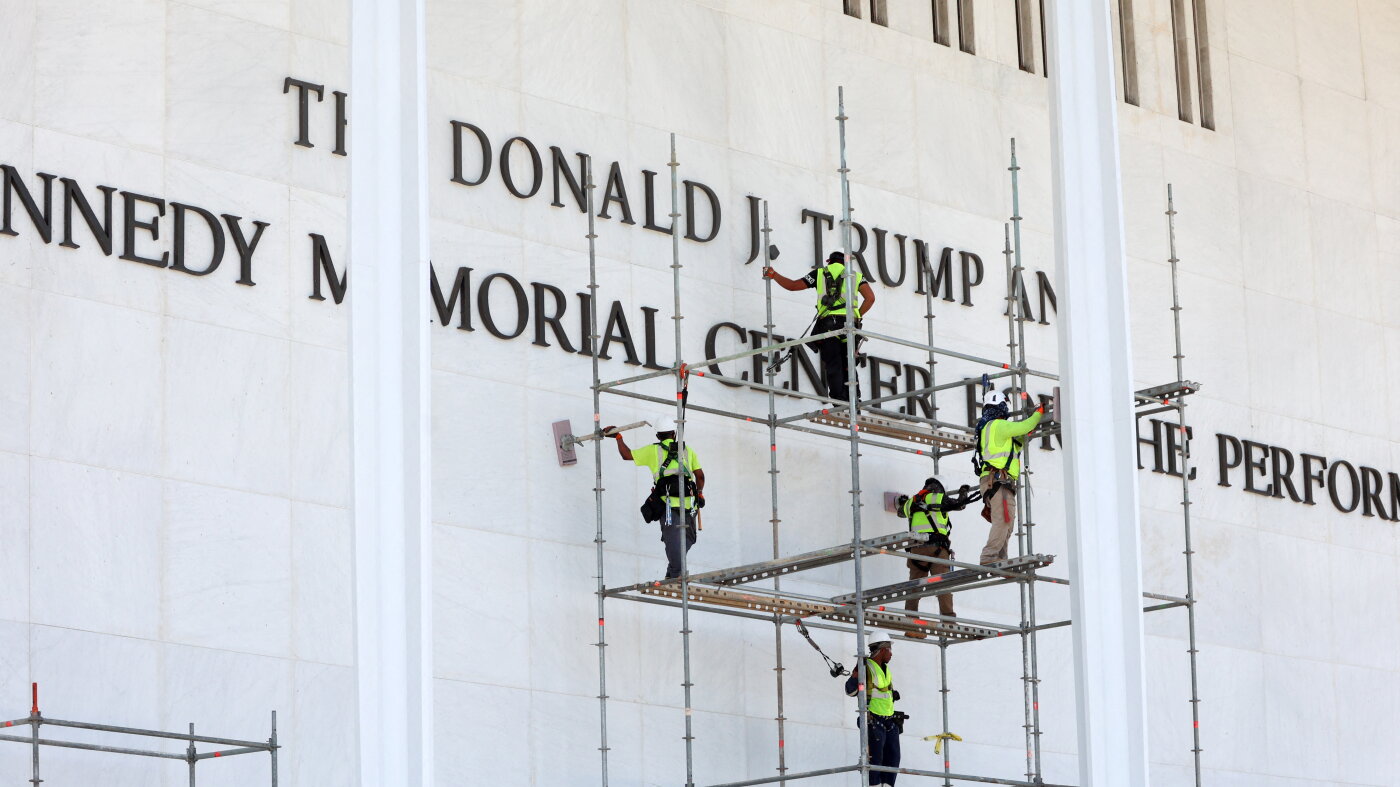
In December 2025, the Trump administration added the president’s name to the exterior of the Kennedy Center in Washington, D.C., a performing arts complex established as a memorial to John F. Kennedy. The addition proved temporary, as a federal judge ruled that only Congress possesses the authority to change the facility’s official designation. The removal occurred less than six months after the name was installed.
President Trump has expressed interest in having his name attached to various federal infrastructure projects, including naval vessels and airports, and has suggested that without such recognition, some facilities may face closure or demolition. Historians note, however, that sitting presidents placing their names on public assets remains uncommon in American history, reflecting a long-standing reluctance rooted in the nation’s founding principles. When the first Congress deliberated on designs for inaugural American currency, lawmakers specifically rejected the idea of featuring the sitting president, viewing such practice as monarchical and inconsistent with republican values. George Washington, despite being honored when the federal capital was named after him during his presidency, generally avoided ostentatious self-promotion.
When sitting presidents’ names have appeared on public works, it typically resulted from supporters’ efforts rather than executive initiative. The Hoover Dam illustrates this complex history. Originally called the Boulder Dam, Secretary of the Interior Ray Lyman Wilbur renamed it in 1930 to honor President Herbert Hoover’s role in negotiating interstate water agreements. The Franklin D. Roosevelt administration challenged this designation, with Secretary Harold Ickes advocating for the original name, citing both legislative precedent and political opposition. Roosevelt kept Hoover’s name out of his 1935 dedication remarks. Congress voted unanimously in 1947 to restore the Hoover name, acknowledging Hoover’s contributions and humanitarian legacy.
Roosevelt himself resisted having projects named in his honor, though he initiated the Franklin D. Roosevelt Presidential Library and Museum during his tenure. In keeping with contemporary precedent, Trump has announced plans to establish a presidential library in Miami, though he has expressed skepticism about traditional library and museum formats.
Article Attribution | Read More at Article Source
Article summary produced by Claude AI