

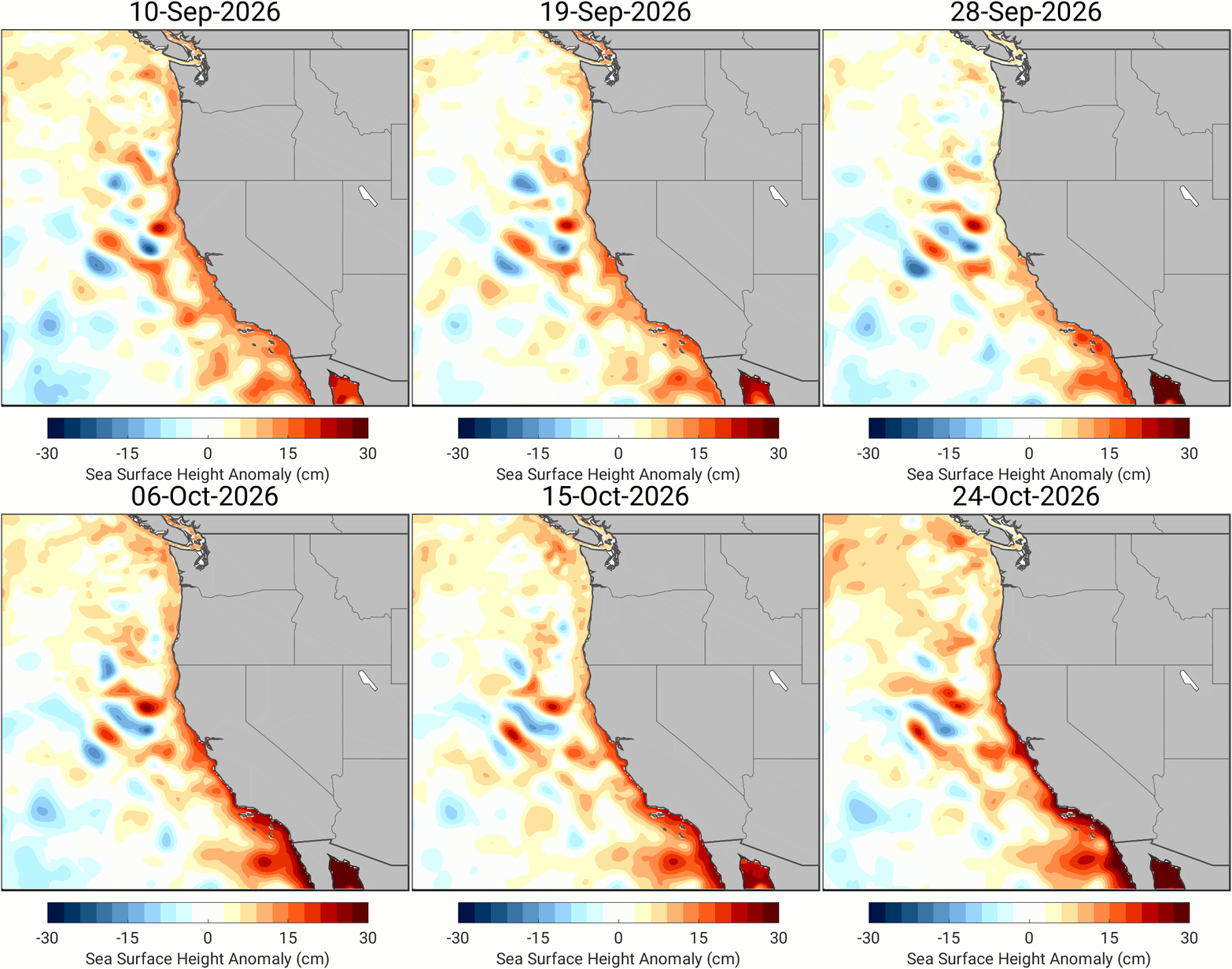
A Kelvin wave, a deep ocean phenomenon that has long been studied by scientists but recently gained public attention through social media, is currently affecting sea levels along the West Coast. The wave, which stretches thousands of miles, develops during El Niño years when a vast region of the Pacific Ocean becomes significantly warmer than normal. This warm water moves slowly eastward beneath the ocean’s surface until reaching South America, where it splits and travels northward along the West Coast.
Kelvin waves function as large-scale ocean features rather than visible surface phenomena. They operate as “planetary-scale waves” that gradually raise sea levels as they move along the coast, creating conditions more favorable to coastal flooding without directly causing it. By themselves, these waves do not produce flooding; instead, they require triggering factors such as major storms or exceptionally high tides to result in significant coastal impacts. Earlier this month, Southern California communities experienced such a scenario when Tropical Storm Rachel struck while sea levels were already elevated by six to eight inches due to the Kelvin wave, resulting in substantial storm surge damage.
Beyond flooding risks, Kelvin waves bring warmer water up the coast, disrupting marine ecosystems. Researchers have documented tropical fish species appearing in uncommon locations and reported sea bird mortality linked to elevated water temperatures. The waves also push down nutrient-rich cold waters that sustain productive marine habitats. During strong El Niño years, typically five to six Kelvin waves occur. The next wave is predicted to reach San Diego in late October or early November, with several additional waves anticipated through fall and winter. NOAA researchers expect the El Niño pattern to remain strong through early 2027.
Article Attribution | Read More at Article Source
Article summary produced by Claude AI