

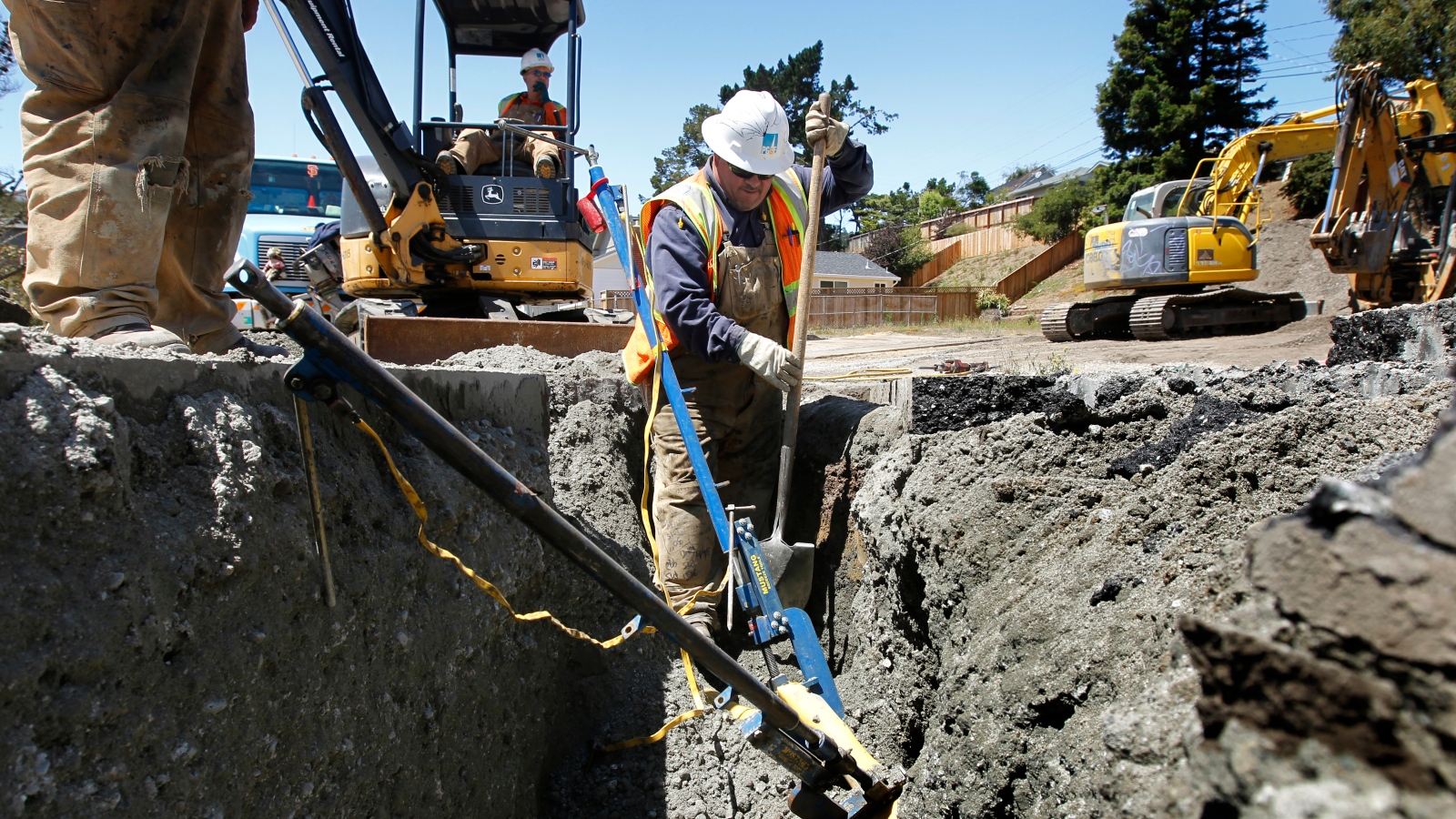
Pacific Gas and Electric replaced Merrian Borgeson’s aging gas service line in Berkeley despite her plan to fully electrify her home, illustrating a common utility practice. The $20,000 to $30,000 replacement cost, along with interest and maintenance expenses, was distributed across all gas customers over decades, even though Borgeson’s new line would remain unused.
California has now enacted the Home Energy Choice Act (Assembly Bill 2313) to address this issue. The legislation requires utilities to offer households scheduled for service line replacements a choice between receiving a new gas line or accepting a financial incentive to transition to all-electric equipment such as heat pumps, induction ranges, and electric water heaters. The incentive amount will be structured to cost less than the replacement itself, generating savings that benefit all gas customers collectively.
The Natural Resources Defense Council estimates that providing 1,000 PG&E customers with $17,500 incentives could save the customer base $20 million compared to replacing service lines. Given that PG&E replaces approximately 15,000 service lines annually, scaling such programs nationally could produce savings comparable to federal home electrification investments. The law supports California’s objective of achieving a carbon-neutral economy by 2045.
The legislation that passed included compromises from its original form. Programs are capped at 1% of a utility’s customer base, and the law is set to expire on January 1, 2035, though renewal is possible beforehand. Utilities San Diego Gas and Electric and SoCalGas opposed the measure, citing concerns about cost shifts to remaining gas customers. The California Public Utilities Commission will now develop implementation guidelines, with utilities required to submit individual programs for approval by January 1, 2028.
California becomes the third jurisdiction adopting this approach, following Con Edison’s 2024 Energy Exchange Program in New York and Xcel Energy’s initiative approved by the Colorado Public Utilities Commission in July. Officials report interest from Illinois, Maryland, Minnesota, Oregon, and Washington in developing similar legislation.
Article Attribution | Read More at Article Source
Article summary produced by Claude AI