

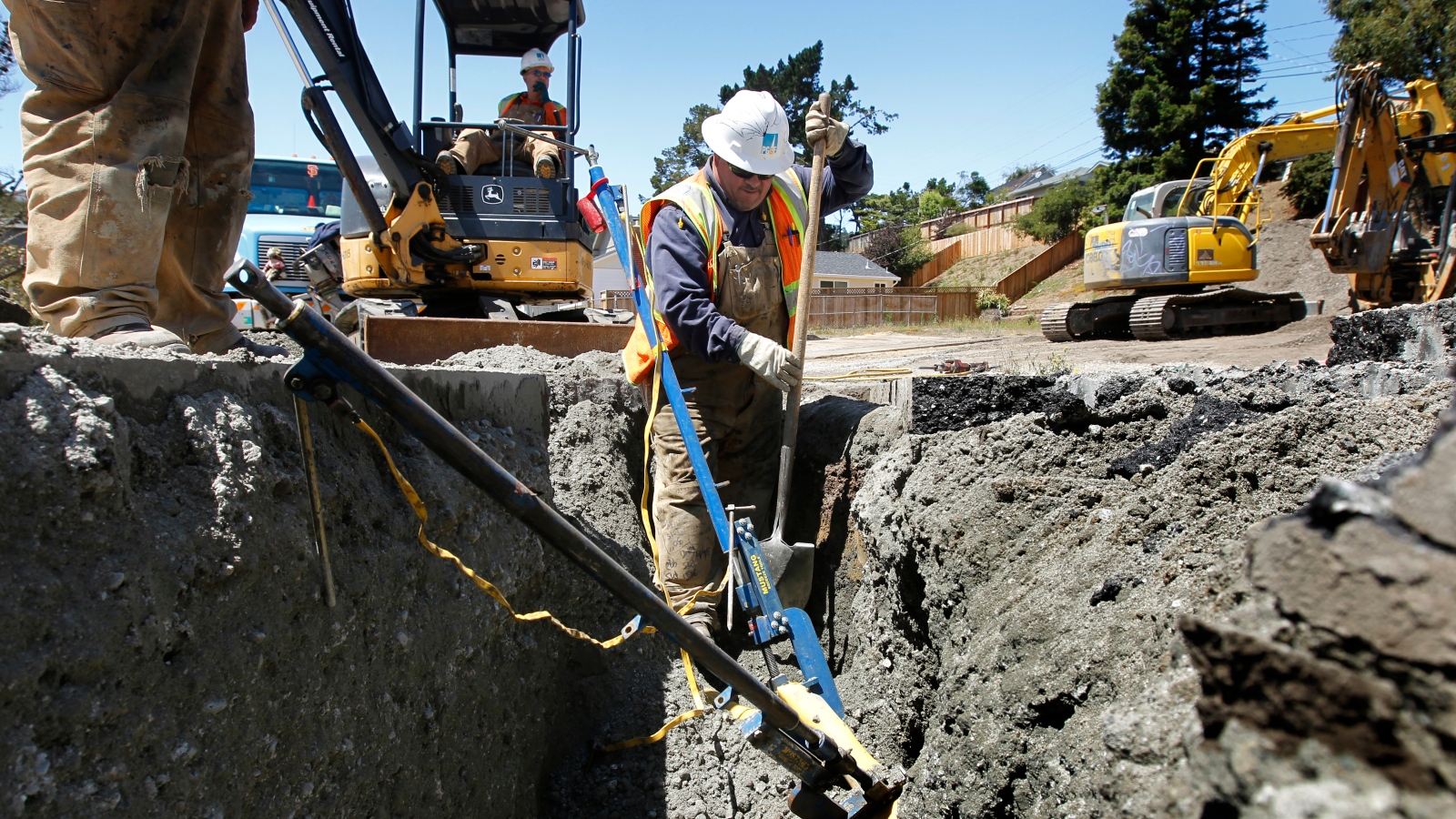
A new California law will provide households with an alternative to expensive gas service line replacements. Under the Home Energy Choice Act, utilities must offer eligible customers financial incentives to electrify their homes instead of upgrading aging gas infrastructure. The incentive amount will be set lower than the cost of replacing the service line, creating savings that benefit all gas customers through reduced infrastructure costs spread across the utility customer base.
The legislation emerged partly from the experience of Merrian Borgeson, a policy director at the Natural Resources Defense Council, whose gas service line was replaced by Pacific Gas and Electric despite her plans to eliminate gas use entirely. That replacement, costing between $20,000 and $30,000 plus ongoing expenses, will be paid by customers for approximately 50 years despite remaining unused. Under the new law, similar households facing scheduled replacements will have the choice to pursue electrification with financial support instead.
The Natural Resources Defense Council estimates that offering eligible customers a $17,500 incentive to electrify would save PG&E customers $20 million compared to replacing 1,000 service lines. Since utilities nationwide spend over $7 billion annually on service line replacements, comparable programs across the country could rival federal home electrification investments. The approach aligns with California’s target of achieving a carbon-neutral economy by 2045.
The legislation was diluted during the legislative process, with the final version capping programs at 1% of a utility’s customers and setting an expiration date of January 1, 2035, though renewal is possible. Utilities San Diego Gas and Electric and SoCalGas opposed the measure, citing concerns about cost shifts to remaining gas customers. California joins New York and Colorado in authorizing this approach, with the state’s Public Utilities Commission now tasked with developing implementation details and incentive levels, particularly higher amounts for disadvantaged communities.
Utilities will have until January 1, 2028, to submit approved programs. Several other states, including Illinois, Maryland, Minnesota, Oregon, and Washington, are reportedly considering similar legislation based on California’s model.
Article Attribution | Read More at Article Source
Article summary produced by Claude AI