

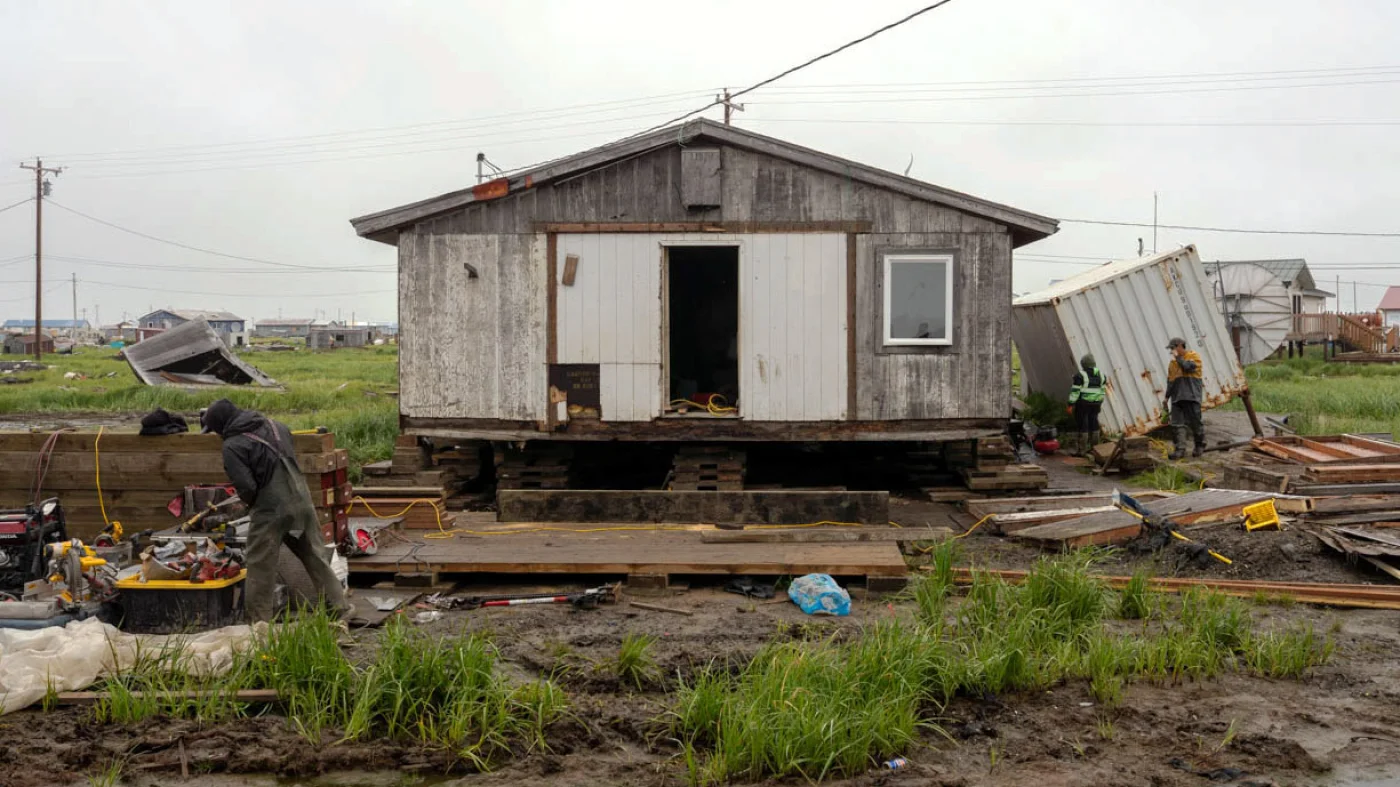
The remnants of Typhoon Halong struck numerous small Alaska Native villages in Western Alaska during October 2025, causing widespread destruction to infrastructure and displacing over a thousand people. In Kipnuk, a community of fewer than 200 homes located on the tundra and accessible primarily by air, approximately 90% of residences sustained damage according to state officials. Dozens of structures were swept from their foundations, with some families still inside at the time. A year after the disaster, hundreds of residents remain displaced, many now living elsewhere in Alaska or beyond, separated from their ancestral homeland.
Reconstruction efforts have progressed throughout the past year, with local workers including Eddie Chuckwuk leading repair operations. In August, construction crews employed methods such as air compressors to raise buildings back onto foundations. Federal Emergency Management Agency funds are expected to make most homes minimally habitable by Thanksgiving, addressing issues such as damaged insulation, windows, doors, and roofs. However, severely damaged structures may not be fully restored to pre-storm conditions, and state officials are seeking additional funding to construct replacement housing. The timeline for reopening the community’s school remains uncertain.
Significant barriers to return persist beyond physical reconstruction. Many residents, particularly older individuals, experienced trauma from the storm and remain reluctant to relocate back. Living in larger cities and towns during displacement has created cultural distance, as residents speak less of Yugtun, the native language, and lose connection to traditional hunting and gathering practices. Additionally, climate change is increasing the vulnerability of communities like Kipnuk to future severe weather events. While residents have expressed desire to relocate to a safer location, current FEMA funding can only support restoration of damaged properties rather than relocation efforts.
For those who have maintained ties to Kipnuk, returning during the summer months has provided opportunities to continue subsistence practices. Some families, including that of Burt Paul, traveled home to harvest traditional foods such as salmonberries and to fish, affirming cultural continuity despite ongoing displacement. Paul, who remained in the village as a community leader during the aftermath, expressed determination to maintain cultural traditions despite the uncertain timeline for full community restoration.
Article Attribution | Read More at Article Source
Article summary produced by Claude AI