

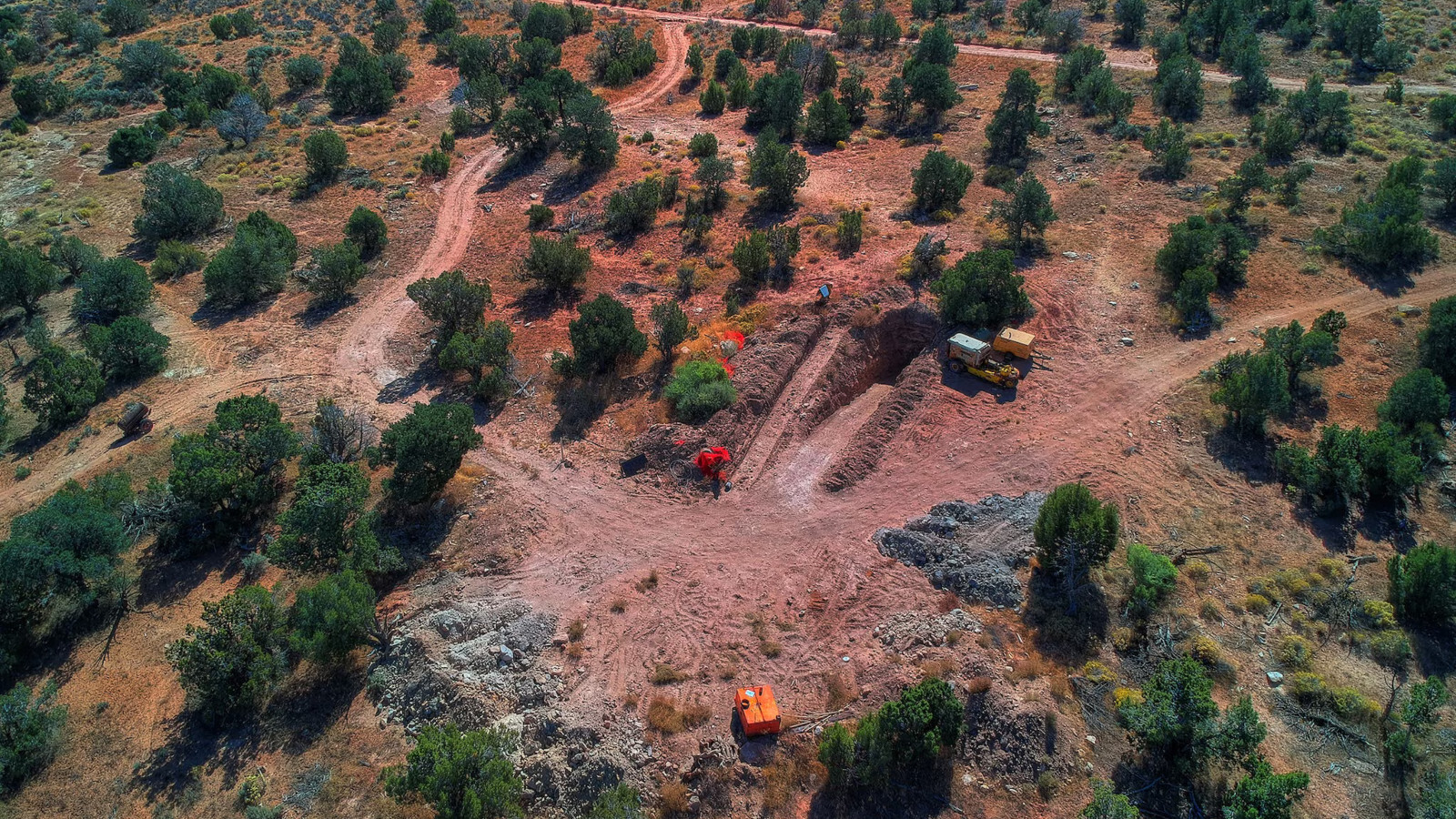
Following President Trump’s reduction of Bears Ears National Monument by approximately 90 percent, prospectors filed 16 mining claims on September 11, the first day the 1.2 million acres became available for development. The claims were submitted by small-scale local miners and businesses, with several parties focusing on uranium exploration. Environmental organizations including the Southern Utah Wilderness Alliance expressed concern about the rapid influx of claims and potential resource damage from small-scale mining operations.
George Schultz, an off-roading guide from Moab, filed three claims in the Lockhart Basin, characterizing claim-staking as a preliminary step in mining development. Kimmerle Mining, a family-owned operation based in Moab, filed 13 claims, including modifications to the existing Easy Peasy mine and 11 additional nearby claims. Kyle Kimmerle, a managing member of the mining company, has affiliations with uranium exploration and serves on the board of a Canadian uranium-focused company. Neither party disclosed specific details about intended mining operations.
Bears Ears has experienced significant political fluctuation regarding its protected status. President Barack Obama established the monument in 2016, protecting 1.35 million acres. Trump subsequently reduced it by approximately 85 percent, after which President Joe Biden restored the original boundaries and expanded protection slightly. Trump’s latest action again shrinks the monument and dissolved the tribal commission that previously managed the area alongside the Bureau of Land Management. Trump’s proclamation cited potential minerals including silver, copper, molybdenum, lead, uranium, vanadium, and zinc as resources important to the U.S. economy.
Uranium mining represents a particularly contentious issue given recent energy policy developments. The Trump administration and Utah’s Office of Energy Development have promoted nuclear energy as a solution for powering artificial intelligence infrastructure and meeting projected electricity demands, with uranium serving as the primary nuclear fuel. Historically, Utah ranked as the third-most productive uranium state. However, environmental attorney Steve Bloch expressed skepticism regarding the commercial viability of extracting sufficient uranium to justify the operational and environmental costs of reopening mines in the area.
Article Attribution | Read More at Article Source
Article summary produced by Claude AI