

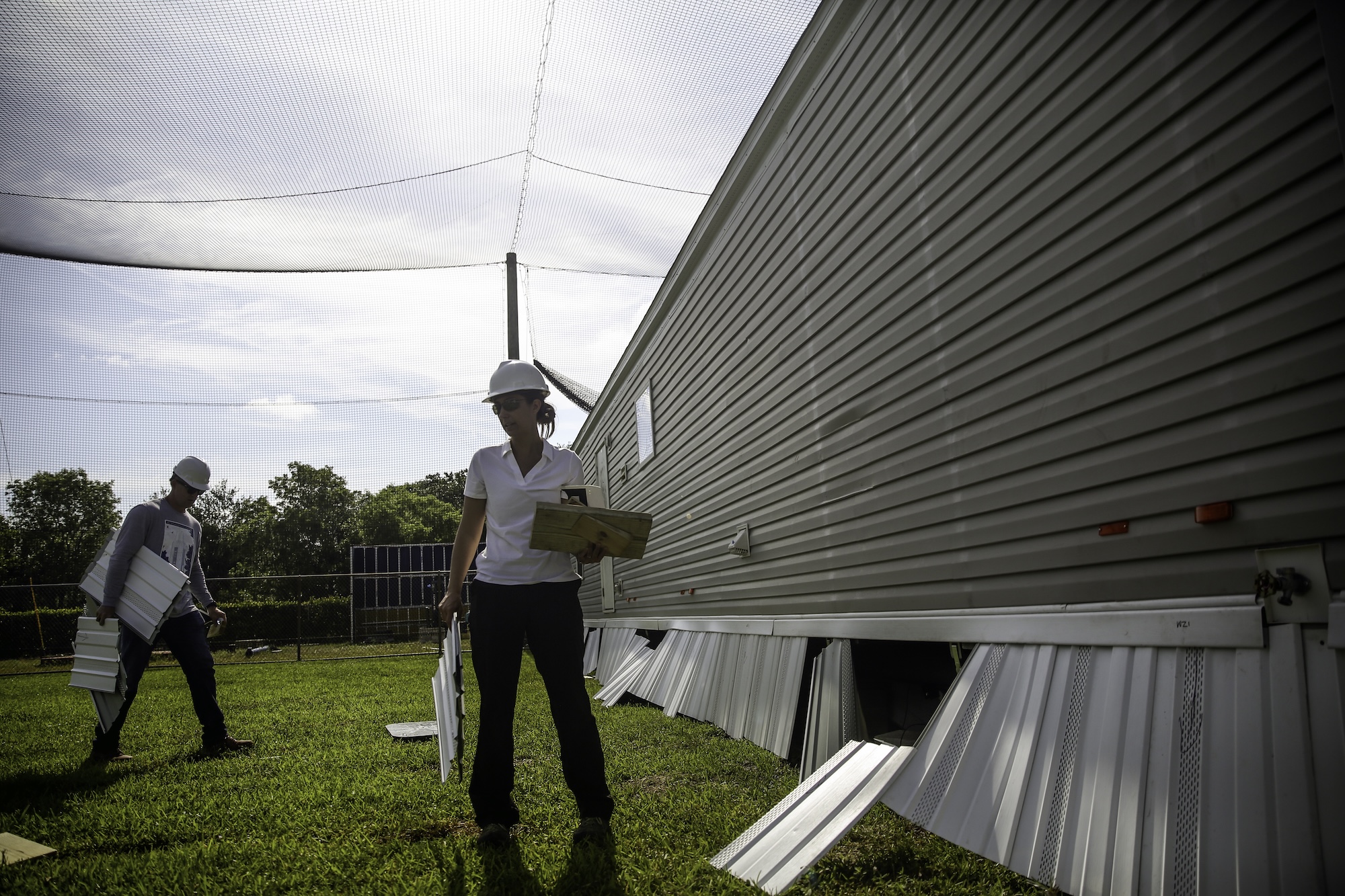
Researchers at Florida International University’s Wall of Wind facility are conducting systematic tests on manufactured homes to determine how to improve their ability to withstand extreme weather events. The testing program, led by structural engineer Elaina Sutley from the University of Kansas, involves subjecting homes to winds exceeding 157 mph while monitoring hundreds of pressure sensors to identify failure points.
The research addresses a significant vulnerability affecting millions of Americans. Approximately 20 million people reside in manufactured homes, a housing type that faces disproportionate exposure to severe wind and climate hazards. Many of these structures were constructed before regulatory standards were strengthened following Hurricane Andrew, and installation requirements currently vary by geographic location, creating inconsistency in safety levels across the nation.
Manufactured homes differ from conventional structures in critical ways that affect their wind resistance. These homes are typically installed on ground-level piers rather than permanent foundations, making their stability dependent not only on structural integrity but also on anchoring systems, straps, and tie-down mechanisms. The federal government currently divides the country into three wind zones with varying requirements, with most areas requiring homes to withstand 70 mph winds, while coastal hurricane-prone regions face stricter standards.
Sutley’s research program tests multiple variables including installation methods, elevation levels, skirting configurations, and structural openings to determine optimal safety practices. By systematically failing homes under controlled conditions, researchers can identify which design and installation modifications would most effectively enhance resilience. Because manufactured homes are regulated by a single federal code administered by the Department of Housing and Urban Development, findings from these experiments could potentially inform nationwide regulatory changes affecting millions of residents.
The research carries particular importance given housing patterns and climate risk distribution. Over half of newly installed manufactured homes during the past decade were placed in Gulf states, areas increasingly vulnerable to severe weather events. Approximately 5 million existing manufactured homes are located in regions prone to significant climate disaster impacts, making improvements to their wind resistance a matter of substantial public concern.
Article Attribution | Read More at Article Source
Article summary produced by Claude AI