

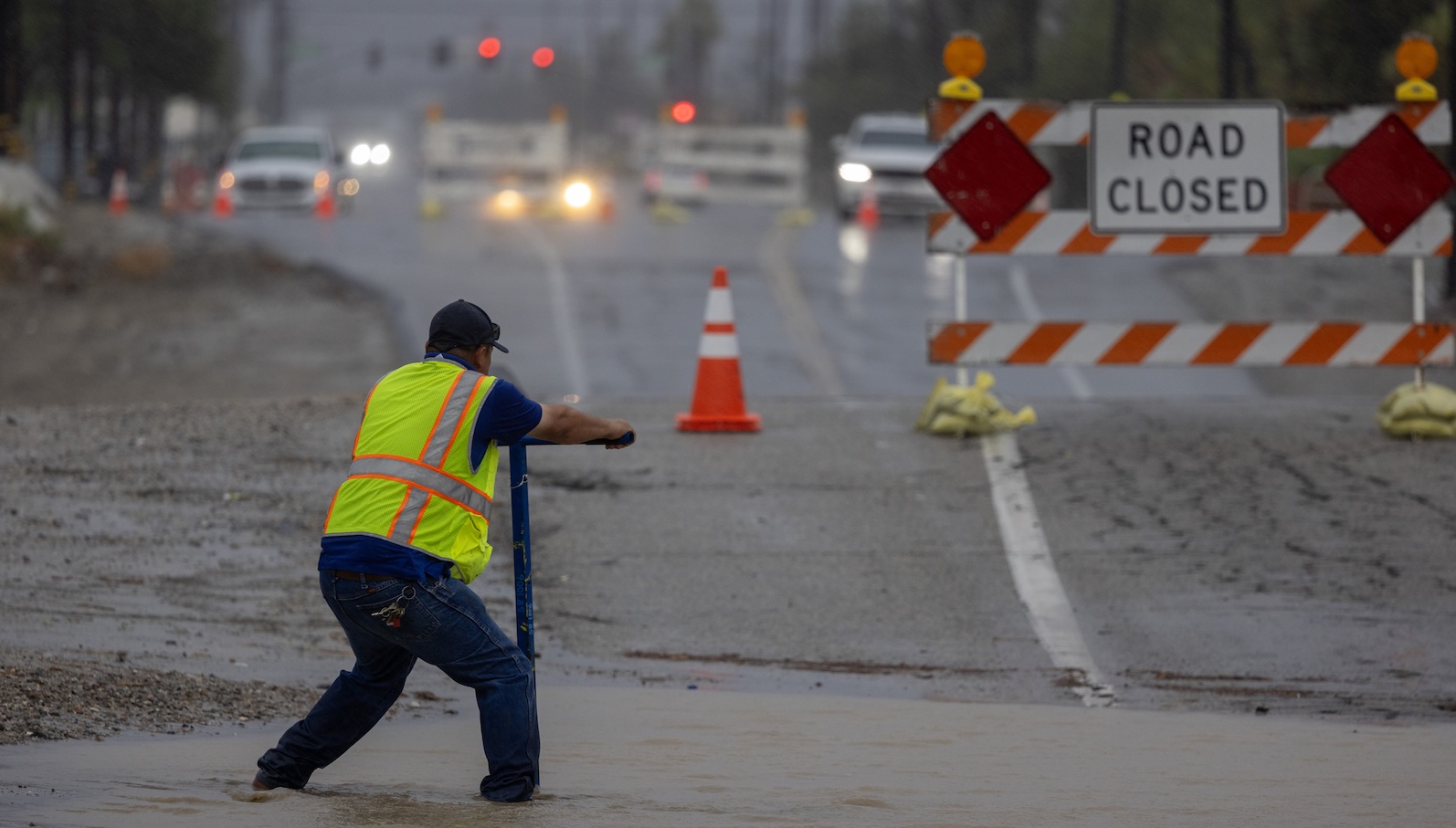
California is bracing for significant rainfall from an exceptionally powerful El Niño weather pattern affecting the state this autumn. Historically, El Niño conditions bring extraordinary precipitation to the region, as occurred during the severe storms of 1997 and 1998 that caused widespread flooding and property damage. The state now confronts a dual challenge: managing the immediate threats posed by intense rainfall while addressing long-term water scarcity issues created by climate change-driven droughts.
Water agencies across California have shifted their approach to precipitation management over recent decades. Rather than attempting to prevent or rapidly channel rainfall away, officials are now prioritizing the capture and storage of excess stormwater. This strategy reduces dependence on imported water transported through canals from distant sources. The Los Angeles Department of Water and Power identified stormwater capture as central to reducing reliance on purchased imported supplies while acknowledging that heavy storms can disrupt infrastructure and vulnerable areas.
The core challenge with El Niño precipitation lies not merely in volume but in temporal distribution. A single intense storm allows some water to permeate soil, but consecutive storms saturate ground conditions and create dangerous excess water conditions. California’s approximately 1,500 traditional reservoirs provide temporal water storage but face spatial limitations—they can only hold finite amounts before requiring controlled releases to prevent overflow or structural failure. Furthermore, dam construction creates environmental consequences including disruption of fish migration patterns.
To address these constraints, California has increasingly focused on managed aquifer recharge, a process that redirects flood flows underground rather than toward the ocean. The state’s underground aquifers possess vastly greater storage capacity than surface reservoirs—potentially holding around a billion acre-feet compared to the 21 million acre-feet in major reservoirs. Water agencies divert excess rainfall into shallow basins where it gradually infiltrates underlying aquifers. This approach preserves water by eliminating evaporative losses that occur in surface reservoirs while allowing summer extraction to meet peak-season demands.
Managed aquifer recharge projects demonstrate secondary environmental benefits. Some initiatives partner with agricultural landowners to deliberately flood fields, restoring wetland ecosystems while simultaneously recharging groundwater supplies. Such programs compensate farmers for providing ecological services while supporting biodiversity recovery in regions that have lost substantial wetland acreage to development.
Article Attribution | Read More at Article Source
Article summary produced by Claude AI