

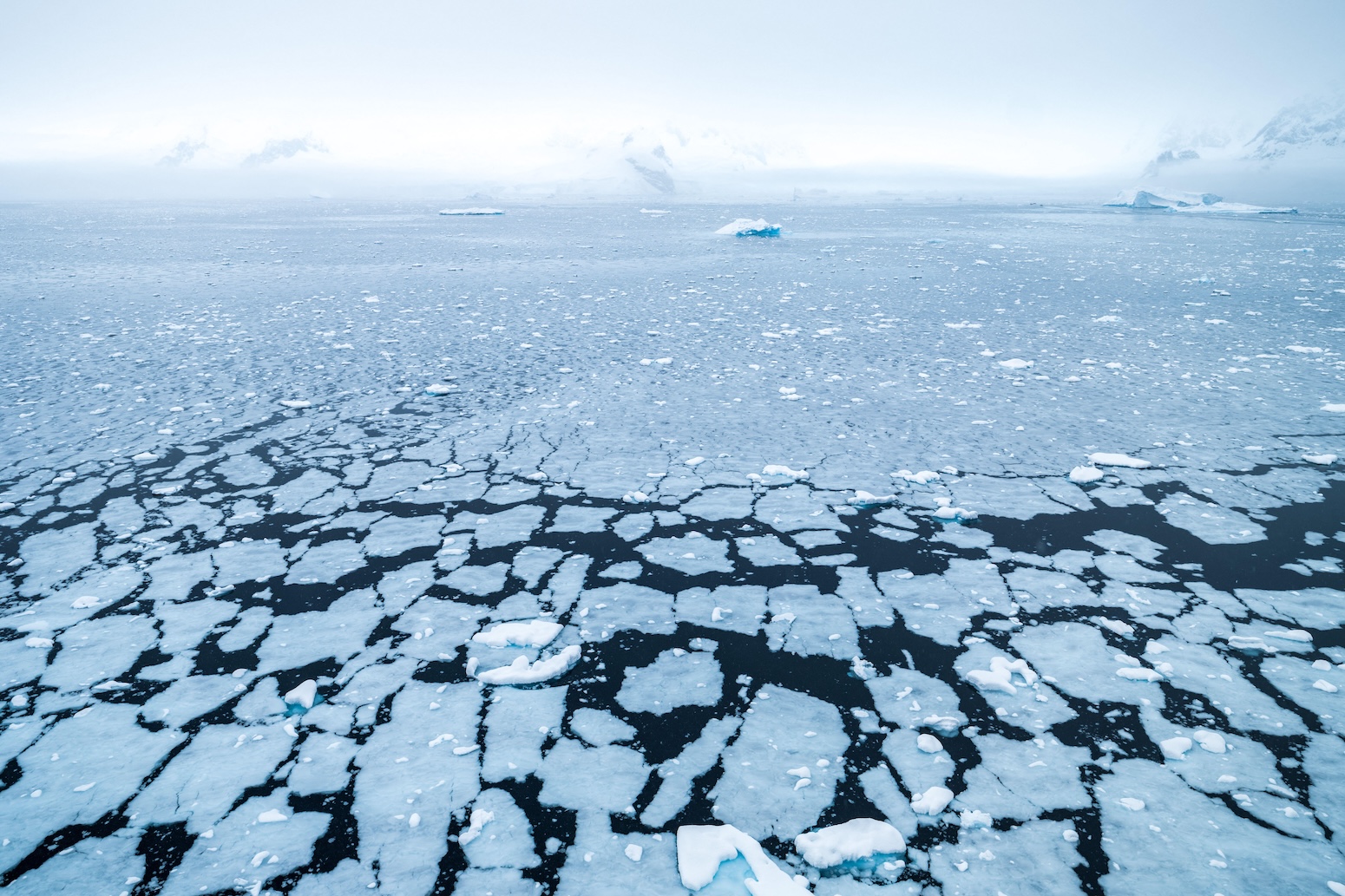
Antarctic sea ice recorded its third-smallest winter peak extent since satellite monitoring began 48 years ago, according to provisional data from the US National Snow and Ice Data Center. The ice reached its annual maximum on 14 September with an extent of 17.59 million square kilometers. Scientists caution that data remains preliminary and large fluctuations are typical near the Antarctic seasonal maximum.
Polar climate experts expressed concern about the persistently low Antarctic ice levels. Dr. Lettie Roach from the Alfred Wegener Institute noted that this year’s maximum was well below seasonal average, and that after decades of stable or increasing winter Antarctic sea ice, the recent low values are troubling. However, researchers emphasize that determining whether these changes represent a fundamental structural shift requires additional years of observational data. The attribution of Antarctic ice changes to human-caused warming versus natural variability remains less clear compared to Arctic trends.
Regional patterns of Antarctic sea ice shifted substantially during the growth season. Early in the year, the Bellingshausen Sea remained nearly ice-free while the Amundsen Sea had above-normal coverage. By late August, atmospheric pressure and wind changes reversed this pattern, with ice recovery in the Bellingshausen region but unusual scarcity across the Amundsen Sea and East Antarctica. July and August 2026 saw the fifth and fourth-lowest ice extents on record, respectively, with all lowest July extents occurring since 2022.
Arctic sea ice reached its annual minimum on 12 September at 4.60 million square kilometers, tying with 2025, 2010, and 2008 as the 10th-lowest on record. While not setting a new record, this remains lower than any minimum before 2007. Regional variations in Arctic conditions contributed significantly to outcomes, with cooler, cloudier conditions across parts of the central Arctic limiting surface melt, while the Atlantic side experienced more extreme conditions with record early melt-out in the Barents Sea.
Scientists noted that a March 2026 termination of a critical global air pressure dataset has disrupted the production of a major Arctic sea ice thickness reanalysis system, complicating ongoing monitoring efforts. Researchers indicate that additional metrics beyond extent, particularly ice thickness measurements, are needed to better understand overall ice pack conditions.
Article Attribution | Read More at Article Source
Article summary produced by Claude AI