

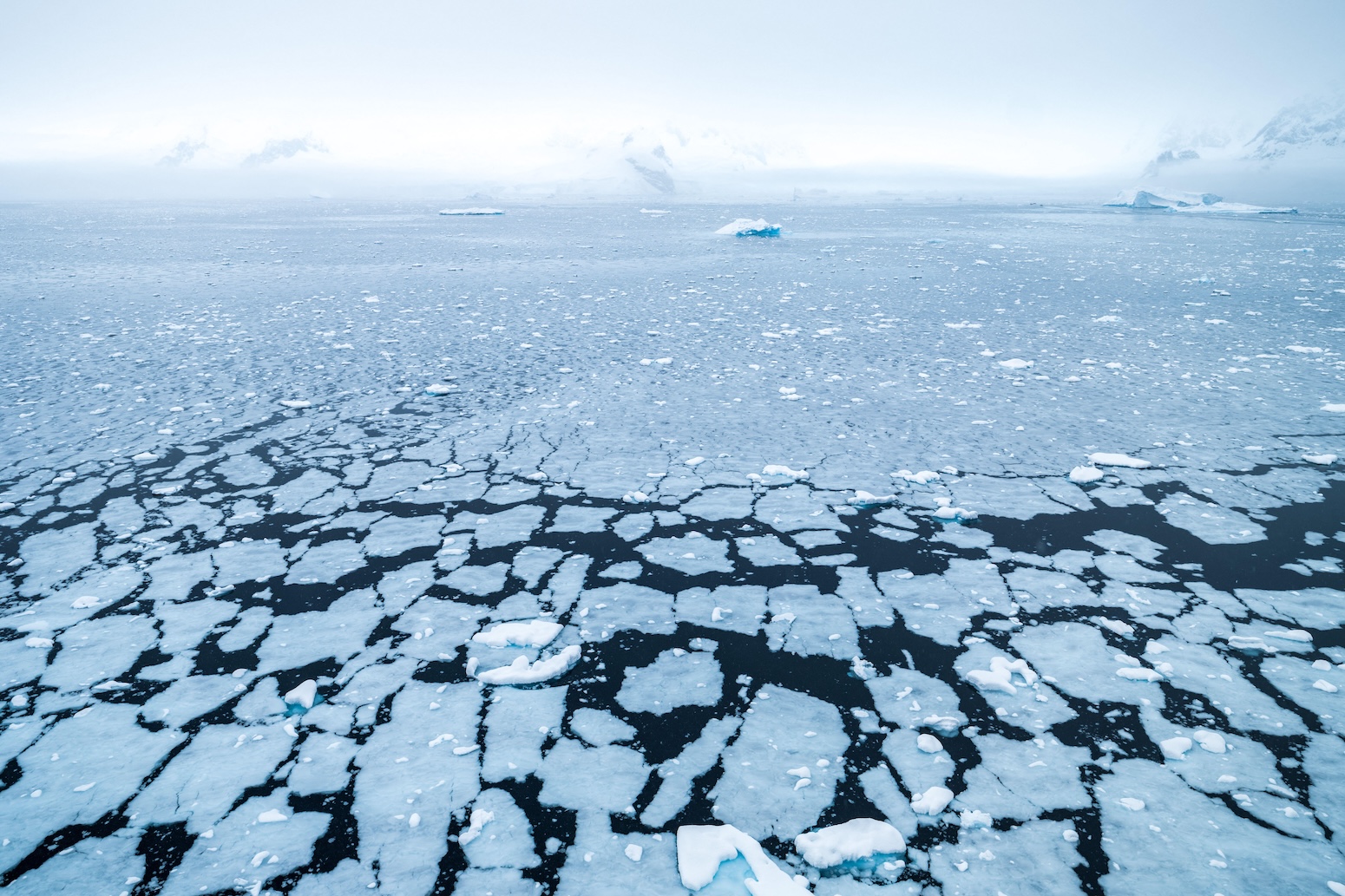
Antarctic sea ice attained its annual winter maximum on 14 September with an extent of 17.59 million square kilometers, marking the third-smallest peak extent in the satellite record spanning 48 years. The US National Snow and Ice Data Center provided preliminary measurements, noting that fluctuations near seasonal peaks are typical for Antarctic conditions. Scientists have expressed concern about the persistently low values, though they indicate additional observations are needed to determine whether this signals a fundamental change in Antarctic sea ice patterns.
Dr. Lettie Roach of the Alfred Wegener Institute characterized this year’s Antarctic maximum as substantially below seasonal averages. She highlighted that following decades of stable or increasing winter Antarctic sea ice, the recent low values warrant attention. However, researchers acknowledge that distinguishing between human-caused climate effects and natural variability remains challenging for Antarctica, contrasting with the Arctic where warming signals are clearer. Dr. Clare Eayrs from the Korea Polar Research Institute reported that Antarctic sea ice extent in July and August represented the fifth and fourth-lowest readings on record, respectively, with all five lowest July extents occurring since 2022.
Regional ice coverage patterns experienced significant changes throughout the growth season. In April, the Bellingshausen Sea remained nearly ice-free while the adjacent Amundsen Sea held above-normal ice. By late August, atmospheric pressure and wind shifts reversed this pattern, with ice recovering in the Bellingshausen region but becoming scarce across the Amundsen Sea and East Antarctica.
At the Arctic pole, sea ice reached its minimum extent on 12 September at 4.60 million square kilometers, tying as the joint-10th lowest on record. Dr. Zack Labe noted that while not record-setting, current minimums remain lower than any observed before 2007. Arctic researchers face operational challenges after the National Oceanographic and Atmospheric Administration terminated a critical global air pressure dataset in March 2026, forcing suspension of the Pan-Arctic Ice Ocean Modeling and Assimilation System reanalysis. Scientists continue analyzing regional weather patterns and their roles in ice extent variability, with particular interest in measuring ice thickness and other metrics to better assess overall ice pack conditions.
Article Attribution | Read More at Article Source
Article summary produced by Claude AI