

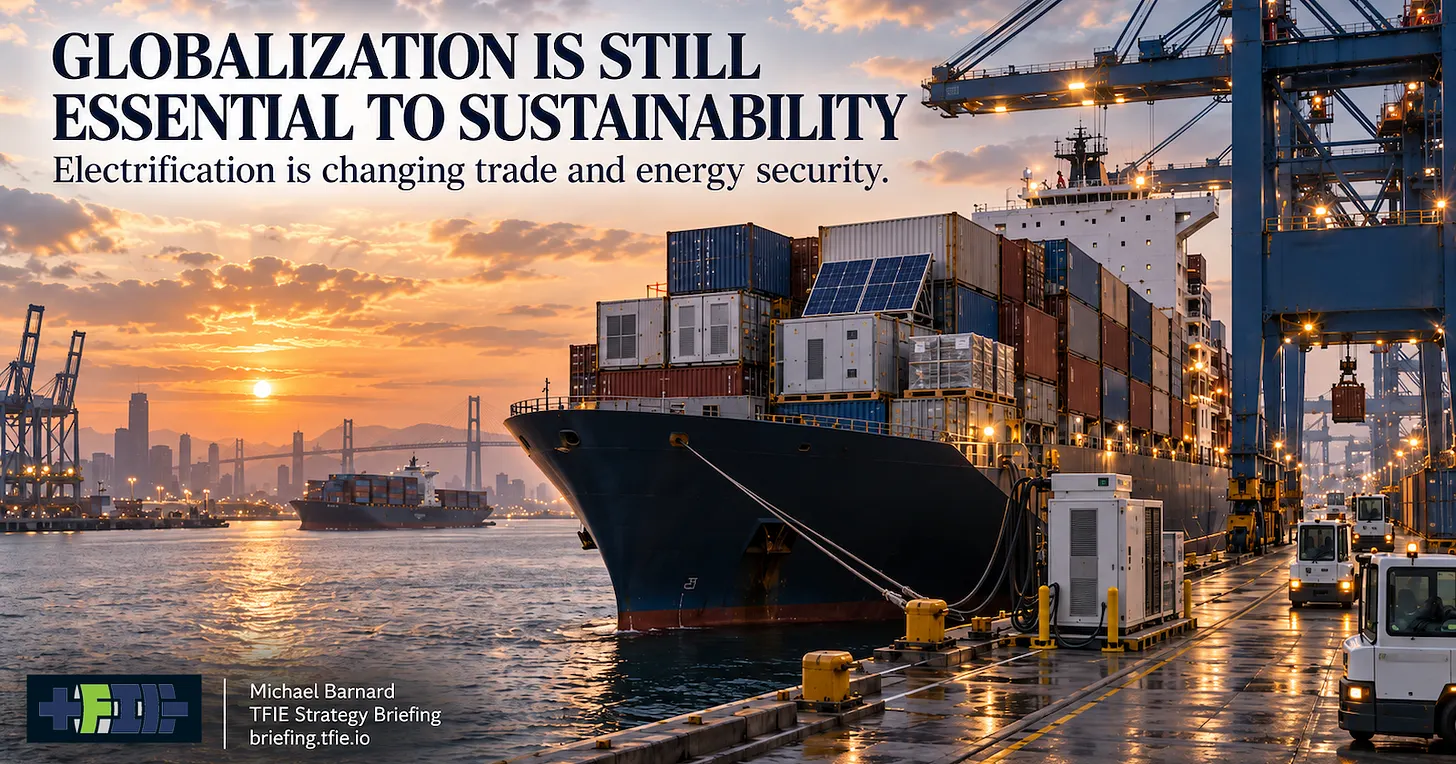
The transition to electrified energy systems represents a structural change in how countries approach energy security and international trade relationships. Under the fossil-fuel model, nations required constant imports of consumed resources—oil, natural gas, and coal—creating persistent economic dependencies on specific suppliers and vulnerable supply routes. Electrification introduces a different dependency pattern where countries import productive equipment such as solar panels, batteries, electric vehicles, and power electronics, then utilize these assets to generate energy from domestic renewable sources over extended periods.
This shift does not eliminate international trade or geopolitical considerations, but it substantially alters the risk profile of energy systems. Pakistan’s experience demonstrates the practical implications: rapid deployment of approximately 50 GW of solar capacity, much of it imported from China, reduced foreign-exchange spending on energy imports by an estimated $7.1 billion over six years. The central bank projects additional savings of $5.2 billion to $7.8 billion in 2026 energy-import costs. Similarly, the global electric vehicle fleet displaced roughly 1.7 million barrels of daily oil consumption in 2025, with China accounting for approximately one million barrels per day. Oil-importing nations can now purchase vehicles and batteries internationally while avoiding repetitive fuel purchases for transportation.
Resilience in electrified systems benefits from diversity rather than self-sufficiency. Europe expanded cross-border electricity infrastructure following supply disruptions, improving system stability through interconnection with neighboring countries. Ukraine’s integration with the Continental European power system provided critical support after the 2022 invasion when domestic infrastructure sustained damage. This approach maintains international dependencies while distributing risk across multiple suppliers, routes, and domestic alternatives.
African countries imported over $12 billion of solar modules, batteries, and electric vehicles between 2022 and 2024, with China supplying more than 90 percent of solar equipment. This concentration carries risk, but imported technologies simultaneously create local markets for installation, maintenance, financing, and electrical services. This developmental sequence can support regional manufacturing and assembly as markets mature. Manufacturing concentration in specific countries enabled affordable renewable technology prices; dispersing production globally would increase costs and slow deployment. Resilience depends on diversifying excessive concentrations, building selected domestic capabilities, and maintaining alternative suppliers rather than pursuing complete national self-sufficiency. The combination of unevenly distributed renewable resources, mineral deposits, manufacturing centers, and capital means that forcing all production stages within borders would slow and costlier energy transitions.
Article Attribution | Read More at Article Source
Article summary produced by Claude AI