

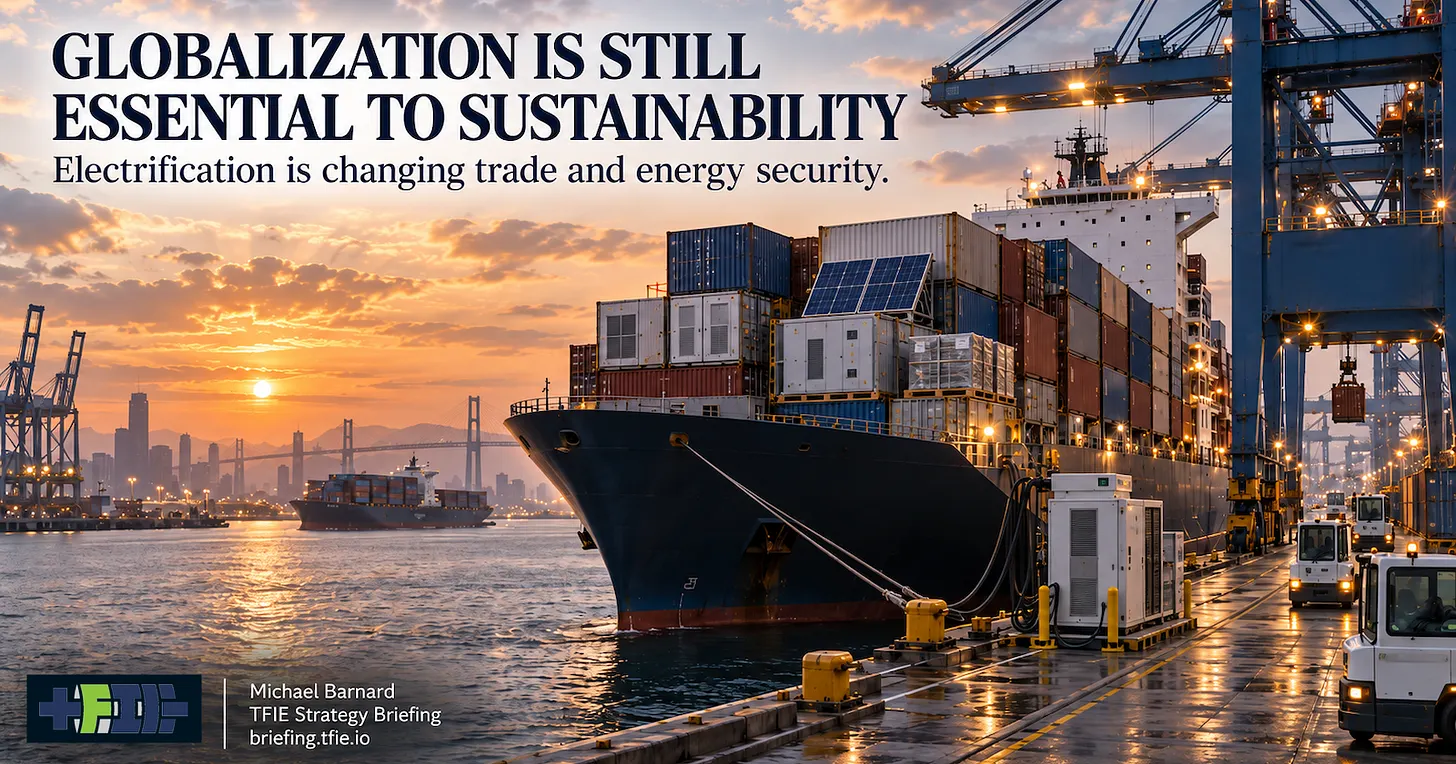
The transition to electrified energy systems fundamentally alters how countries conceptualize and manage energy security compared to the fossil-fuel era, according to analysis in an updated strategy briefing on globalization and electrification. Traditionally, energy security focused on maintaining uninterrupted supplies of consumable fuels—oil, natural gas, and coal—that required repeated international transactions and ongoing access to producing nations, shipping routes, and pipelines. In contrast, electrified systems shift trade toward productive equipment that generates electricity domestically over extended periods after an initial import.
This structural change does not eliminate international dependence but reconfigures its nature and risks. Countries importing renewable energy infrastructure—solar panels, batteries, electric vehicles, and power electronics—can subsequently draw increasing energy from domestic natural resources, reducing the need for continuous commodity purchases. The distinction proves particularly significant for fuel-importing nations where energy imports consume scarce foreign exchange. Pakistan’s rapid deployment of decentralized solar capacity, with roughly 50 gigawatts estimated by the end of 2025, illustrates this dynamic. Despite sourcing much solar hardware internationally, Pakistan’s central bank estimates the installations will reduce the country’s 2026 energy-import bill by between $5.2 billion and $7.8 billion while having recovered the foreign-exchange costs of imported panels through fuel-import savings accumulated over six years.
Electric vehicle adoption demonstrates a comparable pattern globally. The International Energy Agency estimates the global EV fleet displaced approximately 1.7 million barrels of oil daily in 2025, with China accounting for roughly one million barrels. While vehicle imports may continue, eliminating per-kilometer petroleum requirements creates substantial savings for oil-importing economies. Ethiopia has explicitly linked restrictions on new combustion-vehicle imports to reducing fuel dependence while promoting electric mobility.
The shift also creates opportunities for industrial development in emerging economies. African nations imported more than $12 billion in solar modules, lithium-ion batteries, and assembled electric vehicles between 2022 and 2024, with China supplying over 90 percent of solar modules. However, this equipment establishes local markets for installation, financing, maintenance, and electricity services. Solar and batteries can replace diesel generation at mines and commercial facilities, while electric motorcycles and buses increase demand for locally generated electricity, potentially supporting eventual domestic assembly and manufacturing.
Resilient electrified systems benefit from diversified suppliers, multiple routes, domestic alternatives, and sufficient redundancy rather than national self-sufficiency. While international trade remains necessary—given uneven global distribution of renewable resources, mineral deposits, manufacturing capacity, and expertise—the traded goods generate lasting productive value rather than disappearing through combustion, fundamentally altering the dependency structure underlying energy security.
Article Attribution | Read More at Article Source
Article summary produced by Claude AI