

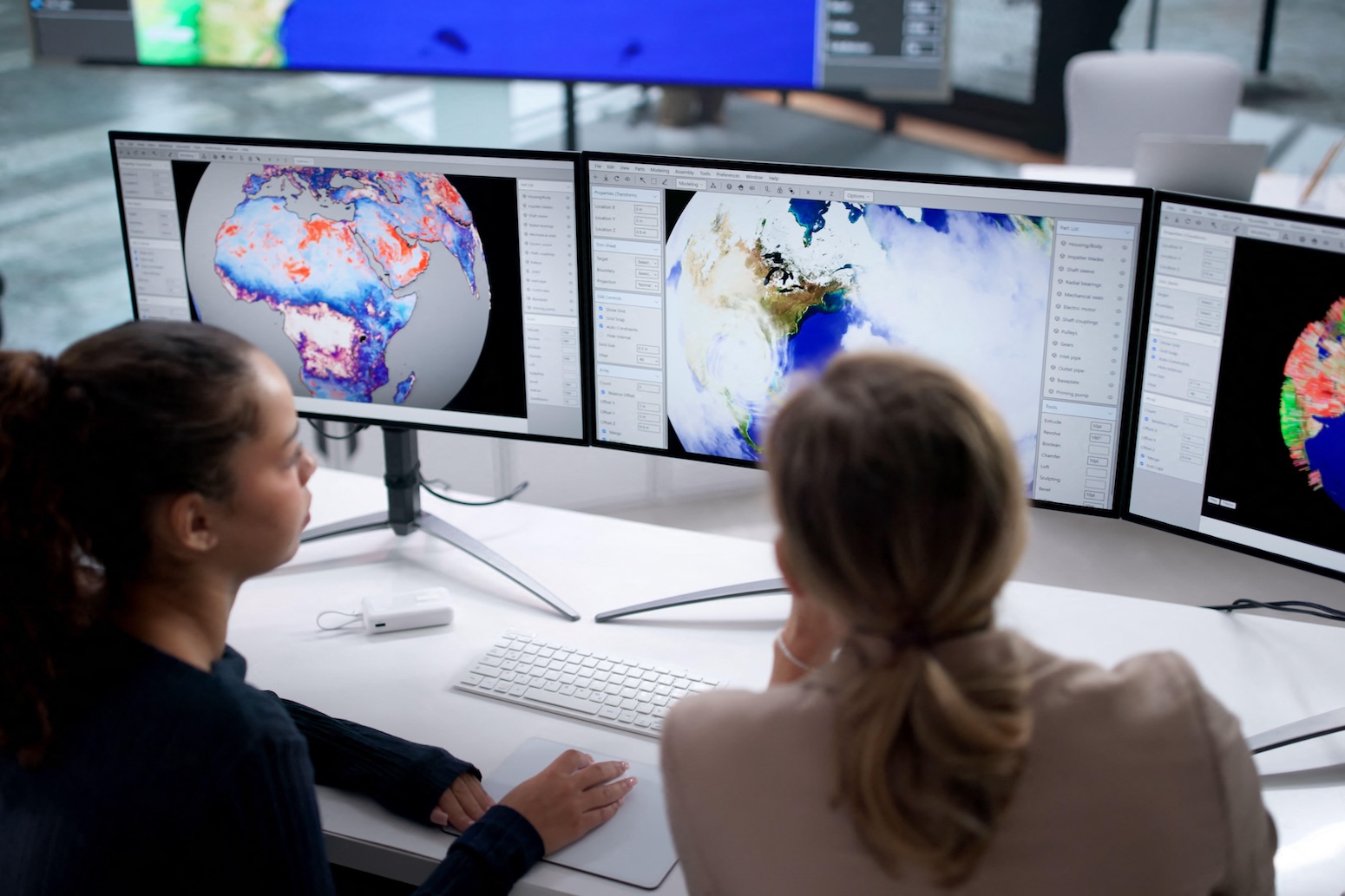
Artificial intelligence is becoming integral to climate science, with applications spanning multiple research domains. Scientists are leveraging AI technologies—from machine learning algorithms to deep learning systems—to analyze vast amounts of climate data and improve forecasting capabilities.
Weather prediction has emerged as a particularly successful application area. Recent AI weather-prediction models have demonstrated the ability to generate accurate forecasts extending up to two weeks into the future while requiring significantly less computational power than traditional numerical models based on mathematical equations. These systems learn patterns from extensive historical weather datasets and iteratively apply those patterns to generate successive predictions. The European Center for Mid-Range Weather Forecasts has begun integrating an AI forecast system into its official weather communications, placing it alongside conventional forecasting methods.
However, climate prediction presents distinct challenges compared to weather forecasting. Climate scientists must make projections for future conditions that extend beyond existing observational records, creating a fundamental data gap. Researchers are exploring hybrid approaches that combine AI’s data-driven capabilities with physics-based models to maintain scientific rigor while improving accessibility and reducing production costs. Additionally, current AI systems tend to underperform on record-breaking extreme weather events—precisely the phenomena most critical for adaptation planning—suggesting that refining models to better capture unprecedented conditions remains an ongoing challenge.
Earth observation satellites are generating unprecedented volumes of geospatial imagery, and AI systems are proving effective at processing this data. Machine learning algorithms now automatically detect industrial methane leaks through hyperspectral satellite imagery, track illegal logging activities, monitor glacier retreat, and analyze sea ice characteristics including concentration, thickness and drift patterns. These applications translate raw satellite data into actionable climate intelligence at scales and speeds that manual human analysis cannot match.
Despite these advances, the field faces significant obstacles. The intensive computational energy requirements of AI systems, potential overreliance on unverified results, and concerns about exacerbating existing inequalities within climate science research remain substantial concerns that the community continues to address.
Article Attribution | Read More at Article Source
Article summary produced by Claude AI