

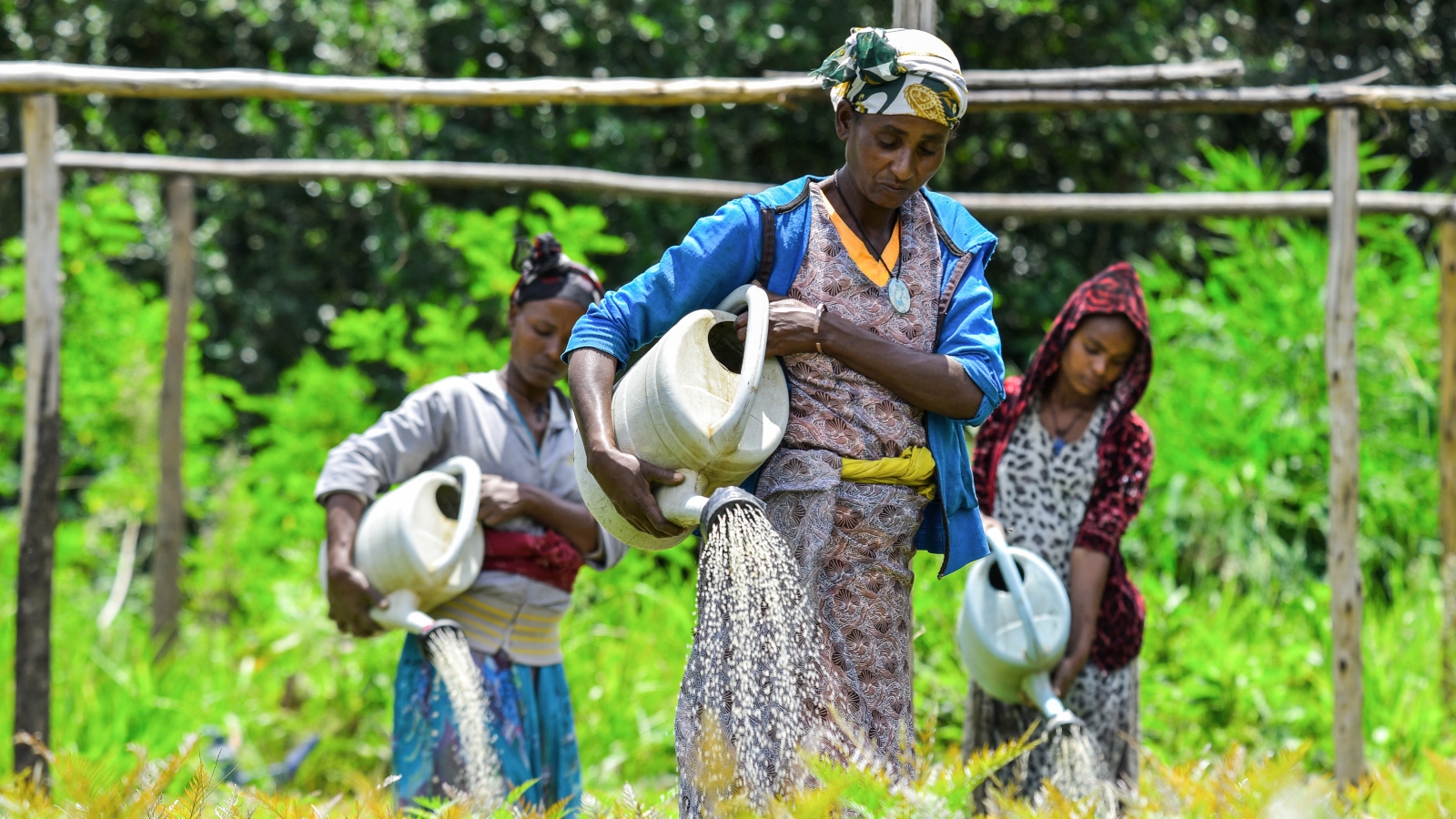
Ethiopia faces acute environmental challenges stemming from nearly complete forest loss over the past century. Historical clearing of trees for agriculture, grazing, and fuel removed protective vegetation that once stabilized soils across the country’s highlands. By 1989, forest cover had declined to less than 3 percent, and the highlands were losing approximately 1 billion metric tons of topsoil annually. This degradation has intensified vulnerability to climate change, with heavier rainfall causing erosion and flooding while intensified droughts dry out depleted soils. The economic impact is substantial, with land degradation costing an estimated $4.3 billion annually in reduced harvests and lost farming income, contributing to widespread food insecurity across a population of more than 100 million who depend on agriculture.
The Ethiopian government has responded with an ambitious environmental restoration strategy. Following severe droughts and famines in the 1970s and 1980s, the country began investing in soil conservation, tree-planting, and infrastructure projects like terraces and check dams. This effort accelerated significantly in 2019 when the government launched the Green Legacy Initiative, a nationwide campaign that mobilized millions of participants including farmers, public servants, schools, and religious organizations to plant trees across the country. In 2024, the government established the Green Legacy and Landscape Restoration Special Fund, committing between $73 million and $145 million annually—a substantial allocation for a low-income nation.
The scale of participation has been remarkable. In August alone, 26.6 million Ethiopians planted 800 million seedlings in a single day. Over the past seven years, tens of millions of Ethiopians have collectively planted more than 47 billion seedlings as part of the campaign targeting 50 billion seedlings by 2030. These efforts integrate native tree species into both restored forests and farmland while sequestering carbon to mitigate future climate impacts.
Early results suggest the campaign is generating measurable environmental benefits. Government data indicate national forest cover increased from 17.2 percent in 2019 to 23.6 percent in 2023. Studies of restored areas have documented significant reductions in soil erosion, and the annual deforestation rate declined from more than 350 square miles to approximately 100 square miles between 2013 and 2023. Experts acknowledge reforestation typically faces substantial challenges, but the program’s unprecedented scale means even partial success would constitute a major achievement in environmental restoration.
Article Attribution | Read More at Article Source
Article summary produced by Claude AI