

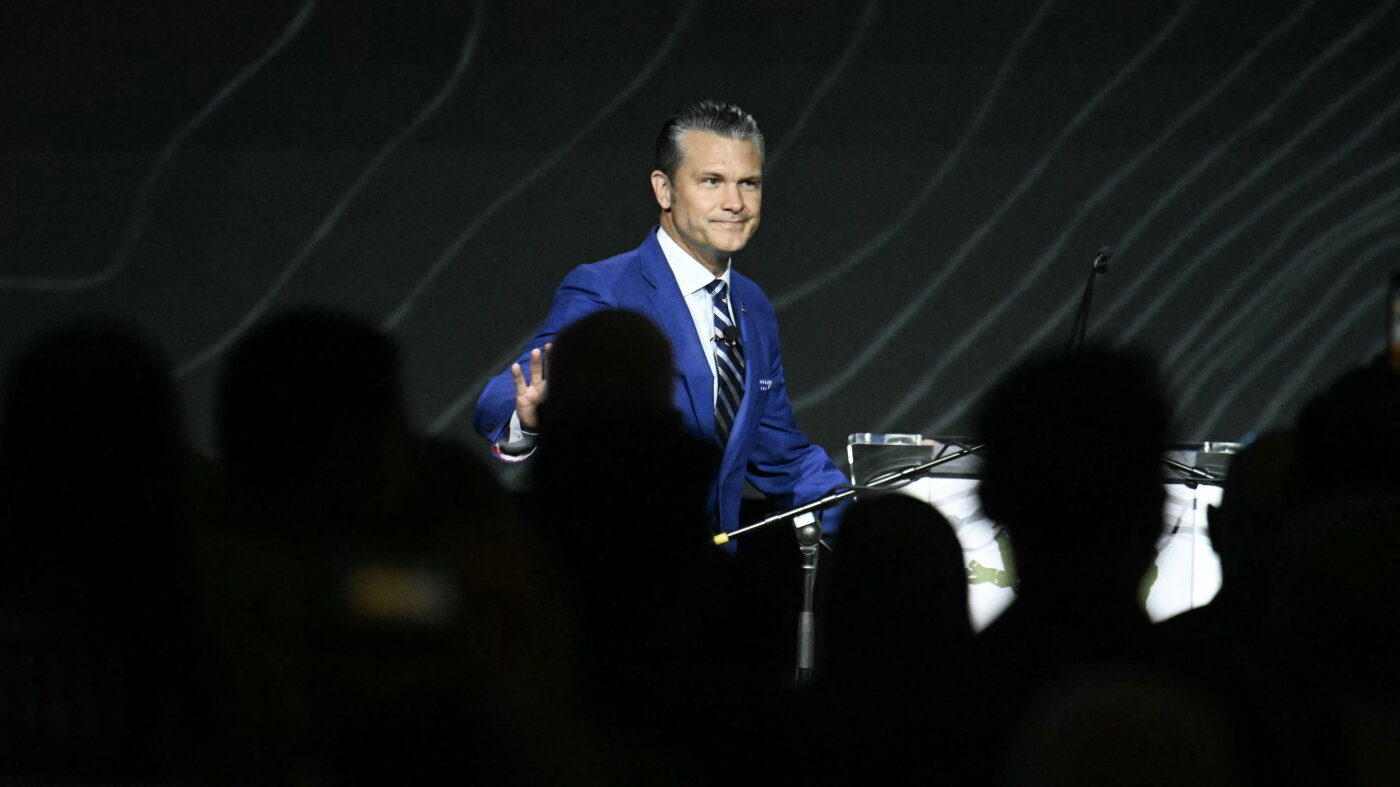
Defense Secretary Pete Hegseth suggested that the execution of Nidal Hasan, set for December 3, should be livestreamed to demonstrate consequences for violent attacks. Hasan, a former U.S. Army major, killed 13 people and injured 32 in a 2009 attack at Fort Hood. Hegseth stated the public nature of the execution would serve as a deterrent, though President Trump said officials were “looking at” the proposal and Vice President JD Vance indicated he would not watch it, raising questions about whether the plan would proceed.
Religious scholars have expressed concern about the proposal and its connection to Hegseth’s theological background. Julie Ingersoll, a professor of religion at the University of North Florida specializing in the religious right, said the public discussion of such an idea shifts boundaries of what society deems acceptable. Matthew Taylor, a visiting scholar at Georgetown University’s Center on Faith and Justice, characterized Hegseth as holding “extreme ideas” that fall outside mainstream American Christianity. The proposal also drew disapproval from Archbishop Timothy Broglio, who serves Catholics in the U.S. military and instructed Catholic personnel to request excusal from participation in the firing squad.
Scholars have pointed to Hegseth’s affiliation with the Communion of Reformed Evangelical Churches (CREC), whose leadership identifies with Christian Nationalism and has advocated for a theonomous society. Ingersoll noted that within this community, support for the death penalty is “unanimous” and rooted in biblical interpretation of Old Testament law. Taylor argued that Hegseth’s apparent worldview—evidenced by his tattoos including religious and medieval-themed imagery and his book titled “American Crusade”—reflects an ideology centered on Christian supremacy.
Some observers have questioned whether Hasan’s Islamic faith influences the unprecedented nature of the proposal. Joshua Salaam, president of the Association of Muslim Chaplains, asked whether the execution would be treated differently due to Hasan’s religious identity. Scholars suggested that Hegseth’s stated opposition to Islam and his vision of Christian governance form the ideological context for the proposal. Taylor expressed concern that Hegseth may be using military authority to advance religious nationalist objectives across the Pentagon and broader military structure.
Article Attribution | Read More at Article Source
Article summary produced by Claude AI