

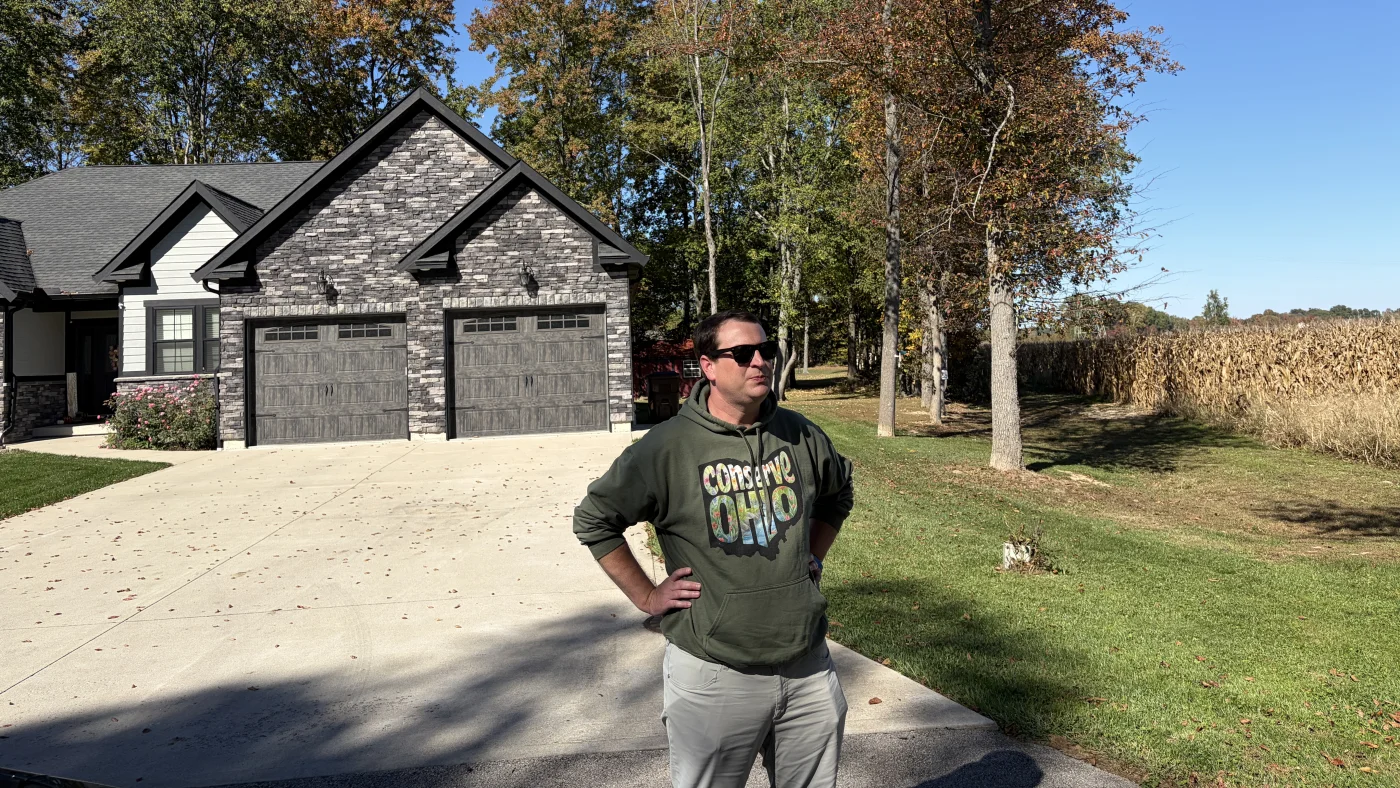
Nick Owens, a Republican attorney in Brown County, Ohio, has emerged as a leading voice in opposition to hyperscale data center development in rural communities. His activism began after discovering that 1,000 acres of farmland near Mt. Orab had been sold to a data center developer, with some properties situated immediately adjacent to residential homes. Owens characterized the developments as fundamentally at odds with the small-town character and quality of life that residents value.
Owens’ concerns prompted the formation of Conserve Ohio, a grassroots coalition that includes Democrats, Republicans, and Independents. The group has mobilized volunteers across nearly all 88 counties in the state. This fall, Conserve Ohio is backing ballot initiatives in 10 communities that would amend local charters to prohibit construction of large-scale data centers used to power artificial intelligence. Beyond these local efforts, the organization is working toward a more expansive goal: a petition for a state constitutional amendment that would ban large-scale data centers statewide, with plans to place it before Ohio voters in 2027.
Owens has articulated concerns about data centers’ environmental impact, noting that the facilities require new power plants and generate significant emissions and pollution. He has suggested that if data centers must be developed, they should be located on brownfield sites rather than pristine farmland, though he acknowledged that such industrial sites would be more expensive and difficult for developers to utilize.
The data center issue has become increasingly prominent in Ohio’s political landscape. In the competitive U.S. Senate race, former Democratic Senator Sherrod Brown has criticized incumbent Republican Senator Jon Husted’s past support for data center investments as lieutenant governor. Husted has introduced legislation aimed at requiring data centers to fund power grid upgrades and other infrastructure costs associated with their energy consumption. Brown has characterized Husted as “the face of data centers,” while Husted has countered that Brown previously supported such projects.
Despite these political overtures from candidates seeking statewide office, volunteers with Conserve Ohio remain skeptical that elected officials will prioritize community preferences regarding data center development. Activists continue collecting signatures to advance the statewide ballot measure, viewing grassroots mechanisms as the most reliable avenue for ensuring public input on the issue.
Article Attribution | Read More at Article Source
Article summary produced by Claude AI